The SHOAL is the global ecosystem of partners and collaborators who work together to safeguard the health of Earth's freshwater habitats and conserve the most threatened freshwater species. As with a shoal of fish, the strength of the SHOAL lies with the number of partners all working together.
Blueprint for Conservation Action for 1,000 Freshwater Fishes
SHOAL's flagship initiative sets out a plan for how significant collaborative conservation effort can lift freshwater fishes and potentially thousands of other neglected freshwater species to a new elevated platform of conservation attention and greatly enhance freshwater conservation efforts globally.
“Discovering and describing new species completes our knowledge about the diversity of life on Earth.”
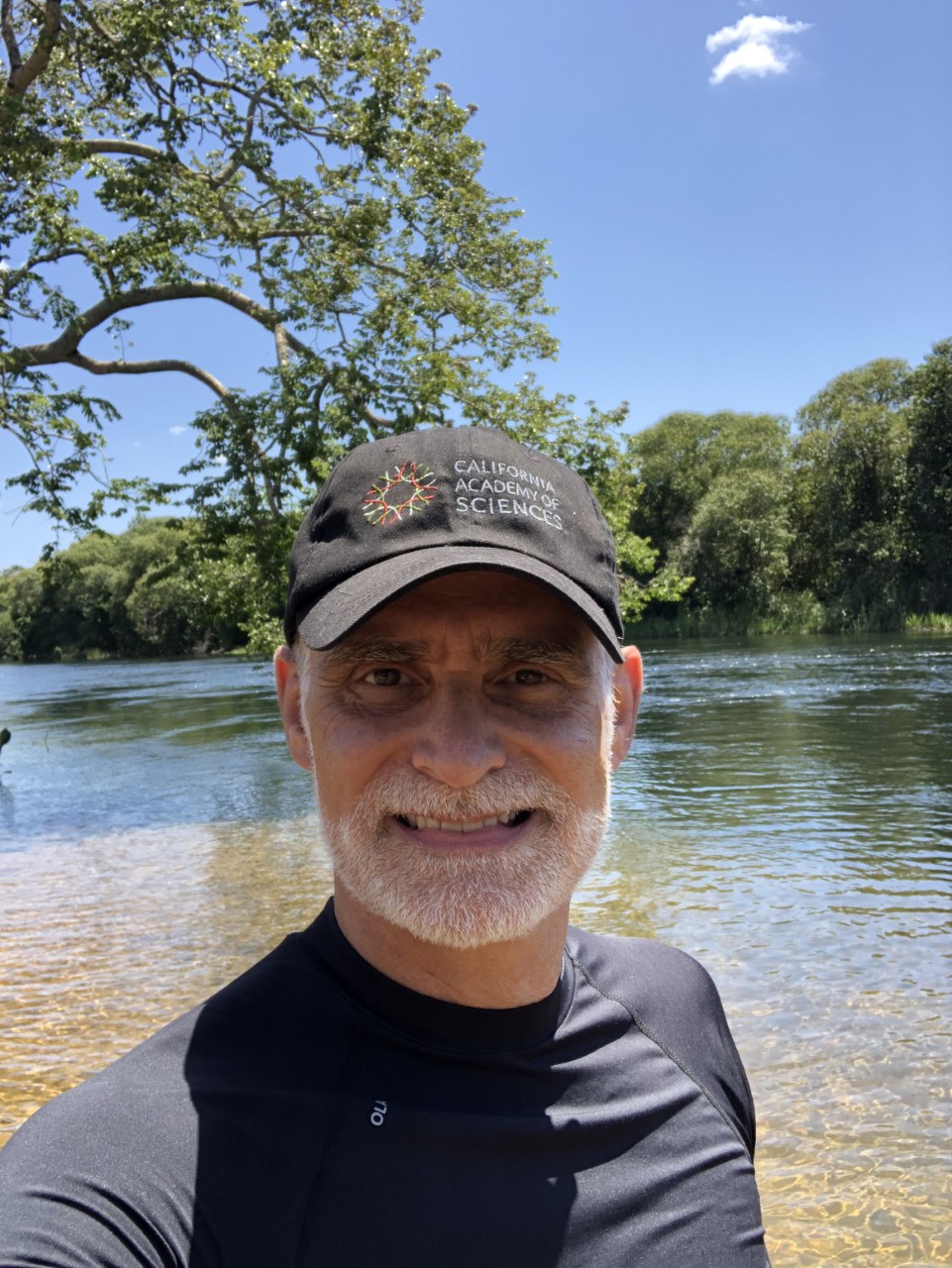
Roberto Esser dos Reis, is a Brazilian ichthyologist, professor and Curator of Fishes at the Pontifical Catholic University of Rio Grande do Sul. With his students and collaborators, he has described 151 new taxa (including 139 new species), 17 new genera, and one new subfamily of fish.
In 2022 alone, he described eight species and one genus of freshwater fish, which are highlighted in New Species 2022. He also discovered a further six freshwater fish species that will likely be described over the coming years.
What do you most enjoy about discovering and describing species?
ROBERTO: What moves me is revealing undetected biodiversity and studying their phylogenetic relationships. Discovering and describing new species completes our knowledge about the diversity of life on Earth and allows for adequate conservation planning. Revealing their phylogenetic relationships – the part I like the most – uncovers the diversification of the group and brings to light explanations on evolution, biogeography and phylogeography of organisms.
Can you talk about the process of describing a species?
ROBERTO: This is not a simple process. It usually takes many years of detailed study of a museum or other biodiversity collection, careful fieldwork, and lots of reading of specialised literature.
Once you have the expertise, you must compare newly collected specimens (or those residing in a collection) with type-specimens (those previously used to describe species) and published descriptions. Then you will be able to find the subtle differences that can tell independent evolutionary lineages (i.e. species) apart.
In the last 20 or so years, the possibility of using DNA segments to help this process has improved our ability to detect such lineages and demonstrate they are evolving independently. This is the process of discovering undescribed diversity. Describing and publishing is a much simpler process that also requires some expertise and training. I am proud of having trained many grad students in both parts of the process.
Can you talk through a particularly memorable species discovery?
ROBERTO: Back in 2003 I was conducting fieldwork in the Ucayali River in Peru, and I knew from European aquarium magazines of a new species of Otocinclus (a small suckermouth catfish) from that region. I spent around two weeks looking for this and other fishes and could not find it. At the end of the expedition, I was with my team at the harbor in Jenaro Herrera to take the boat back to Iquitos, and suddenly a local fish collector for the aquarium trade arrived at the harbor with dozens of flat, wooden trays coated with plastic, obviously carrying ornamental fishes to sell to the aquarium fish exporters in Iquitos. I asked permission and started peeking at each tray and eventually found one full of the new Otocinclus I was looking for! They were collected in a nearby creek and lake which I was not aware of! I then purchased some 30 specimens from the fisher, preserved them during the boat trip, and used those specimens to describe Otocinclus Cocama – a very beautiful fish!
Are there any characteristics of a place that make it more likely to have undescribed or undiscovered species living there?
ROBERTO: Well, this is a tricky question. Obviously, I would expect unexplored areas (like the eastern Amazon, or the southern Orinoco basin) to have more unknown species. This is generally true. However, I can show you several papers, some by myself, describing new species from areas heavily sampled during the last 200 years!
At this very moment I am conducting a study describing five new species of another group of suckermouth catfish from the upper Uruguay River in south Brazil, an area that my team have collected heavily for about 30 years. Most of the fishes were already pickled and sitting on a shelf in our own museum, but are so far undetected as undescribed. It’s a matter of being able to detect them.
Can you estimate how many species may yet be discovered and described in South America, and the world?
ROBERTO: Fish is a big group with about 36,400 species today. Approximately half are freshwater and half are marine. In the last 20 years or so, an average of 104 new species are described for the Neotropical region alone. In 2016 I published with colleagues an article showing that we had in South America some 5,160 freshwater fish species, and we estimated a final diversity between 8,000 and 9,000 species.
Sturisoma reisi, one of the notable species in this report, was named after you. Are there other species named after you?
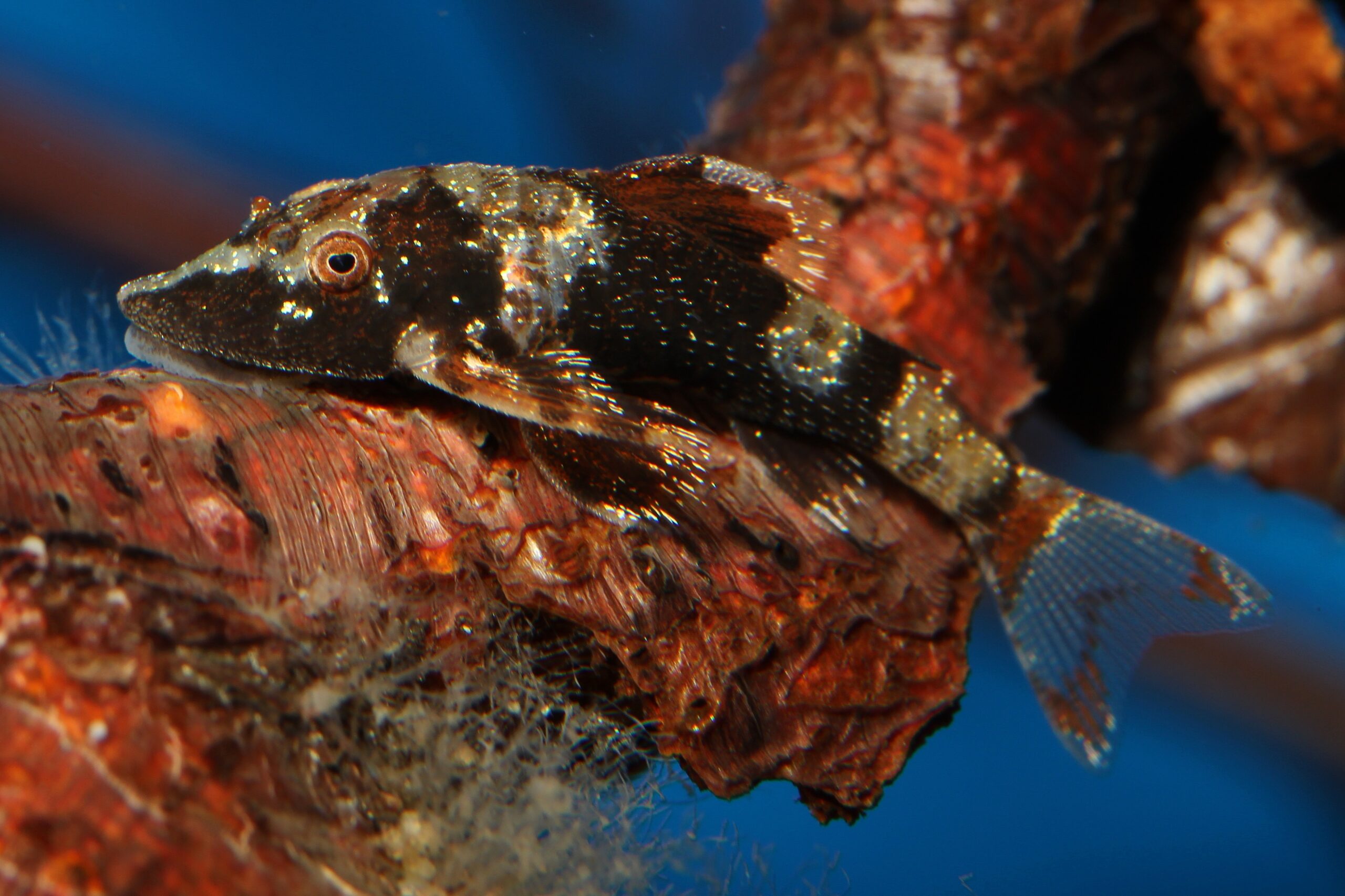
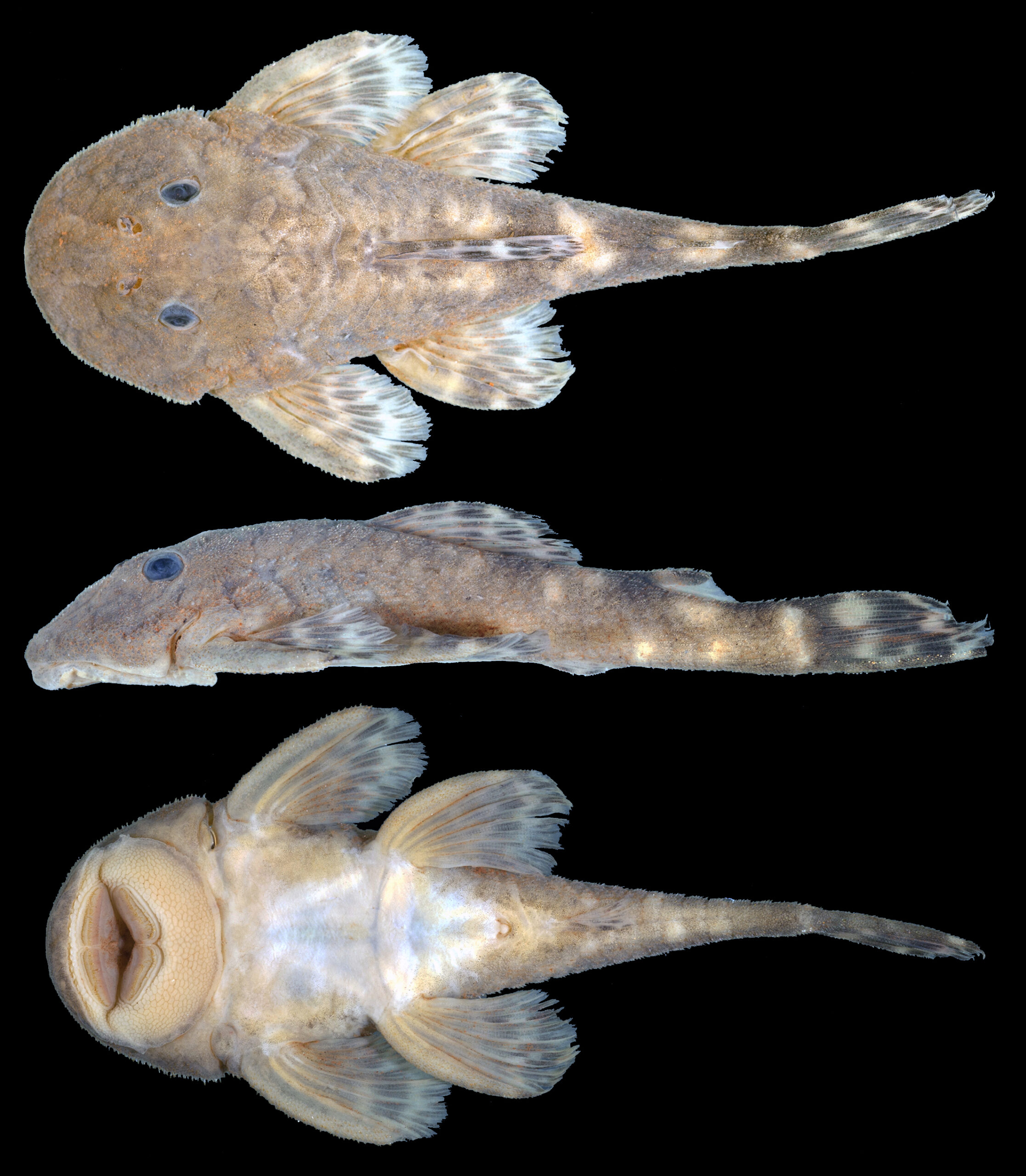
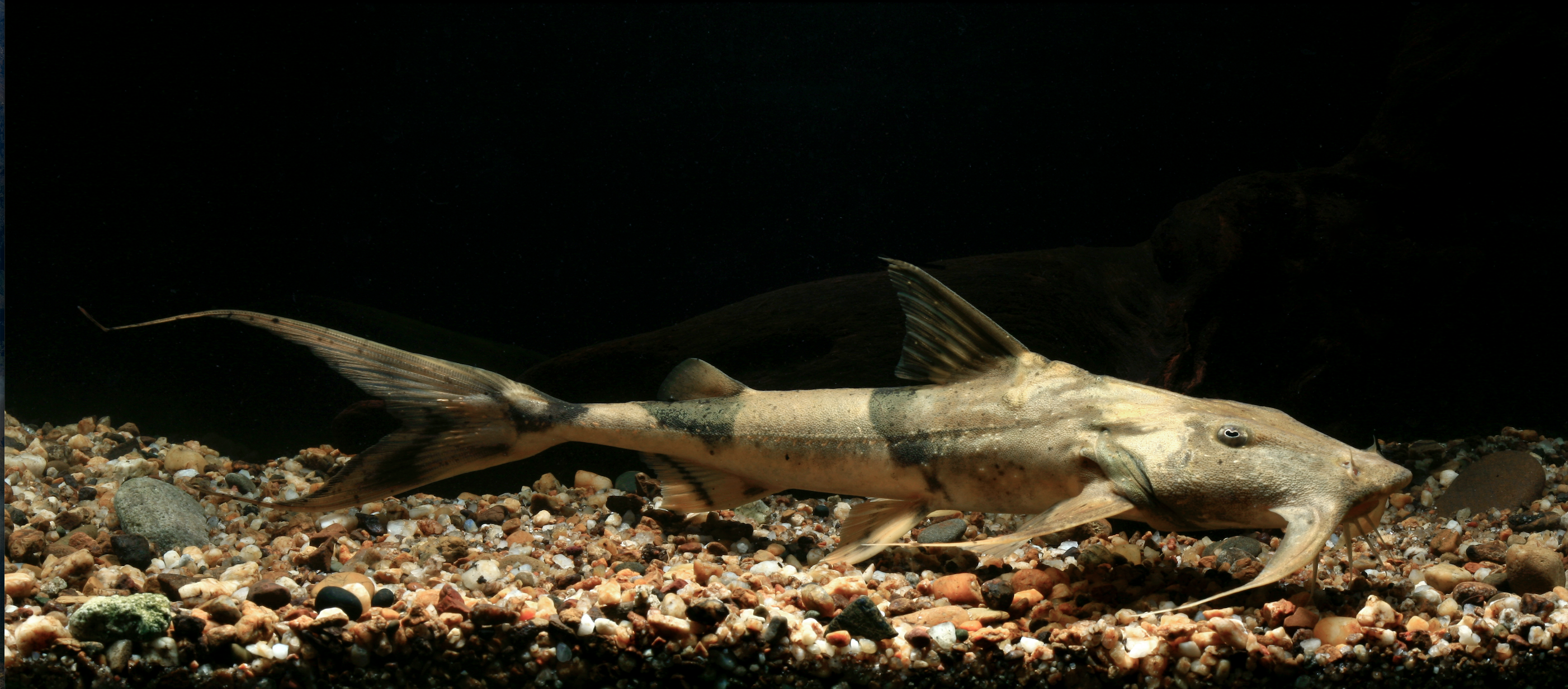
ROBERTO: Yes! A former PhD student described Sturisoma reisi in my honor. As well as that, there is Ancistrus reisi, Phalloceros reisi, Rineloricaria reisi, Scleromystax reisi, and Brachychalcinus reisi. Sturisoma reisi is a very beautiful fish, from the Guaporé River, Madeira River basin, and collected near Costa Marques in the state of Rondônia, Brazil. It’s a really cool fish that lives, as most other suckermouth catfishes, in the bottom of swift creeks and rivers. This particular species can be found more commonly on logs and tree branches fallen into the water.
SHOAL released their annual report New Species 2022 on World Wildlife Day, Friday 3rd March 2023. The report details the 201 species of freshwater fish identified in 2022.
Post Overview
Michael Edmondstone
March 10th 2023
Feature, Interview, New Species
Share this post:
Recent News
One of the World’s ‘Most Wanted’ Lost Fish Is Rediscovered
This fantastic freshwater bird is a lesson in how water management can impact wildlife.
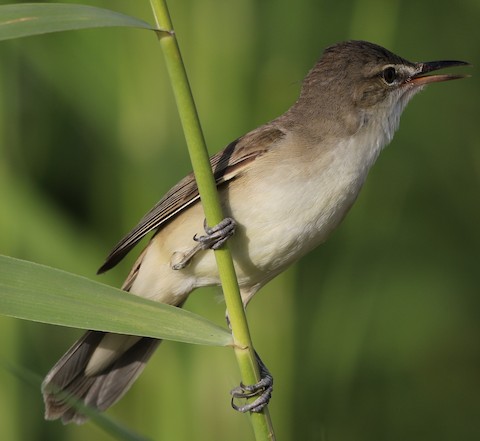
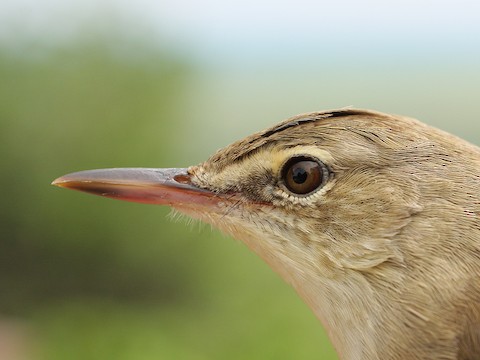
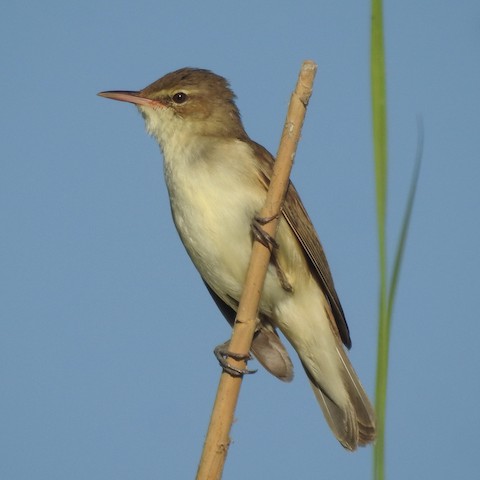
Meet the Basra reed warbler
The Basra reed warbler (Acrocephalus griseldis) is an endemic breeder in East and southern Iraq, Kuwait, and Israel. If you’re in the area, you may spot it by its cold grey-olive-brown plumage and whitish underparts, or follow its gruff ‘chaar’ call and quiet, slow song mixed with deep, bulbul-like notes.
Its preferred environment depends on the time of year. When migrating or wintering, the species is found in thickets and bushlands. Other times its aquatic vegetation in or around shallow, fresh or brackish water, that the species will call home. You can’t beat a dense bed of papyrus and reeds, according to the species.
The Basra reed warbler is one of the 50 landmark species at high risk of extinction identified in SHOAL’s Fantastic Freshwater* report. Published on 19th May 2022 (International Day for Biodiversity), Fantastic Freshwater highlights the diversity and beauty of freshwater species and the immense threats they face to their survival.
For a lesson in how water management can impact wildlife, you can look at the Basra reed warbler. The species’ shallow, marshy wetland habitat has suffered significant loss due to major hydrological projects since the 1950s, from dams preventing water from entering the wetlands, to drainage of the Mesopotamian Marshes in Iraq. This has, in turn, resulted in rapid decline of the species.
The species is being threatened by:
Large-scale hydrological projects causing habitat loss
Threats to habitat from large-scale conversion for agriculture
The species’ population was thought to have stabilised with the recovery of 58% of the original marshland area as of late 2006. Major snow melts in Turkey and Iran coincided with an extensive marsh restoration project. However the Basra reed warbler faces massive decline once again in the face of drought, and more major hydrological projects such as continued upstream dam construction.
Monitoring programmes in Israel and Iraq are keeping a close eye on the future of the species.
If you want to support the work SHOAL are doing to conserve freshwater species through action-driven conservation donate here and don’t forget to subscribe to our newsletter The Stream to get all the latest freshwater news straight to your inbox
5 ways you can help look after freshwater ecosystems on your doorstep (and beyond)
Every little helps bring threatened freshwater ecosystems back from the brink.
If there’s one thing we can relate to here at SHOAL, it’s getting excited about freshwater. Been there, got the Save Denise’s Friends t-shirt. But what next? Here are 5 ways you can help look after freshwater ecosystems on your doorstep (and beyond):
1. Support projects in your local area
Identify your local conservation organisations and explore the opportunities to support their work. Many conservation organisations have opportunities for volunteers to get involved.
If there’s no wetland or freshwater species projects active in your area, maybe you could even start one yourself.
SHOAL works directly with a number of projects around the world. Whilst some are implemented by conservation professionals in the field, others rely on engagement from individuals around the world.
2. Make some noise for freshwater
Learned about a cool conservation project? Read some important freshwater news? Snapped a stunning freshwater photo? Get on social media and share!
It’s vital to keep freshwater visible and part of the conservation conversation. Use #SOShoal to share with other members of the SHOAL network and tag us on Twitter, Facebook or Instagram so we can share the freshwater love on social media too.
3. Donate
SHOAL directs funding towards the conservation projects that are needed most. Donate to contribute towards the work of our wonderful partner organisations in the field, allowing them to make a difference to the survival of some of the most threatened freshwater species.
Reducing your own water use in the house and in the garden can help reduce the strain on our streams and rivers.
There are loads of great tips for saving water, like turning off the tap when brushing your teeth, washing fruit and veg in a bowl rather than under a running tap, or using recycled rainwater to water plants.
5. Practise your freshwater hobby sustainably (and encourage others to too!)
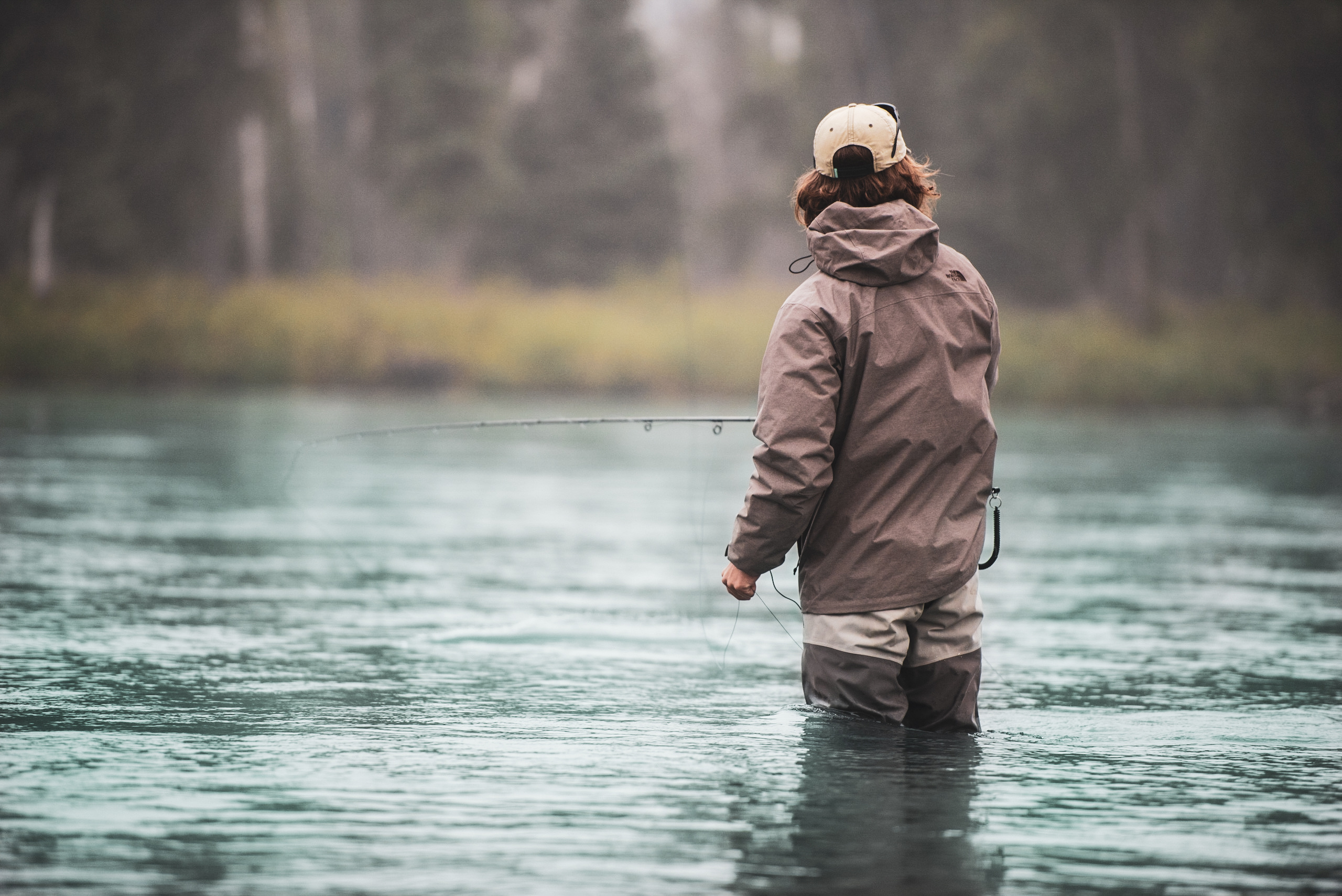
Whether you’re an aquarist or angler, researching the most sustainable way to conduct your hobby is hugely impactful. It not only helps to protect wild populations of freshwater species, but ensures the long-term viability of the hobby.
Join an association or expert network to get involved with other like-minded people and coordinate efforts to safeguard freshwater species or habitats.
BONUS: Join the SHOAL
Stay in the loop with SHOAL and our work to conserve freshwater species through action-driven conservation: subscribe to our newsletter The Stream to get all the latest freshwater news straight to your inbox.
The scale of the challenges facing freshwater is huge, but together we can make a difference.
Post Overview
Michael Edmondstone
January 27th 2023
Feature, SHOAL
Share this post:
Recent News
One of the World’s ‘Most Wanted’ Lost Fish Is Rediscovered
Time to shin the spotlight on one of our favourite freshwater birds!
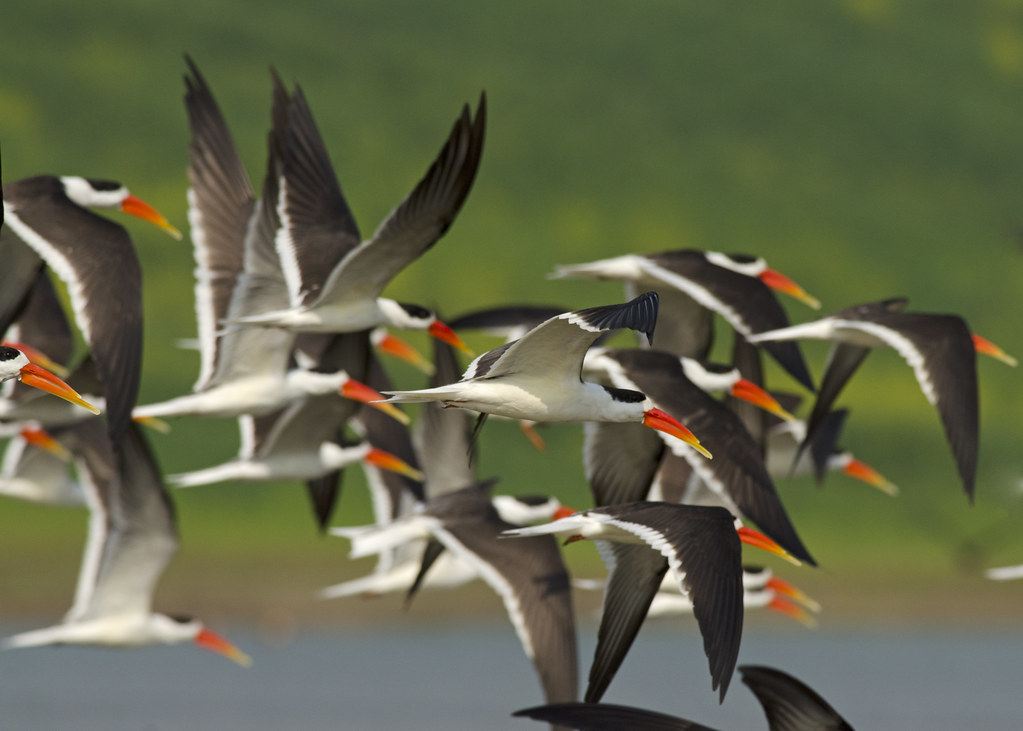
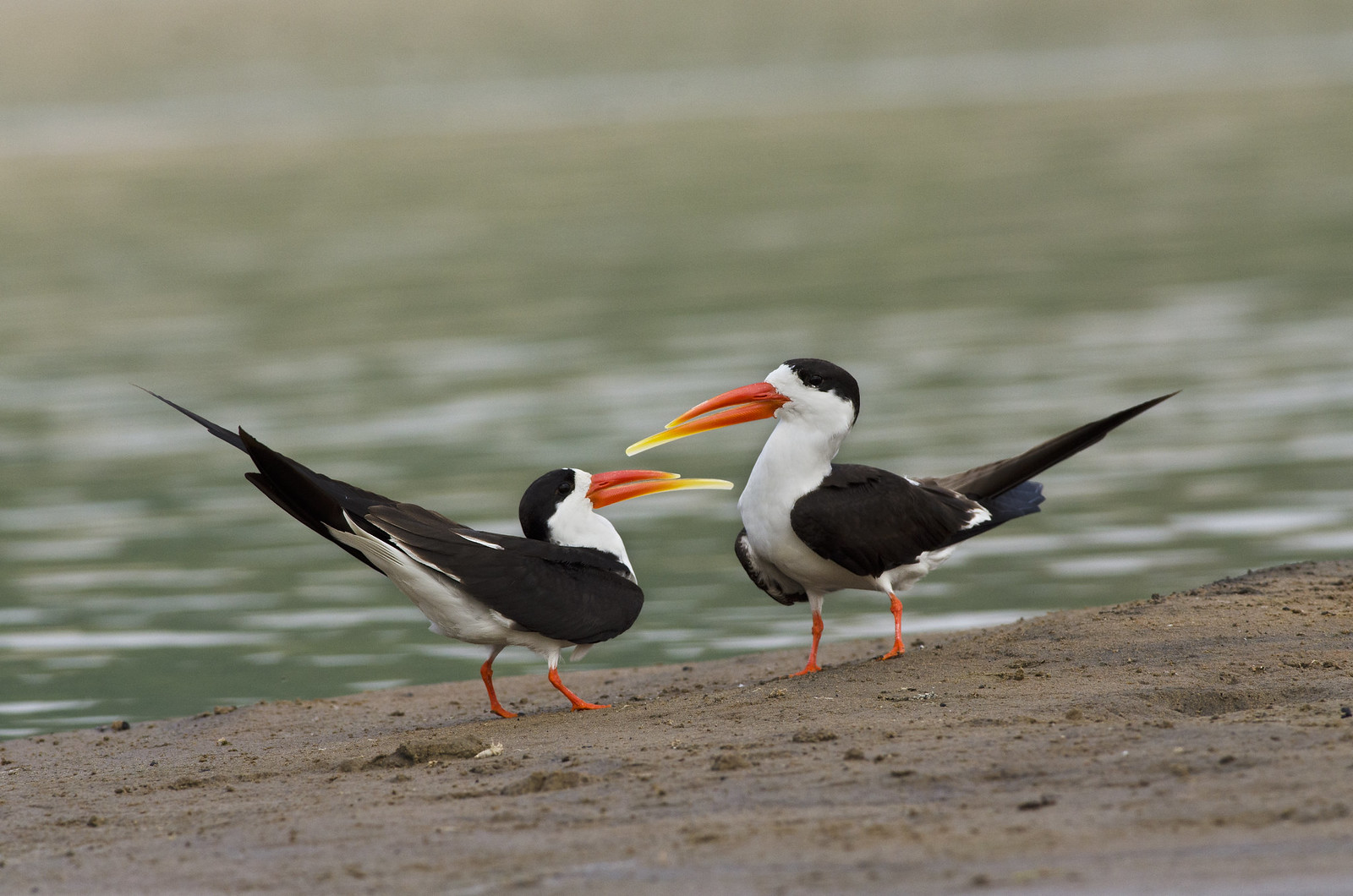
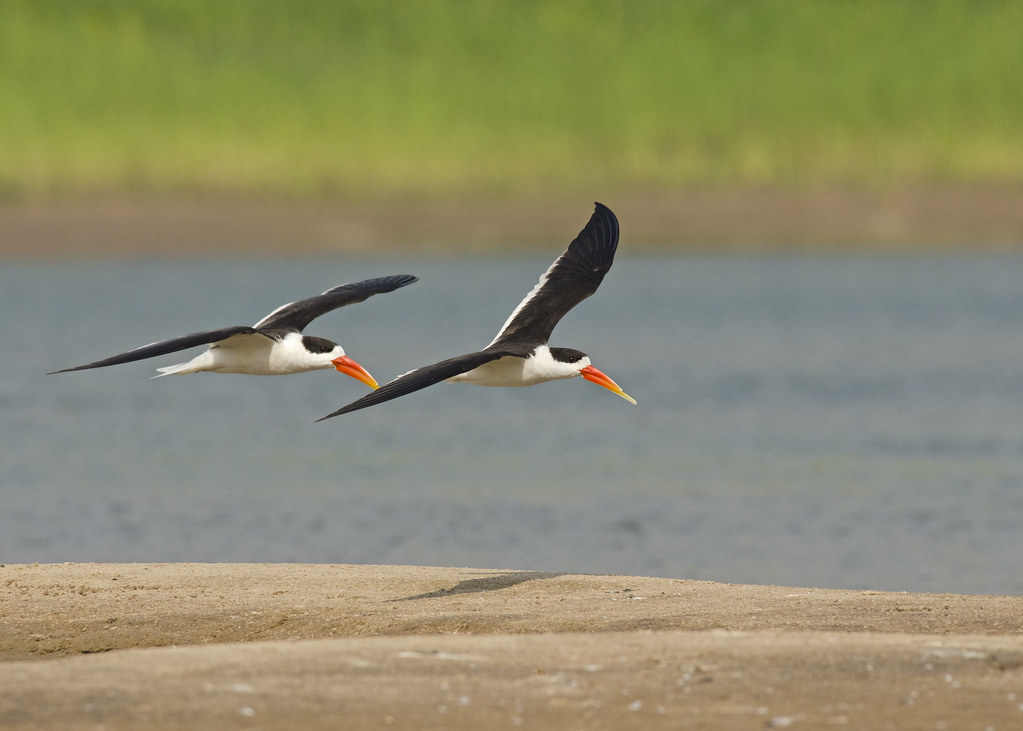
Meet the Indian Skimmer
The Indian skimmer (Rynchops albicollis) gets its name from the way it feeds, flying low over the water surface and ‘skimming’ for fish. The bird is one of our Fantastic Freshwater species, recognisable by its bright orange bill and sharp “kyap kyap” call.
The Indian skimmer forms noisy colonies around rivers, lakes, swamps and coastal wetlands. The bird is now almost completely restricted to India as a breeding bird, particularly the Chambal, Ganga, Son and Mahanadi river areas.
The Indian skimmer is one of the 50 landmark species at high risk of extinction identified in SHOAL’s Fantastic Freshwater* report. Published on 19th May 2022 (International Day for Biodiversity), Fantastic Freshwater highlights the diversity and beauty of freshwater species and the immense threats they face to their survival.
Once common, the species has suffered decades of population decline. Numbers have tumbled more than 20% in the past 11 years, just two generations of the Indian skimmer. Without action, it’s estimated that up to 46% of the remaining birds could be lost in the next three generations (approximately 17 years).
Issues lie in the rate of reproduction, as the species is no longer breeding in formerly occupied parts of its range, such as Myanmar. Other threats have resulted in fewer eggs hatching and fewer chicks surviving to adulthood.
The species is being threatened by:
Increased variation in water levels caused by dams irritation and sand mining along the river of the species’ range.
Human and predator disturbance onto islands where the birds breed.
Pollution from agricultural and industrial chemicals.
At the current rate of reproduction, without concerted conservation action, the Indian skimmer is Endangered with its future in great jeopardy.
The Government of India’s National Mission for Clean Ganga recognises the bird as a priority species for conservation. Projects to conserve threatened riverine birds, with the skimmer as flagship, are being carried out on the Mahanadi, Son and Chambal Rivers.
A range of actions are being taken in these vital breeding grounds as part of the conservation projects. This includes the appointment of nest site guardians, education and outreach work, with the goal of protecting nests to increase breeding success.
If you want to support the work SHOAL are doing to conserve freshwater species through action-driven conservation donate here. Don’t forget to subscribe to our newsletter The Stream to get all the latest freshwater news straight to your inbox
*The Fantastic Freshwater: 50 landmark species for conservation report is led by SHOAL, the IUCN Species Survival Commission (SSC), the IUCN SSC Freshwater Conservation Committee, and the Global Center for Species Survival at the Indianapolis Zoo.
Post Overview
Michael Edmondstone
January 13th 2023
Fantastic Freshwater, Feature
Share this post:
Recent News
One of the World’s ‘Most Wanted’ Lost Fish Is Rediscovered
Cycling for sturgeon (Interview with Matt Spencer)
“Rather than the trip of a lifetime, it was a lifetime in a trip.”
By Eleanor Grice
Matt Spencer hatched a plan in lockdown…
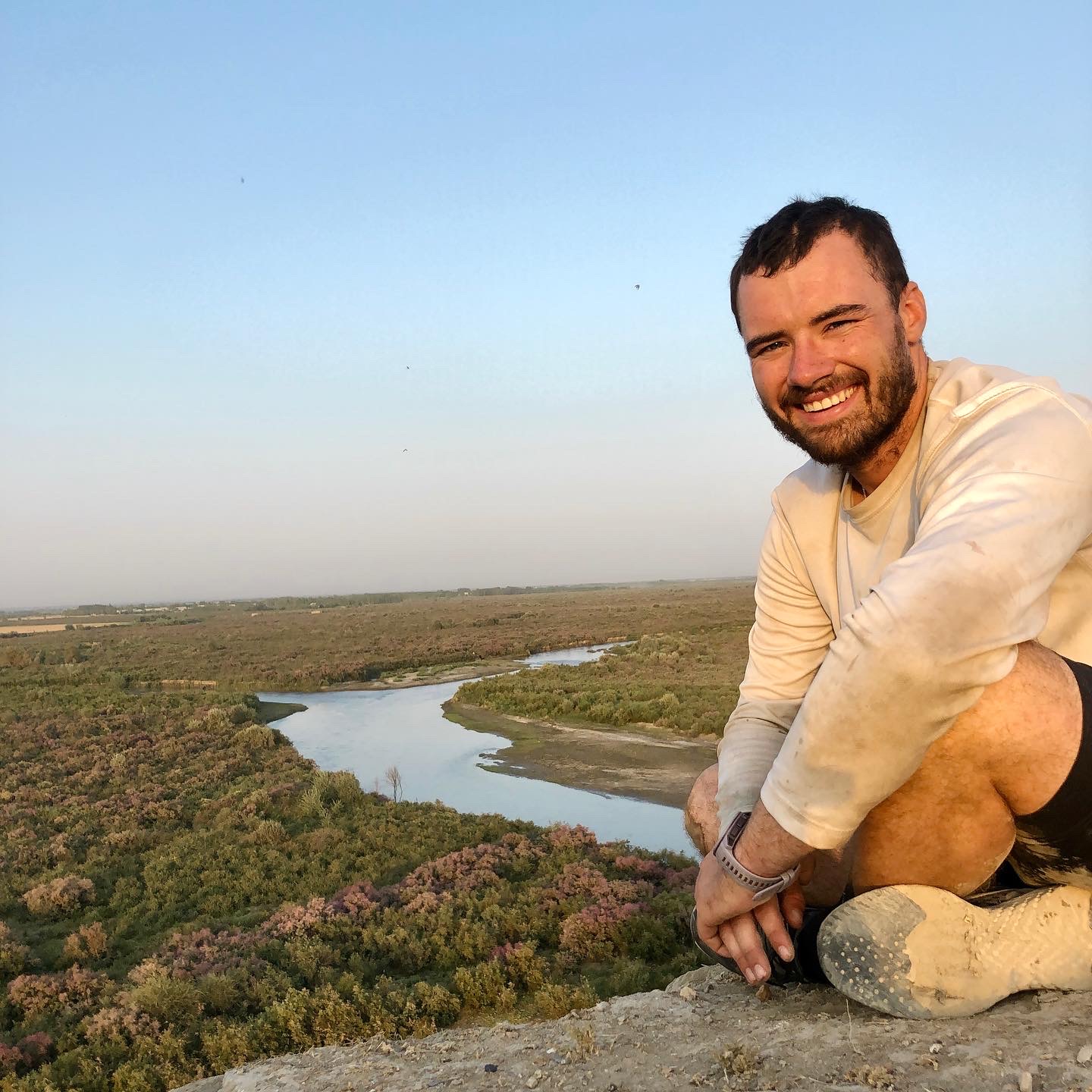
…to leave his job as the UK Fisheries Outreach Officer at the Marine Stewardship Council and cycle 11,000km across Europe and Central Asia. Why? To raise vital awareness of sturgeon declines.
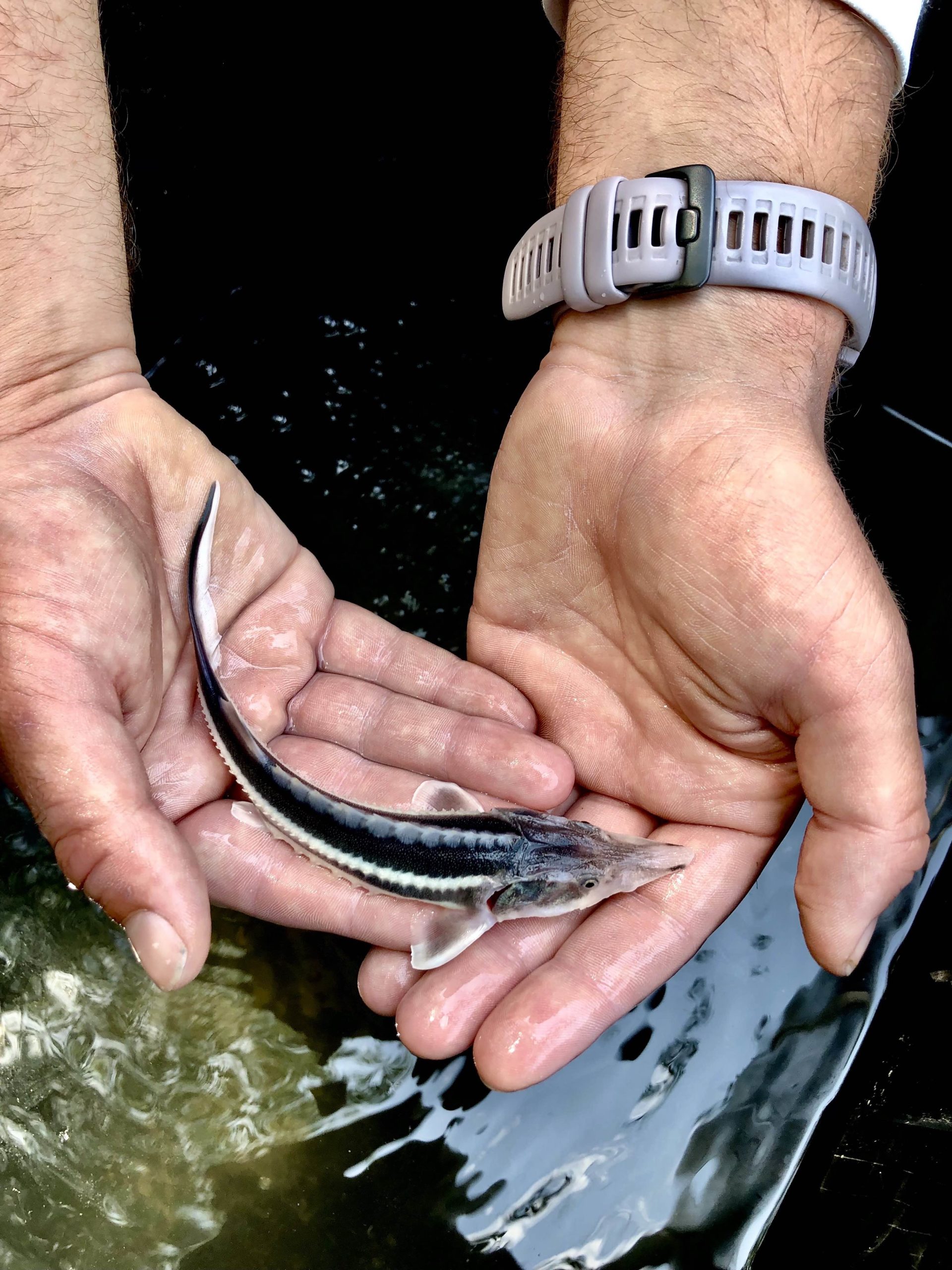
Critical in maintaining ecosystem structures and central to many of the cultures along the rivers they inhabit, sturgeon numbers have plummeted in the last century due to a combination of river pollution, loss of habitat and poaching.
MATT: They’re the most endangered group of species on the planet, we have just 26 species left and they’re all threatened, Endangered or Critically Endangered.
The last time we checked in with Matt, he was still on the road. So now that the adventure is over, how is he feeling? Certainly glad to be reunited with his home comforts, though it seems there has been an adjustment period.
MATT: When I first came to the UK I had to sleep on the floor because the bed was just too soft for me, I was waking up in the night with my joints aching.
SHOAL: Oh my god.
MATT: I’ve slowly worked my way up to the bed.
Matt arrived back in the UK in October – “but I do miss it”.
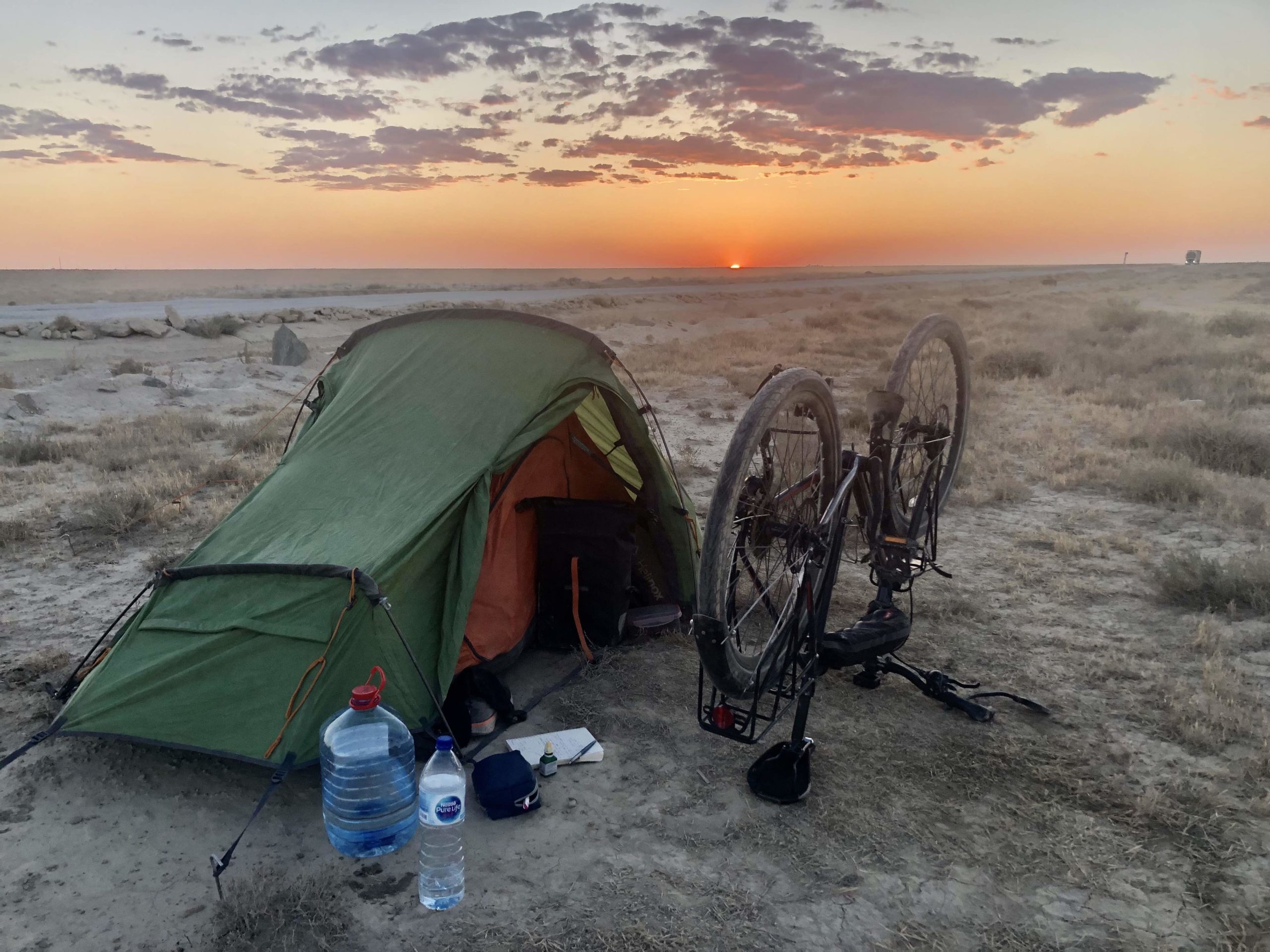
MATT: The best part was I’d unzip the tent in the morning and get a cool breeze of uncertainty. I didn’t know what would be happening, who I’d be meeting, what I’d be seeing.
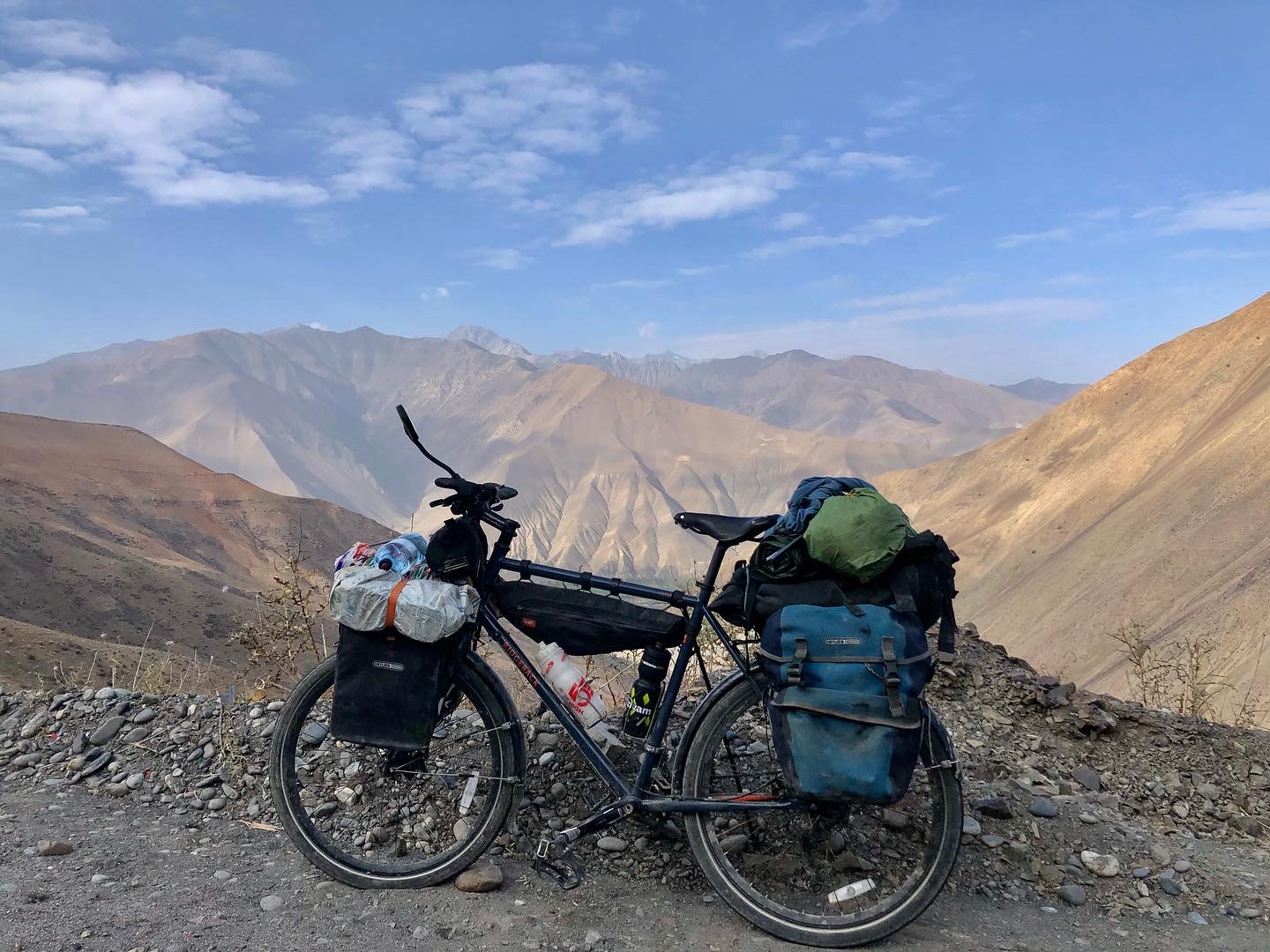
…via extreme terrain from deserts to mountain passes, was conceived during the pandemic. Like everybody else, Matt was stuck at home and grew extremely familiar with his surroundings. His “tiny London flat” had a world map on the wall, that across the weeks he began to obsess over.
MATT: I’ve always had a fascination with sturgeon and I could just track the rivers where they were still present. The Garonne, the Po, the Danube. I then started looking at what’s in between the rivers. I was like well I’ve got to cross the channel, then there’s the Alps, then you’ve got the Black Sea. It was quite cool no-one had ever done this before. There’s always that weird tinge of pride when you’re first to do something.
SHOAL: Were you nervous?
MATT: It’s only when you tell work you’re leaving that you’re at a point of no return. I wasn’t nervous about quitting; I was actually excited to tell them the news because I knew in my heart of hearts this was shattering the glass. The only time I was really nervous about the trip was the day before I left because I hadn’t done a lot of training. Everyone at my leaving drinks was like Matt we didn’t know you liked cycling you’ve never spoken about it before. When I told them I didn’t they went from laughter to [being] quite concerned. It kicked in that I was leaving behind my life and everything that I knew. It was a thrill.
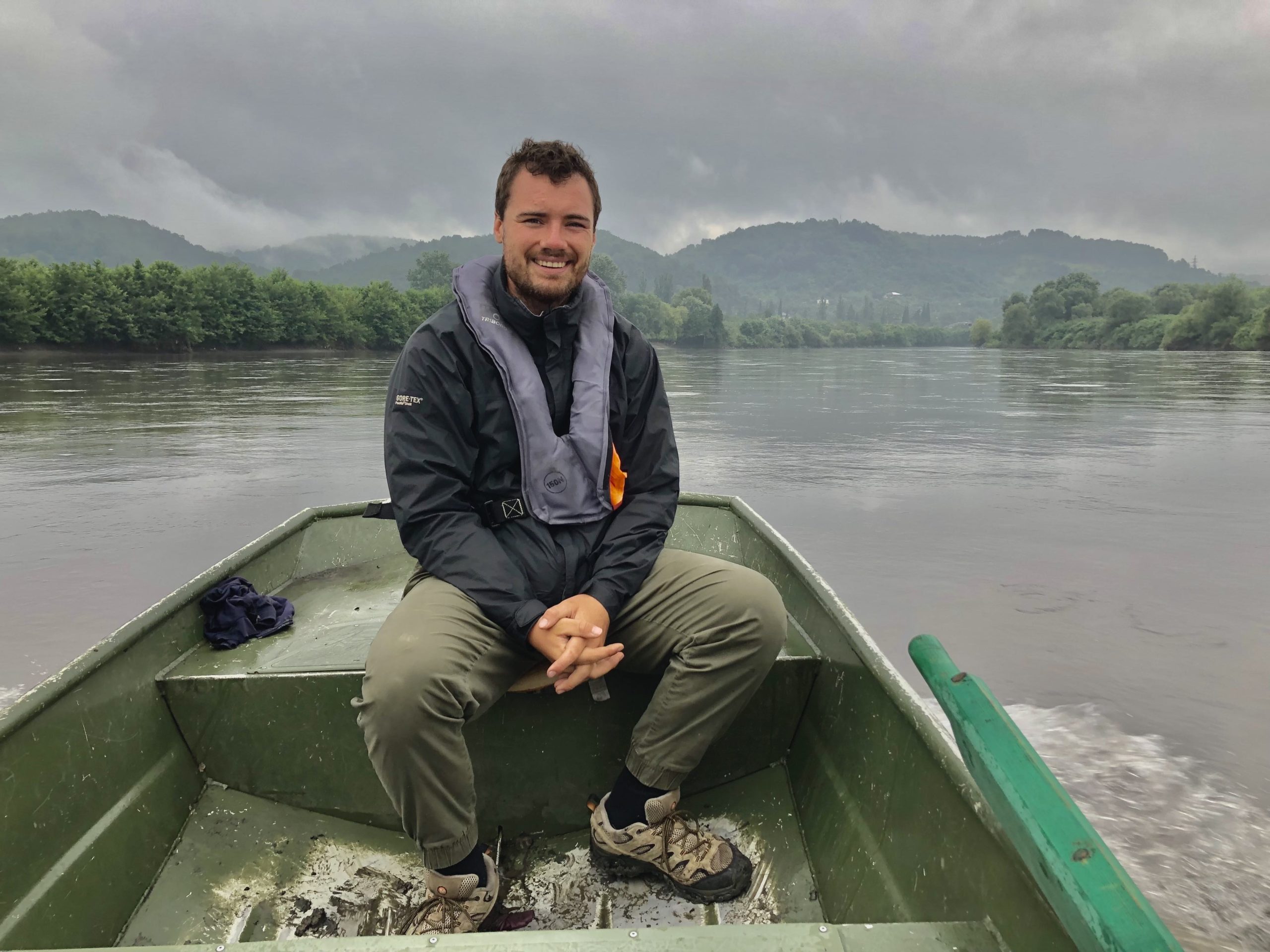
…in the Marine Stewardship Council, Matt has engaged with a lot of fish species but for him the sturgeon is special. Before this recent adventure, Matt joined a project in Georgia with Fauna and Flora International looking at ways to restore populations of sturgeon in the Rioni River. Six species of sturgeon used to breed there, but due to poaching, environmental degradation, and dams those numbers have fallen significantly. It was on that project Matt had the “moment when I realised what I want to do for the rest of my life”.
As he excitedly talks about how his latest journey gave him the chance to see the different communities and how they approached conservation of the fish, it’s clear Matt’s passion for sturgeon is burning as brightly as ever.
MATT: I have a tattoo now.
SHOAL: Wow – was it planned or spontaneous?
MATT: It was something I wanted to do. I got it on my last day in Tashkent. No regrets. They did a fantastic job, it’s on my leg.
SHOAL: A sensible move to get a leg tattoo on the final day and not half way through, when you’re cycling.
…he mentioned a phrase that stuck with us – “the madness that inspired and transpired”.
MATT: Well, the madness that inspired. Everyone who I told about my plan to cycle halfway across the world for fish was just like, that is complete lunacy. Fair enough. And all the madness that transpired. Drinking with policemen until the early hours. Hearing people walk past my tent at 2am in a forest in Romania. A lot of near-misses: drivers, dogs, landslides…
SHOAL: Speaking of – I imagine there were bumps in the road, literal or otherwise. What unexpected moments did you navigate?
MATT: Bad moments are a bit like thunderstorms. They’re normally fleeting but pretty grim. I had a week from hell in Hungary. It was about two months into the trip and loads of my gear started failing on me, plus basically six days and nights of rain. That was tough. I got dysentery in Uzbekistan, but I was meeting a Russian sturgeon scientist so I had to keep going. If I missed him it would be a complete mess. It led to some quite funny moments though, where I had to make an emergency pitstop at the side of the road and people in minivans were just driving past. Gives you all you need to know about that moment in my life.
SHOAL: It’s one of those things though that a month from now, a year from now, ten years from now will just be an interesting thing about Matt.
MATT: Yeah, about four days later I was laughing. At the time I was like “God my life absolutely sucks right now,” but then when you’re on the recovery stretch you can laugh at the misfortune.
The incredible journey spanned not just countries, but continents…
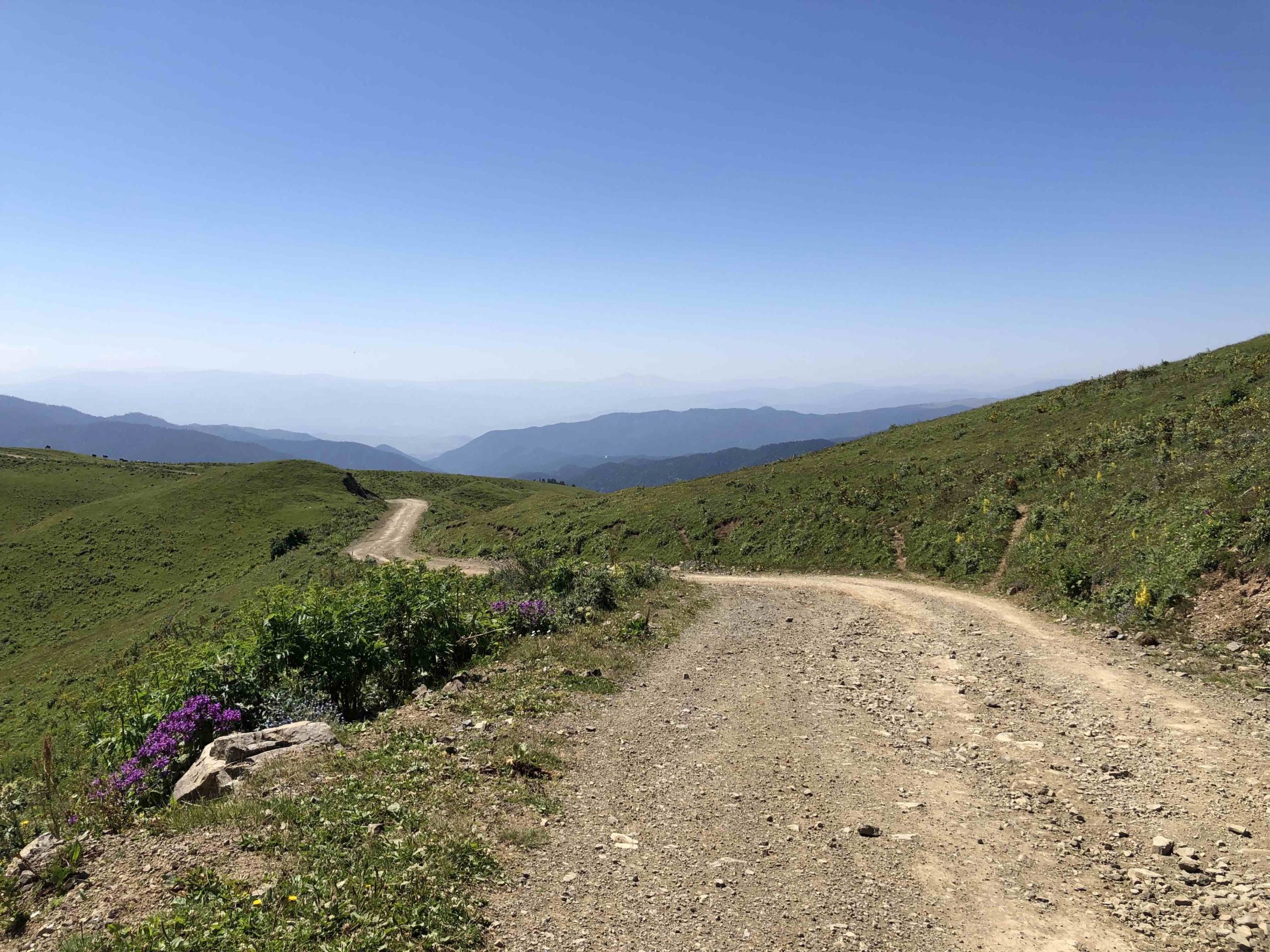
…with Matt’s cycle route based on specific rivers known for their sturgeon populations. From the Garonne in France across the Alps, then following the River Po across Italy. Matt then followed the Danube for several hundred miles before crossing the Black Sea and arriving in the Rioni basin. Next he traversed Georgia and Armenia before having to fly to Aktau on the coast of Kazakhstan, as Azerbaijan was still sealed due to covid. From here it took nine days crossing a desert into Uzbekistan and a jaunt over the Fann mountians in Tajikistan before finally arriving in the Syr Darya in the Fergana Valley.
MATT: Armenia was amazing. To do Georgia and then Armenia it was like gold followed by platinum. I spent a lot of time in southern Georgia near a place called Vardzia. To get there I had to cross the Zekari pass which separated lush verdant mountains on one side into arid Steppe conditions within two hours of cycling. There was barely anyone around, a really ancient part of the world. That was a real highlight.
SHOAL: I’ve been to Georgia and I am personally obsessed with the food there.
MATT: Yes! I had one guy tell me “don’t go to Georgia the cuisine is awful” and I was like…khinkali? Are you mad!
SHOAL: That’s a crazy thing to say, I mean khatchapuri? I’m addicted.
MATT: Romania’s epic, it’s so wild. People think for wilderness you have to go to Alaska or Patagonia, there are parts of Romania which are genuinely still wild. We went down through Uzbekistan, through Tajikistan and then up back into the Fergana Valley. That was mind-blowing. There were so many good spots. The food was wicked.
SHOAL: Were you picking up local recommendations or did you go in with plans for what you would do and eat?
MATT: A little bit of both. France and Italy I’d been to before and I had friends who are French and Italian so I just asked them (a) do you have any family I can stay with for free and (b) any recommendations? In France a slight detour I made was for the Tarne Gorge. It’s some of the best cycling I did the whole trip. Stunning. The weather was awful which meant everyone else was off the road. Just me and some other guy barrelling through headwinds and rain for three days.
SHOAL: It’s nice to have the freedom to be able to incorporate that into the trip.
MATT: Yeah, and credit where credit’s due – Google Maps is incredible. As soon as I’d outlined the route I’d look for the rough country roads. The idea was to double the distance and half the traffic, rather than double the traffic and half the distance. You plan a rough route, but other than that you just follow your nose. Sometimes I just get a really good feeling about a path and I’ve got six months to do it, so I’ve got a bit of time to play with. There would be times when I wouldn’t look at my phone, wouldn’t look at a map, I’d just follow this path. So that was fun.
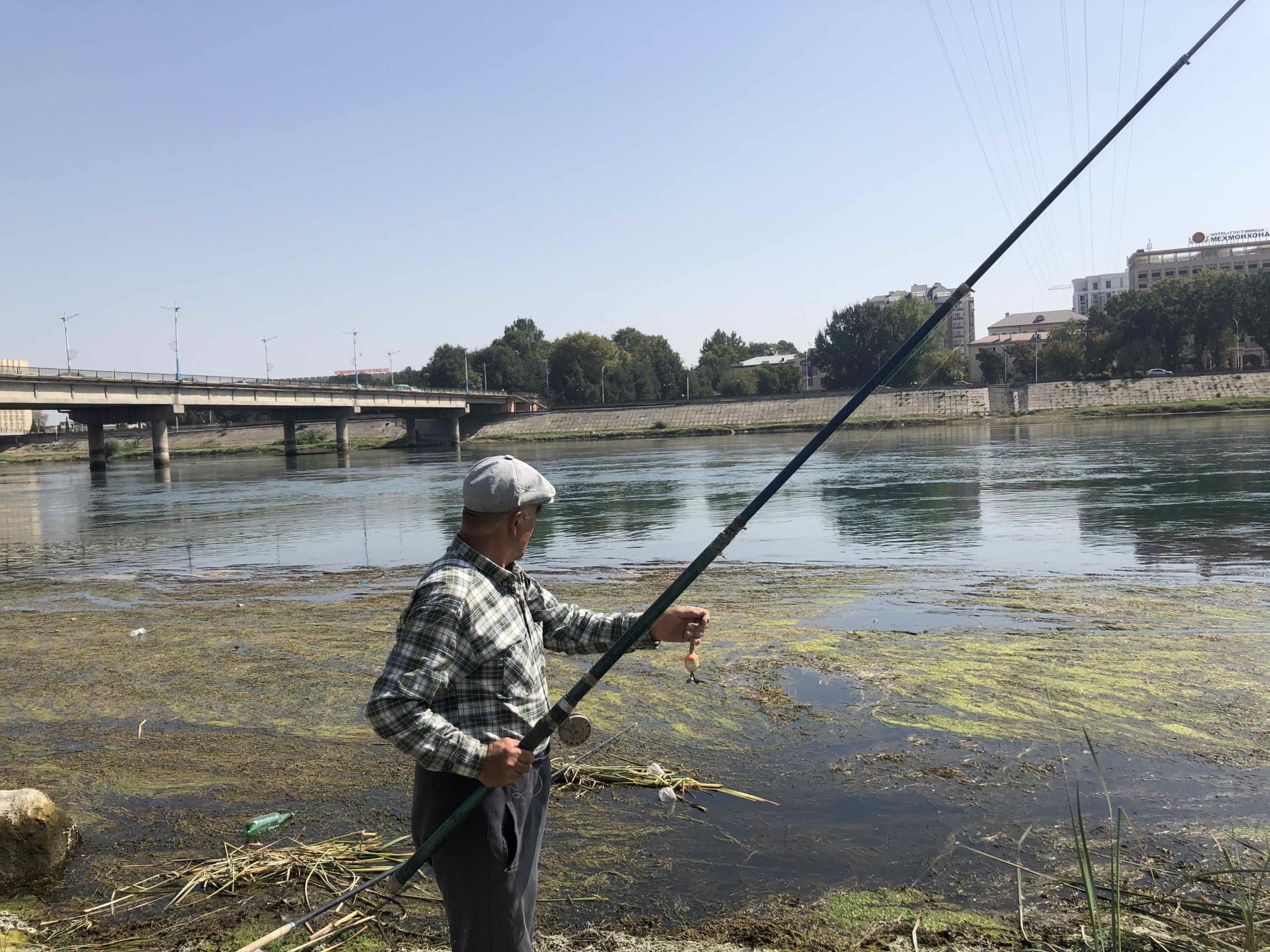
…(before any spontaneous tattoos were booked!) was to the Syr Darya to look for the shovelnose sturgeon, one of SHOAL’s 10 Lost Fishes. Matt met up with Russia and Central Asia sturgeon expert Alexey Cherniak. The duo set out to search the Fergana Valley, the area where the last recordings of the shovelnose sturgeon were taken.
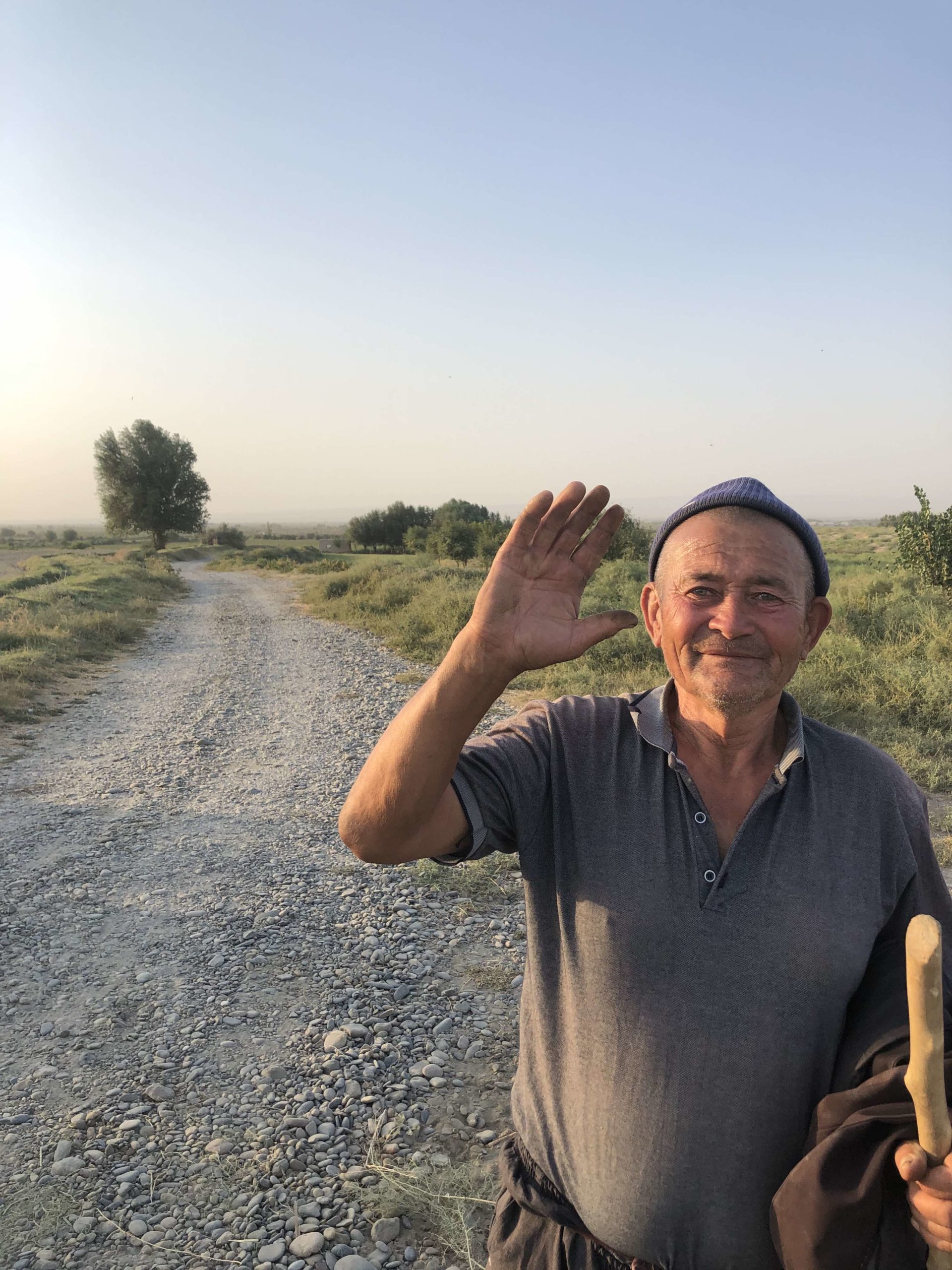
MATT: It was wicked to go into these really remote, rural communities. We’d sit down, sometimes over food, sometimes informal chats by the road or by the river. The older generation fishermen said they hadn’t seen it for 60 years. Anyone under the age of 60 hadn’t even heard of it. So we can probably put a line through that area in terms of hosting the sturgeon.
Disappointed by the outcome of the search, Alexey and Matt are already talking about going further upstream into Kyrgyzstan as the next port of call. Fishermen in the area have anecdotally reported catching the sturgeon in the past 20 or 30 years.
MATT: I built up in my head that I was going to see it, which I probably shouldn’t have done, but when you’re cycling by yourself you don’t have much else to think about. You do feel a bit like you’ve let everyone down, but at the same time you sit back and realise the chances were vanishingly small.
SHOAL: Especially at the end of a trip like that, you must start to feel like this is the Hollywood final act moment.
MATT: There were so many close scrapes and near shaves that you think, no matter how vanishingly small the chance of finding a shovel nose we’ve been so lucky over the past few months you might get one final roll of the dice. But it wasn’t to be.
MATT: I guess for any future employers reading, my answer is no massive trips planned. I’ve definitely got the bug for central Asia, I’d love to go back there. Unfortunately reality is knocking so it’s feet under the table time. And then maybe disappear again.
SHOAL: Work until you have the resources to travel again. And repeat.
MATT: Exactly, life is there for the living right? It’s a great mentality to live with. And it doesn’t need to be for a higher cause, but in moments where I was properly down, knowing that I was cycling for a cause was a massive preserver of energy for me.
SHOAL: With that in mind, for anyone who comes across your journey – what can they do?
MATT: Unfortunately the donation link is now closed. However the cause is Fauna and Flora International so if you want to donate money please donate it to them or SHOAL, another group close to my heart.
Obviously it’s a tough time for everyone financially. If you can’t donate then try and volunteer, if you can’t volunteer then just take 10 minutes a day to walk around and appreciate how majestic wildlife can be. You don’t need to disappear to Alaska or whatever to do that. Just go to your garden, or to a local park.
Be in wonder of something as simple as a bee or a spider and think of ways you can help them out. Small things like that do make massive differences.
SHOAL: Absolutely. Thanks so much for chatting with us Matt. What an incredible journey.
MATT: Best thing I ever did, riskiest thing I’ve ever done – but it paid me back far more than it cost me.
To follow Matt’s future adventures…
…make sure to follow him on social media, and check out his blog One Average Spoke to dive further into his incredible trip.
The festively named starry night harlequin toad is not just for Christmas, and neither are the threats they face.
‘Tis the season (to talk about the starry night harlequin toad)
Meet the starry night harlequin toad
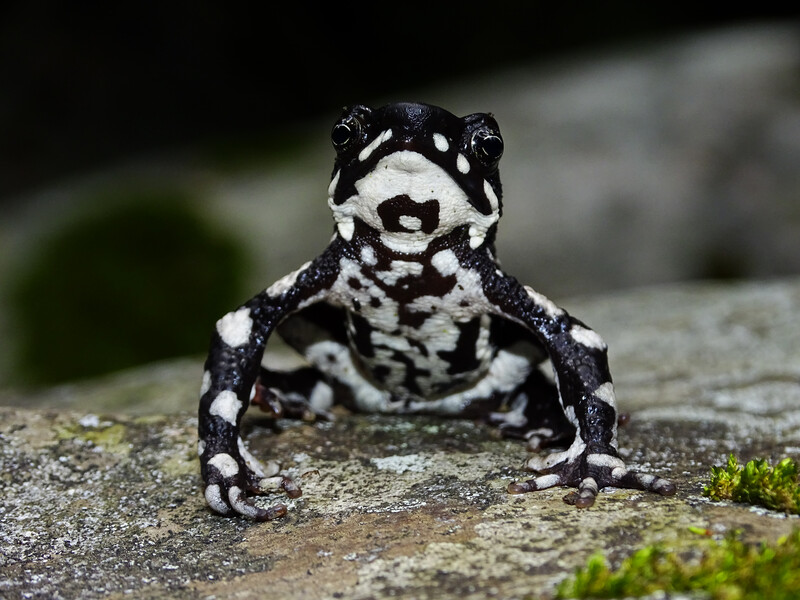
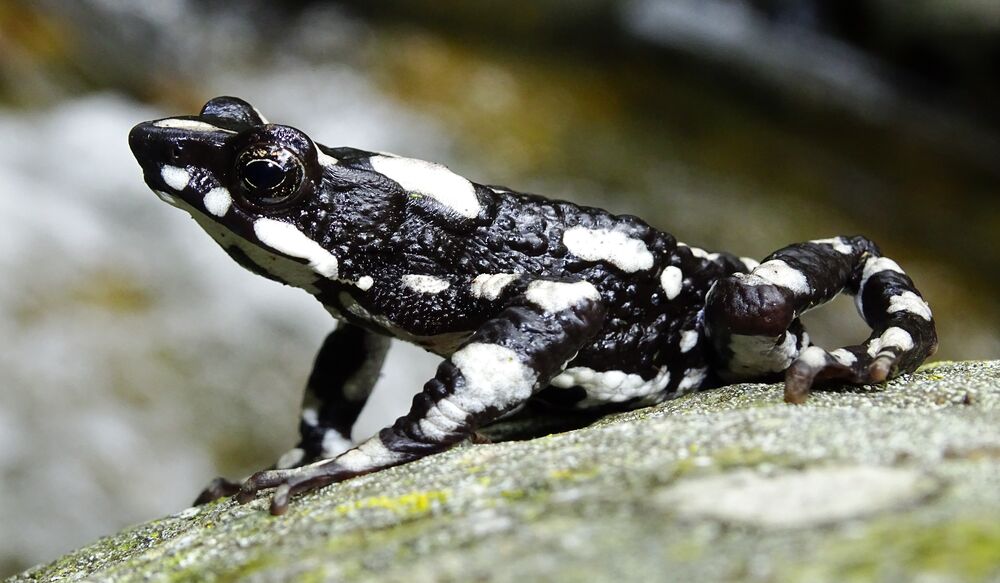
Named for the clear, dark, starry skies in its mountain habitat of Colombia’s Sierra Nevada de Santa Marta, the starry night harlequin toad (Atelopus arsyecue) is one of the most striking of our Fantastic Freshwater species. Less than two inches in size, the stunning amphibian is recognised by its shiny black skin studded with ethereal white spots.
Sierra Nevada de Santa Marta is home to the indigenous Arhuaco people of the Sogrome community. They call the toad ‘gouna’ and consider it a guardian of the water and a symbol of fertility. Inspiring their ancestors for millenia, the species is viewed as an authority of the natural world. It serves as an indicator to signal actions including when to plant crops, or perform spiritual ceremonies.
The rediscovery of the starry night harlequin toad highlights the power of local, indigenous knowledge in protecting and recovering species. Just a few years ago scientists feared the Critically Endangered species was lost. It had not been documented since 1991.
This changed in late 2019 with a unique and poignant partnership between the indigenous people and Fundación Atelopus. Despite the species being lost to science for nearly 30 years, it has never been lost to members of the Sogrome community.
The Colombian NGO, a partner of Global Wildlife Conservation, were in dialogue with mamos, spiritual leaders of the Sogrome community for four years before they were allowed to see (just see) the starry night harlequin toad. This is a test of trust the Arhuaco call “resisting temptation”.
Several more months passed before the community permit the Fundación Atelopus to return to the sacred Sierra Nevada de Santa Marta to achieve photo documentation of the rare amphibian on a Global Wildlife Conservation-funded expedition
Other harlequin species “rediscovered by scientists in recent years include the Costa Rican variable harlequin toad in 2013, the Azuay stubfoot toad in 2015, and the longnose harlequin frog in 2016.
Other harlequin species “rediscovered by scientists in recent years include the Costa Rican variable harlequin toad in 2013, the Azuay stubfoot toad in 2015, and the longnose harlequin frog in 2016.
Not just for Christmas
The starry night harlequin toad is one of the 50 landmark species at high risk of extinction identified in SHOAL’s Fantastic Freshwater* report. Published on 19th May 2022 (International Day for Biodiversity), Fantastic Freshwater highlights the diversity and beauty of freshwater species and the immense threats they face to their survival.
According to the 2004 IUCN Red List of Threatened Species, 80 of the known 96 harlequin toad species are Endangered, Critically Endangered or Extinct in the Wild. This is due in part to the rapid spread of the amphibian-killing fungus known as chytrid. Scientists have observed that harlequin toads are hit especially hard by the disease.
The species is being threatened by:
Habitat loss and degradation from agricultural activities including livestock, along with fire and logging.
Conversations continue between Fundación Atelopus and mamos. It’s hoped that the special relationship will combine Western scientific knowledge and the indigenous scientific, cultural and spiritual knowledge to give the species its best chance going forward.
If you want to support the work SHOAL are doing to conserve freshwater species through action-driven conservation donate here. Don’t forget to subscribe to our newsletter The Stream to get all the latest freshwater news straight to your inbox
Come with SHOAL to Mexico to see Extinct in the Wild golden skiffia reintroduced to the Rio Teuchitlán.
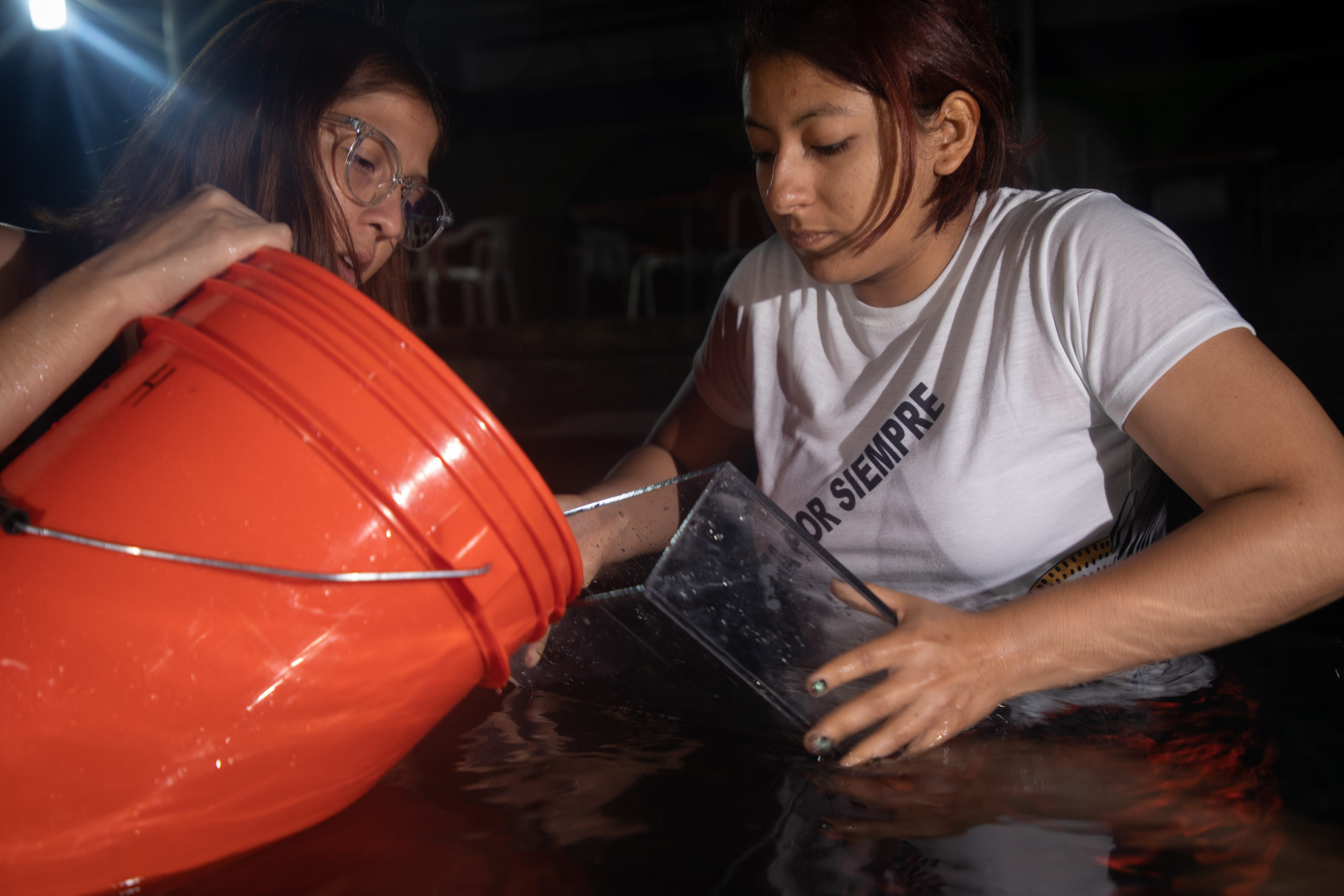
On November 4th 2022 a team from the University of Michoacan, Mexico, reintroduced over 1,000 golden skiffia (Skiffia francesae) into the Rio Teuchitlán. The team was led by Omar Domínguez-Domínguez, and the Goodeid Working Group, with vital support from Chester Zoo.
Just a couple of weeks earlier the SHOAL team packed their bags for Mexico to join them for this (fresh)watershed moment. We also participated in a workshop to plan conservation action for the Mexican goodeids – one of the world’s most threatened groups of fishes.
Time to fly the nest mesocosm
Our first stop was to the Aqua Lab at Michoacan University of Mexico in Morelia to see their breeding facilities. The Fish Ark facility at the university has been breeding golden skiffia in captivity for years in preparation for this re-release.
Fish Ark Mexico is a conservation project in central Mexico that focuses on 41 highly threatened species of freshwater fish. The project has more than 20 years of experience in Mexican fish conservation and has succeeded in keeping 39 species of Endangered and Extinct in the Wild Mexican goodeid species in captivity.
“The Aqua Lab itself is a hugely impressive facility, with three shelves of tanks stretching wall to wall either side, providing ample space for the breeding of threatened fish species, including the golden skiffia and tequila splitfin. Once the fish are fully grown, they are moved to large outdoor pools on the grounds of the Aqua Lab, where they can adapt to living with much more space. Also bred in the Fish Ark are species of Critically Endangered Mexican salamanders.”
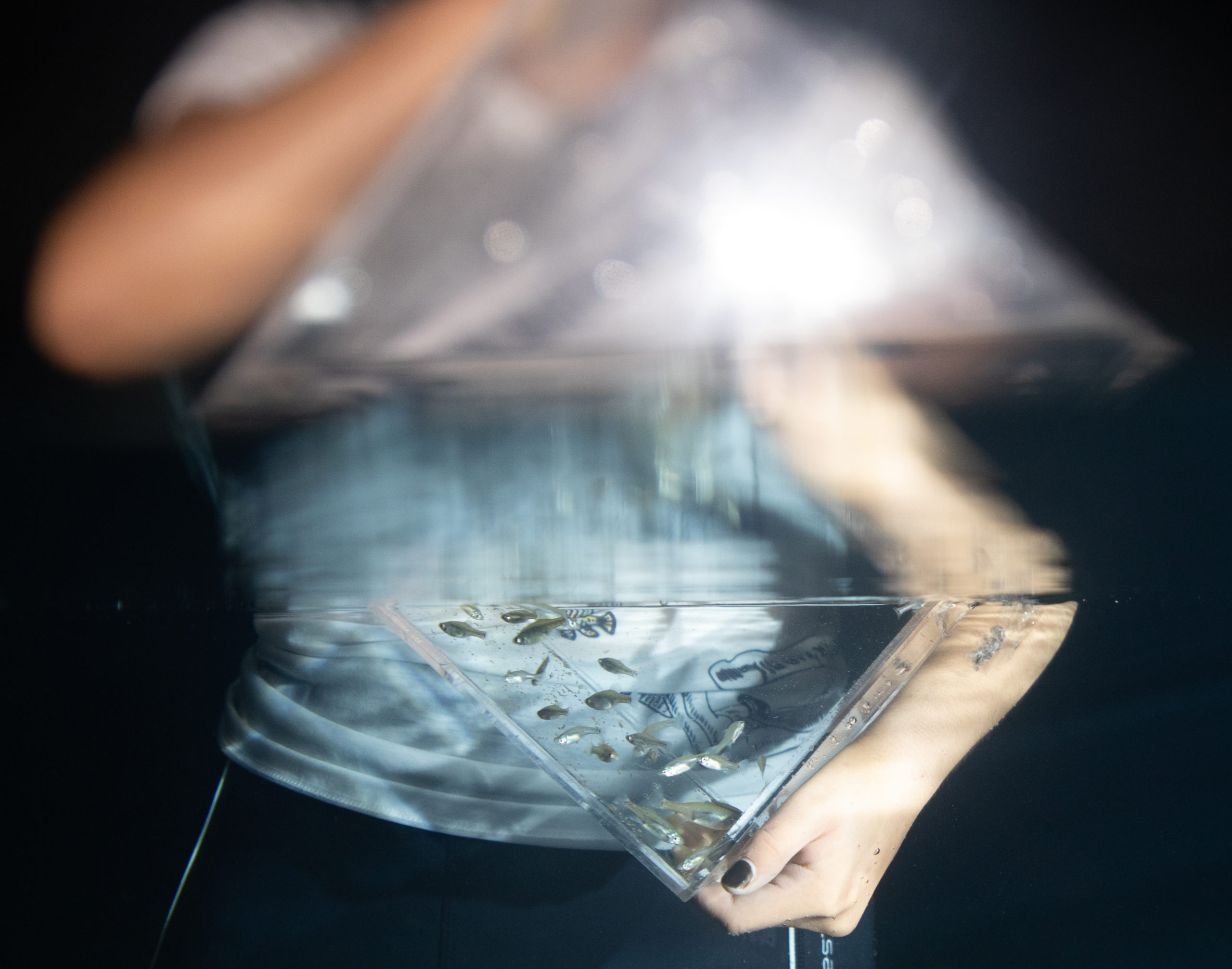
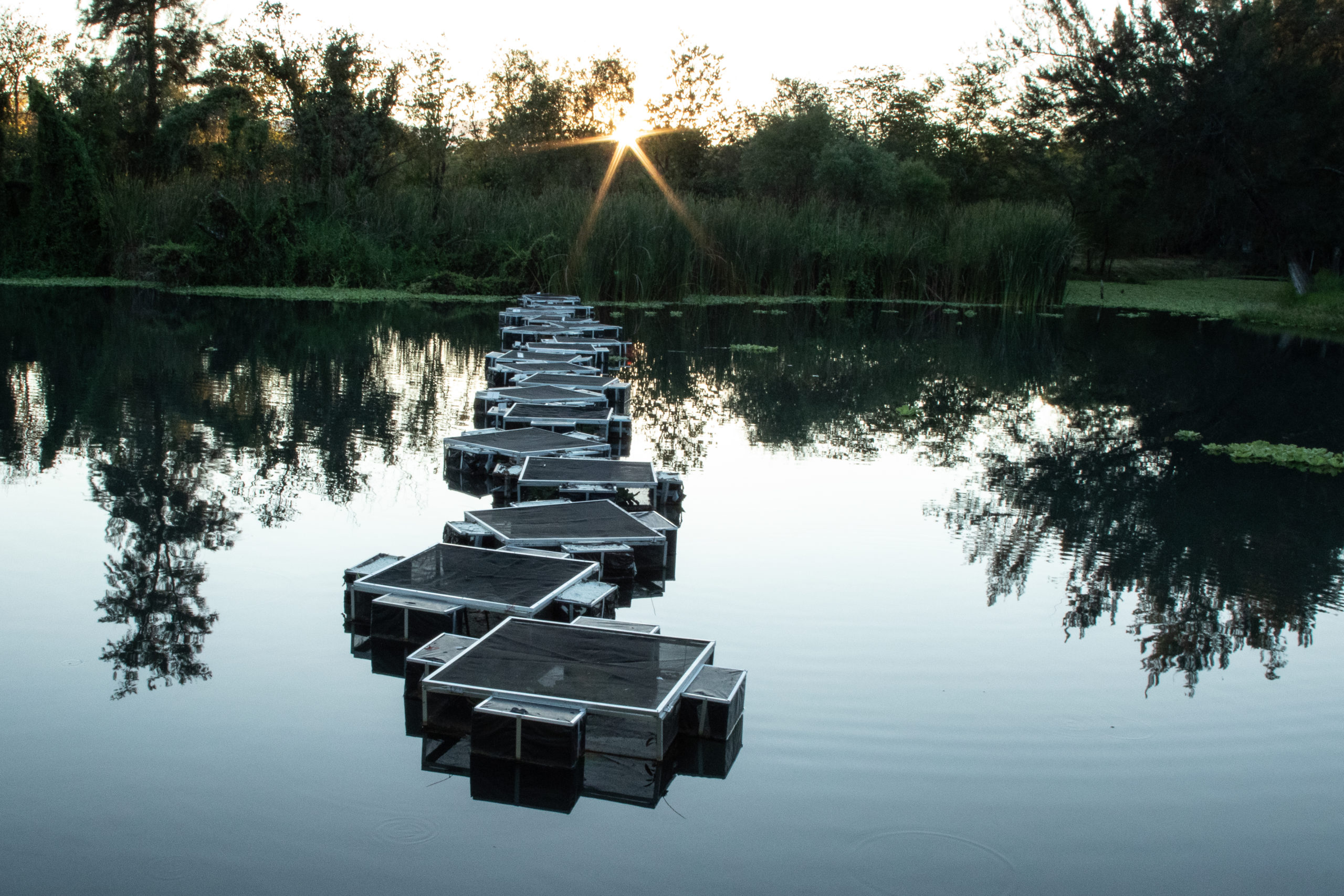
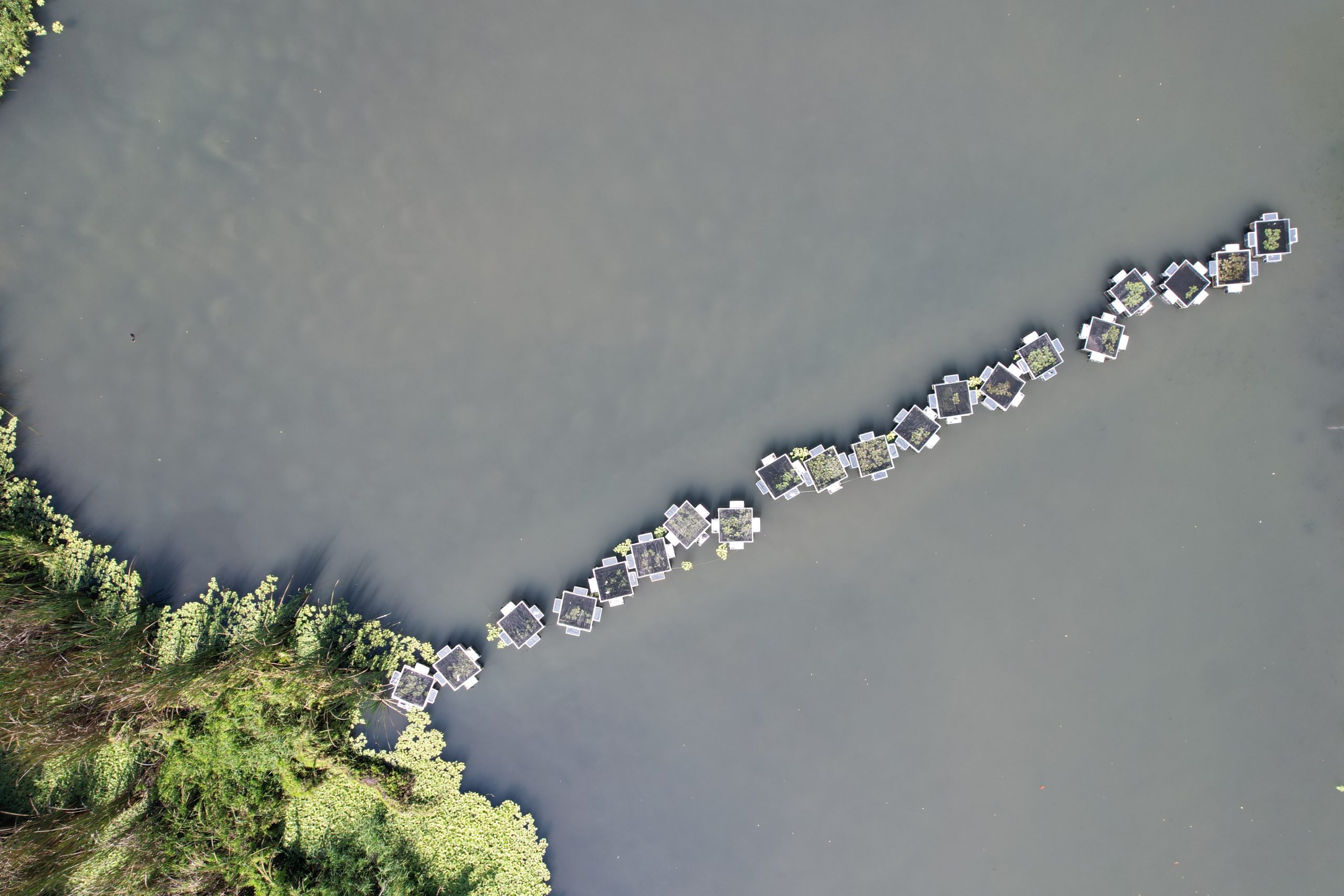
Fishes due for release are dewormed, marked and placed in secure ponds known as mesocosms to prepare them for a return to the wild. The mesocosms float in the species’ natural habitat but are protected by netting, allowing fish to adapt to semi-natural conditions without chance of predation.
The golden skiffia has not been seen in the wild since the 1990s. Human impact such as dam construction, water extraction, pollution and the introduction of invasive species have caused major changes to the skiffia’s habitat, pushing it to extinction in its only home.
The release comes six years after the successful reintroduction of the tequila splitfin (Zoogonetcus tequila) which faced very similar threats to the golden skiffia. The species was also bred in a conservation breeding programme and released into the Teuchitlán River. Domínguez-Domínguez also led that work. The population of tequila splitfin there is now thriving, and the project has been cited as an International Union for the Conservation of Nature case study for successful global reintroductions.
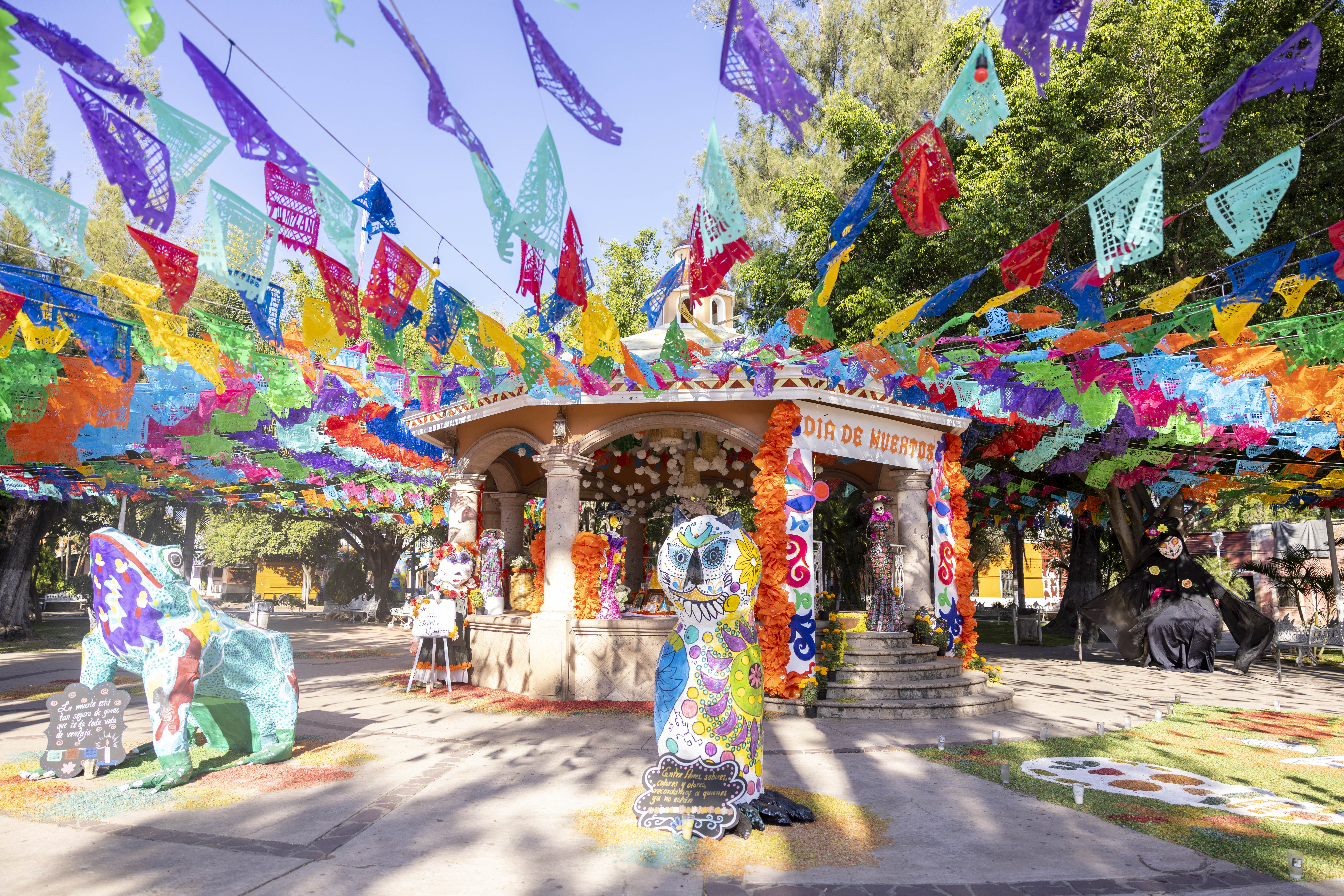
Día de los Muertos, or Day of the Dead, is a celebration of life and death. Being part of this expedition, the SHOAL team got to experience the colourful celebration in all its life-affirming glory.
“The Day of the Dead is a traditional Mexican celebration, when it is believed that people’s deceased ancestors return to the land of the living for one night, to talk and spend time with their families. Releasing the golden skiffia around this time is a metaphor for how the species has come back from the dead to return to its home, not for one night, but forever.” Omar Domínguez-Domínguez, professor and researcher from the Michoacan University of Mexico, who is leading the golden skiffia reintroduction.
“The golden skiffia release came two days later, on 4 November. The day began at the nearby Guachimontones archeological site, with talks about the golden skiffia, the river and the conservation work achieved, and an awards ceremony to celebrate the hard work of the Guardians of the River. In the evening, traditional Mexican dancing, traditional Indigenous dancing, a theatrical performance and a poetry recital set the mood before a symbolic funeral cortege to the release site marked the skiffia’s demise from the wild. To the sound of rhythmic drumming, local children released 10 skiffia individuals one at a time in a moving and memorable ceremony. The remaining approximately 1,200 individuals were subsequently released.”
Individuals released into the wild are tagged with a non-toxic elastomer before release and will be monitored for the next five years. This assesses whether the population is increasing and whether the fish are reproducing and growing successfully in their natural habitat.
Conservationists hope that the fish released on 4 November will ultimately result in a healthy, self-sustaining population taking hold. Then the species can fulfil its important natural role in the ecosystem of eating algae and mosquito larvae, helping to keep populations of those species in check.
SHOAL is currently working with the University of Michoacan, Chester Zoo, the Goodeid Working Group and a host of other organisations on a conservation plan for each of the threatened Mexican goodeids. If the success of the tequila splitfin reintroduction and the predictions for a successful golden skiffia project are anything to go by, there is good reason to believe this collaborative, interdisciplinary conservation programme will bring these goodeid species back from the brink of extinction.
Let’s talk about the Table Mountain ghost frog (Critically Endangered)
They may sound supernatural, but the ghost frog and the threats they face are very real.
Happy Halloween, let’s talk about the Table Mountain ghost frog
Ghosts in Skeleton Gorge? Sounds like the makings of a spine-chilling Halloween horror! But these ghosts aren’t see-through. They don’t float or say “boo!”. They don’t have unfinished business and they certainly don’t need busting. These are ghost frogs!
There are a few theories on how the Table Mountain ghost frog, also known as Rose’s ghost frog, got its name. Some attribute it to the equally spooky-sounding Skeleton Gorge, a steep and treacherous Table Mountain ravine where the species was first found. Others say it refers to the fact that the frog is so rare that the chances of spotting one are tiny.
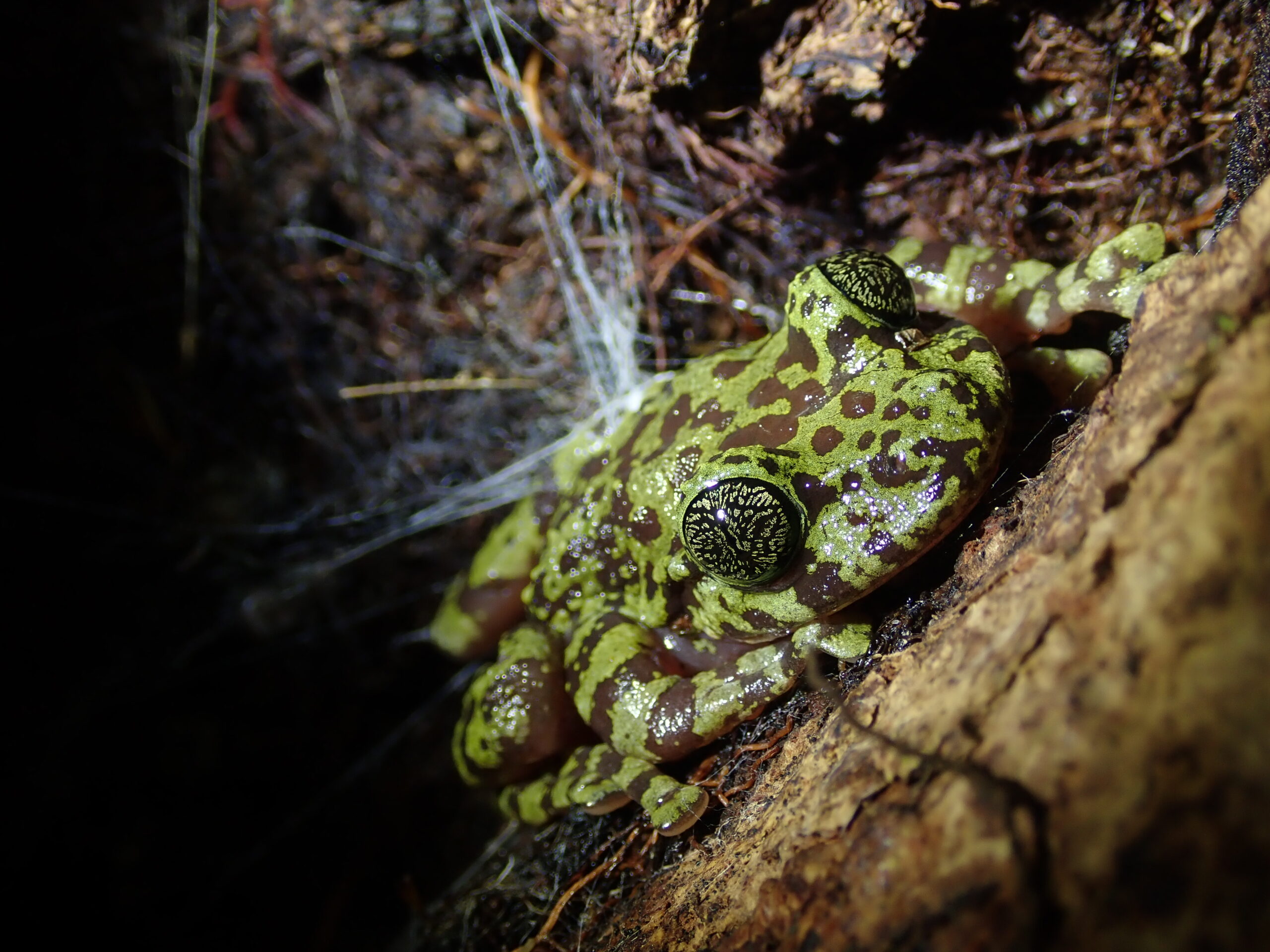
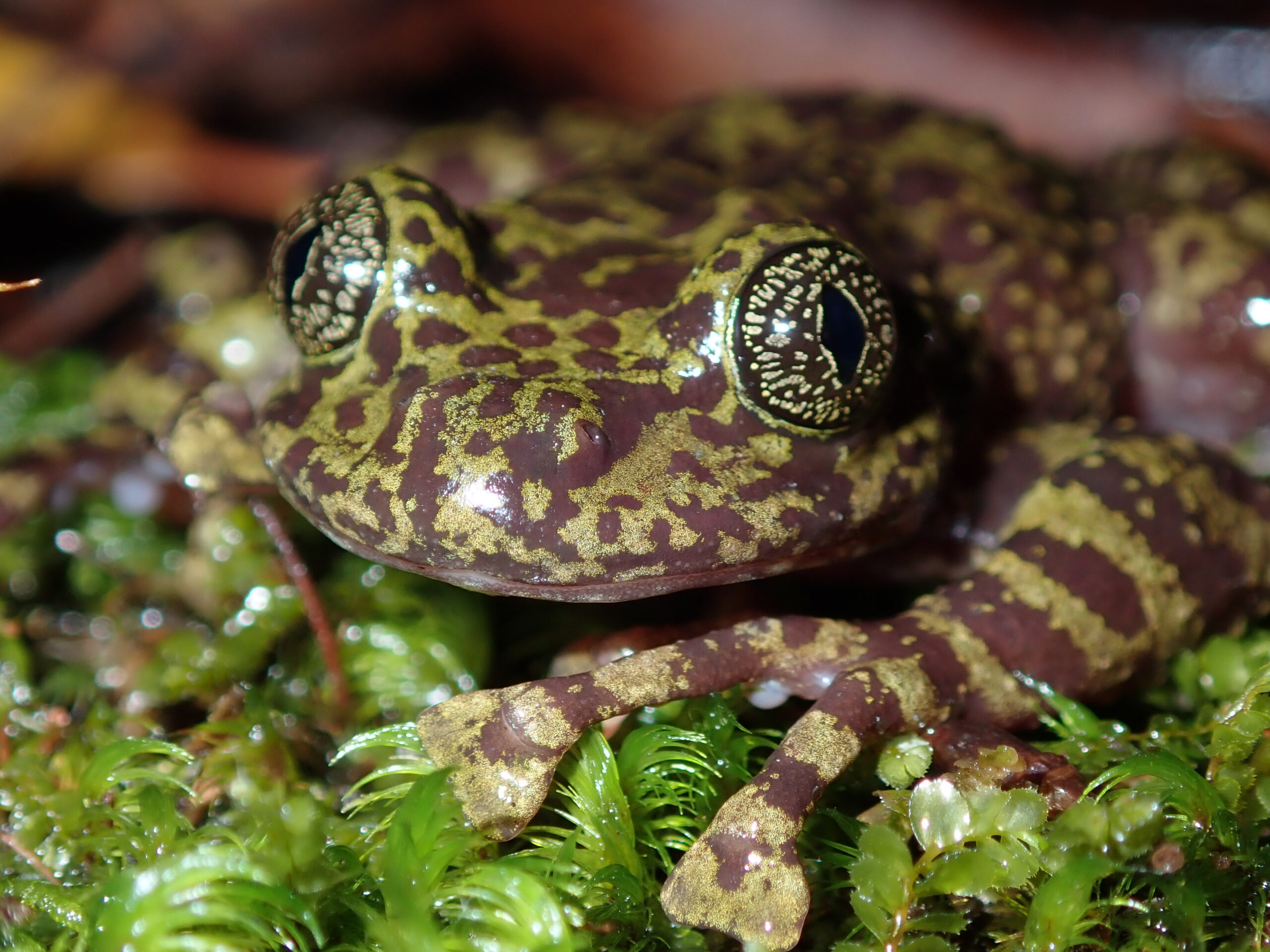
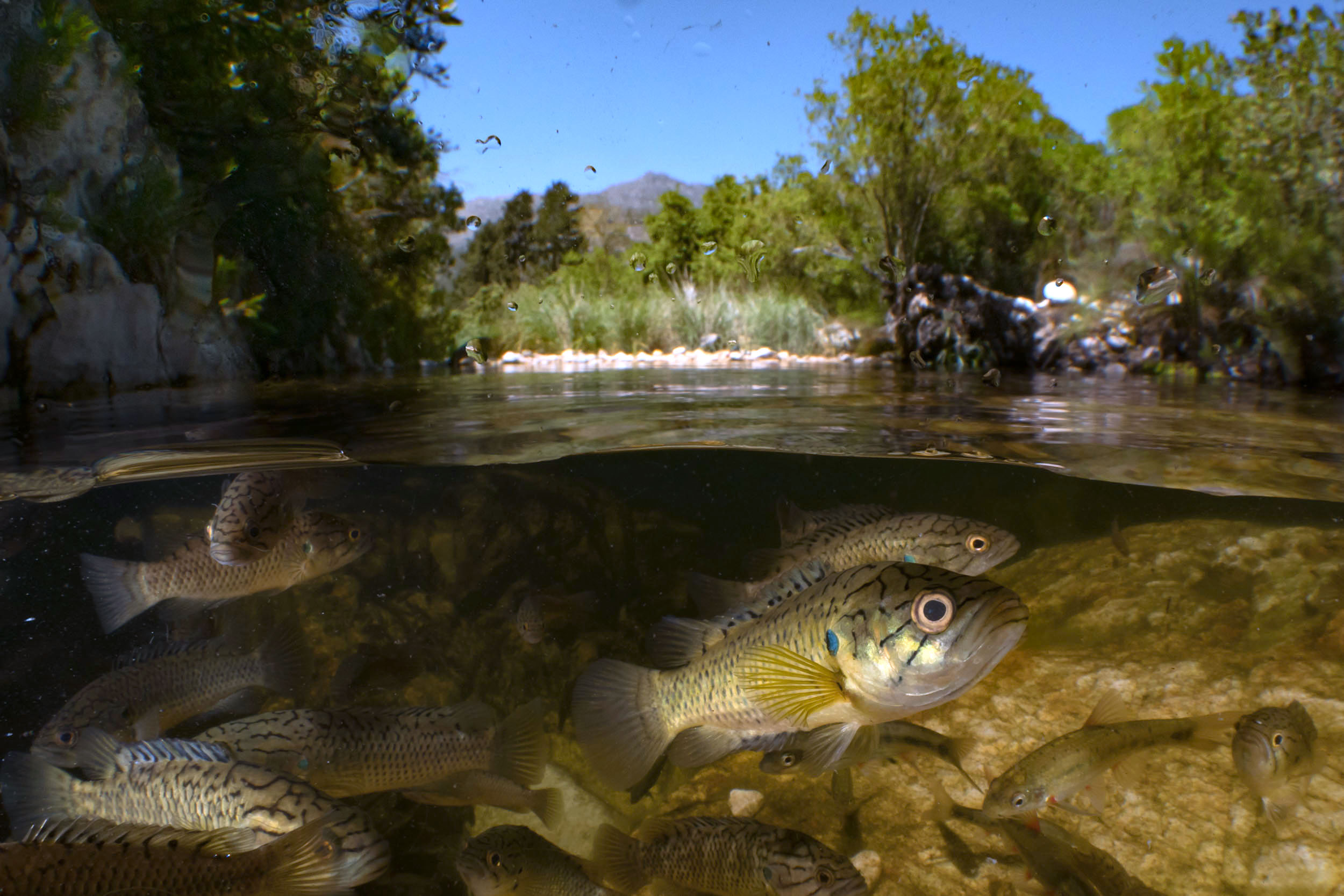
You can recognise the species by the striking purple and red blotches on their pale green skin. However their flat, compressible body means they can hide in the narrowest rock crevices.
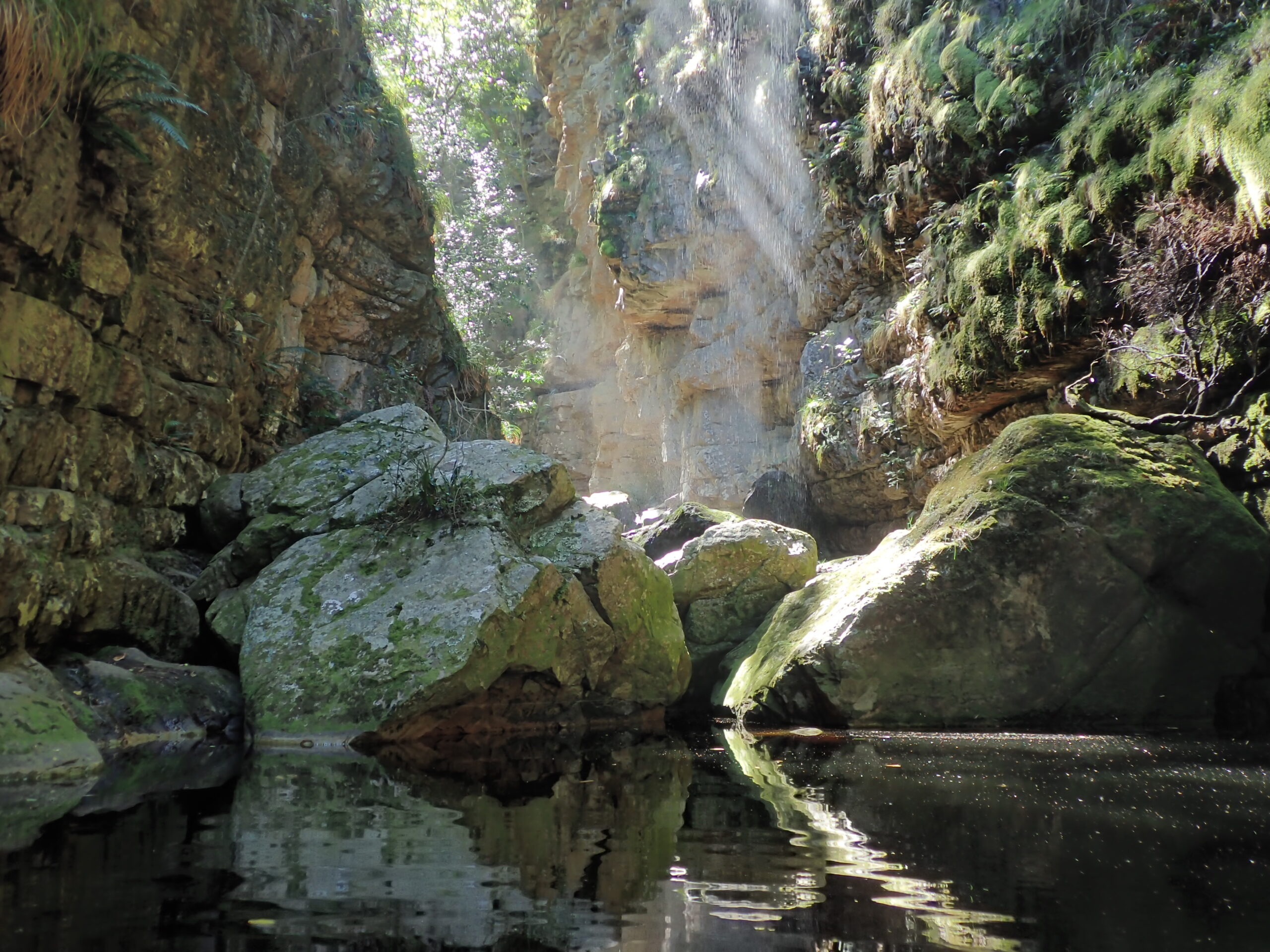
Their range, or haunt 👻 if you will, is very small at just 16m2 on the southern and eastern slopes of Table Mountain in Cape Town. They have highly webbed feet with sucker-like disc pads on the toes. This makes them incredibly strong swimmers able to cling onto the most slippery surfaces, perfectly adapted to life in these mountain streams.
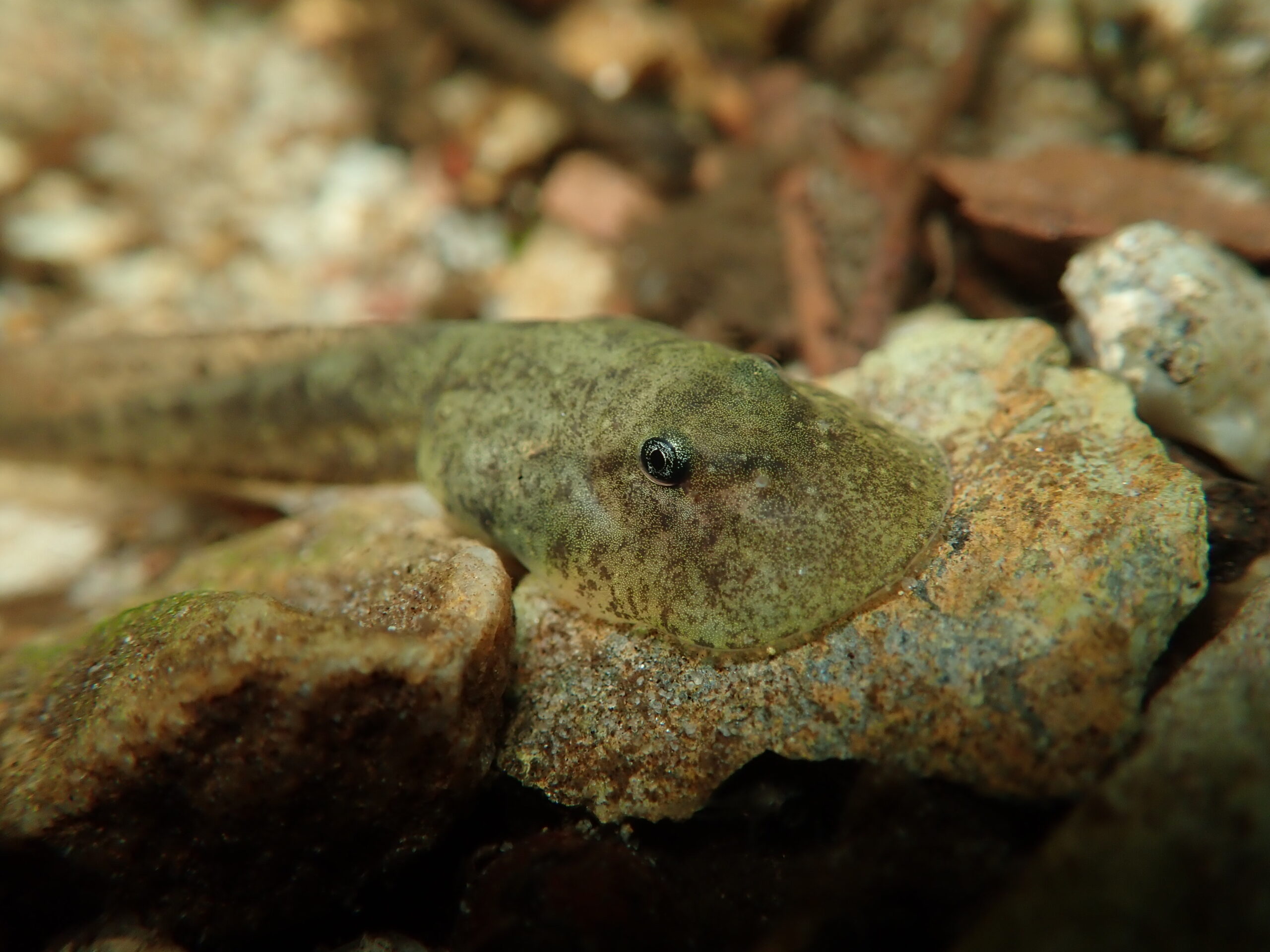
Even their tadpoles have unique sucker-like mouthparts, used to grip and climb wet rocks, as well as feed on delicious algae.
The Table Mountain ghost frog is one of the 50 landmark species at high risk of extinction identified in SHOAL’s Fantastic Freshwater* report. The report published on 19th May 2022 (International Day for Biodiversity). Fantastic Freshwater highlights the diversity and beauty of freshwater species and the immense threats they face to their survival.
The small range of the Table Mountain ghost frog means it is especially vulnerable to disease and invasive species. As well as this, it’s completely dependent on the rocky streams of Table Mountain for survival. Reports suggest approximately 20% of the habitat has been lost over the past 30 years.
The species habitat is threatened by:
The presence of dams and water storage reservoirs: The Table Mountain ghost frog is an example of a species trying to survive close to a very large city, with the demands the human population places on the freshwater resource.
High volume of visitors: Table Mountain is a popular escape from the bustling metropolis of Cape Town, with human activity a significant cause of soil erosion in the habitat. Boardwalk construction would reduce bank erosion.
Alien vegetation: conservation action must include removing alien invasive plant species
The Table Mountain Ghost Frog Action Group formed to investigate the health of the habitat, review threats and establish a plan for conservation, with special emphasis on the Critically Endangered species which relies on the environment for survival.
The scary reality is that without action, the Table Mountain ghost frog is at high risk of extinction.
If you want to support the work SHOAL are doing to conserve freshwater species through action-driven conservation donate here. Don’t forget to subscribe to our newsletter The Stream to get all the latest freshwater news straight to your inbox
Assessing the extinction risk of all species of freshwater fishes globally: an interview with Catherine Sayer
Catherine Sayer is the Freshwater Programme Officer in the IUCN Biodiversity Assessment and Knowledge Team, based at The David Attenborough Building in Cambridge, UK. She is currently working to get the extinction risk of all species of freshwater fishes globally assessed for the IUCN Red List, which will fill in knowledge gaps on which regions have the highest numbers and proportions of threatened freshwater fishes, giving a greater understanding of where conservation programmes are likely to have most impact.
SHOAL caught up with her to learn more about the IUCN Red List assessment process and get some advice on how researchers and taxonomists can conduct Red List assessments themselves.
Tell us a bit about your background and your current role. And what led you to do what you do now?
I have been working for IUCN since 2014 based in Cambridge, UK in the (recently renamed) Biodiversity Assessment and Knowledge Team, part of the IUCN Centre for Science and Data. I was initially part of the Red List Unit, but since 2016 have been focussing on freshwater biodiversity, now with the role of Programme Officer.
My background is quite broad, with an undergraduate degree in Natural Sciences (Zoology) and an MSc in Ecology, Evolution and Conservation, but over the last few years I’ve become much more familiar with the fascinating and often overlooked world of freshwater! At present, my work primarily focusses on increasing the representation of freshwater species on the IUCN Red List of Threatened Species™, through assessment of species of freshwater decapods (crabs, crayfishes, and shrimps), fishes, molluscs, odonates (dragonflies and damselflies), and aquatic plants. This is important given the unprecedented level of threat to the freshwater realm, which is incredibly species rich (supporting over 10% of all known species and 30% of vertebrates, despite covering less than 1% of the Earth’s surface), and of great value to human livelihoods in terms of ecosystem services.
You have recently done a gap analysis to see which species still need to be assessed for the Red List. What does this involve?
IUCN is working to complete a global assessment of all freshwater fish species for the IUCN Red List, and I recently completed a gap analysis to identify which freshwater fish species still need to be assessed. To do this I compared a list of all described freshwater fish species from Eschmeyer’s Catalog of Fishes, which is the standard taxonomic source for fishes on the Red List, to a list of all species with assessments published on the IUCN Red List, or under way through ongoing projects. The resulting list (after accounting for quite a few taxonomic discrepancies and changes!) includes all “gap species” of freshwater fish that still need to have Red List assessments completed. Many of these species are those that are relatively new to science, having been recently described, such that our target list is growing as researchers and taxonomists identify and describe more species!
And what does a Red List assessment involve?
An IUCN Red List assessment tells us the relative extinction risk of a species. Each assessment includes an account with information on the distribution (including a distribution map), population, habitats and ecology, use and trade, threats, and conservation and research actions relevant to the species. This information is then used to assign species to a category of extinction risk based on data driven and objective criteria. The criteria are designed to identify species at higher relative risk of extinction based on their population size, population trend, or geographic range, together with information on threats acting on the species. Species assessed as Vulnerable (VU), Endangered (EN), or Critically Endangered (CR) are described as threatened. However, the Red List isn’t just limited to those species at high risk of extinction – it includes information on all species that have been assessed against the categories and criteria, including those assessed as Least Concern (LC) and considered to be at low relative risk of extinction, for example.
We work with species experts and conservation scientists to draft Red List assessments based on the best available knowledge at the time of assessment. Anyone with knowledge of the global population of a species can be an assessor, but in practice most assessments are drafted by members of the IUCN Species Survival Commission (SSC) Specialist Groups. Once drafted, assessments are reviewed by independent experts to ensure the data presented are correct and complete. Prior to the COVID-19 pandemic, these first steps (drafting and review) often took place in workshops where we gathered species experts to assess the freshwater species native to a particular region and/or taxonomic group, but at present assessments are completed remotely by individuals or groups of experts collaborating online. Once reviewed, assessments are submitted to the IUCN Red List Unit in Cambridge, UK for final consistency checks before being published on the IUCN Red List website, which is recognised as an online scientific journal.
Once published, IUCN Red List data are available for many uses by a number of sectors: education and public awareness, scientific analyses, influencing conservation policy, informing conservation planning and priority setting, assisting with private sector decision making, and more. To search for a species on the IUCN Red List, simply enter its scientific or common name into the search bar at the top of the website. If the species has been assessed for the Red List, you will be taken to its species account.
Approximately how many freshwater fish species are assessed each year?
On the current version of the Red List (version 2021-3), there are assessments of 11,291 species of freshwater fish, representing over 60% of all described freshwater fish species. This total is the result of over 20 years of Red Listing work, but efforts and number of species assessed have greatly increased in recent years with support of initiatives such as the IUCN–Toyota Partnership, which have enabled us to increase the geographic coverage of the Red List with respect to freshwater fishes. In 2020, assessments of close to 1,800 freshwater fish species were published, primarily from the Sunda Basin and New Guinea, and in 2021, assessments of over 900 freshwater fish species were published, including species from Brazil, the Caribbean, and the Philippines. This year, we are hoping for many more species to be published, the majority of which will be native to South America.
And approximately what percentage of these are threatened with extinction?
Of the freshwater fish species assessed for the Red List so far, a best estimate of 30% are considered to be threatened with extinction, meaning they are assessed as Vulnerable (VU), Endangered (EN), or Critically Endangered (CR). This estimate isn’t yet based on complete data (given all freshwater fishes haven’t yet been assessed for the Red List), but indicates a higher percentage threatened with extinction than for birds, reptiles, and mammals, all of which have been assessed. Of the threatened freshwater fish species, 636 (6% of the total) are assessed as CR, and 943 (8%) are assessed as EN. It’s also important to note that a high proportion (21%) of the freshwater fish species assessed so far have been categorised as Data Deficient (DD). This means that there is insufficient information available to indicate their relative extinction risk, bringing some uncertainty into these estimates.
Shoal are keen to encourage researchers and taxonomists to conduct Red List assessments when they discover and describe new species. Can you offer any advice on how they can best do this?
I am also keen to encourage researchers and taxonomists to assess species for the IUCN Red List after describing them! I work with a handful of species experts that do this already, but would welcome if this practice became more widespread. Lots of the information that is provided as part of the description of a species is also relevant to a Red List assessment, for example the known distribution and habitats of the species. Additionally, those involved in the discovery and collection of a species are generally familiar with activities occurring in the distribution of the species that might be observed to (or can be inferred to based on knowledge of similar species) have negative effects on the species, therefore representing known or potential threats. Together, this provides a good basis for a Red List assessment.
Some taxonomic descriptions already contain sections on the conservation status of a species, but these don’t constitute an official Red List assessment – Red List assessments are only official once they have been through the full IUCN Red List assessment process and been published on the IUCN Red List website. This is to ensure that the IUCN Red List categories and criteria have been applied correctly and consistently. Although not always the case, many recently described species are assessed as either Data Deficient (DD) or threatened, given they are often relatively poorly known or occur in poorly known areas, and may be rare or have highly restricted distributions.
For any researchers interested to assess their newly described freshwater fish species for the Red List (or any species for which they have the relevant knowledge), I would advise that they contact me and I will be able to guide them through the Red List assessment process. Alternatively, there are lots of helpful resources available via the Red List website, including a free online Red List training course.
Dr. Ralf Britz is a leading ichthyologist and taxonomist, and Head of the Ichthyology Section at Senckenberg World of Biodiversity. He has been involved in a total of 73 species descriptions and has been a key team member in the discovery of seven species which needed the creation of new genera. He was also the lead author on two papers describing the Gollum snakehead Aenigmachanna gollum: a new species in a new genus in an entirely new family.
With Shoal’s release of a landmark New Species 2021 report tomorrow, we caught up with Ralf to get the low-down on what discovering and describing new species really means.
What does it mean to describe a species, and how is it done?
When you describe a new species scientifically this process is often referred to among the public as having identified a new species. The process starts with the impression that you have found a species that does not have a scientific name, i.e. it is unknown scientifically. You then need to compare your specimens of what you think may be a new species with specimens of similar species that already have a name.
As taxonomy is one of the oldest scientific biological disciplines, this can be quite a cumbersome process, because you have to deal with all the species descriptions since and including Linnaeus’ 10th edition of his Systema naturae, published in 1758 and the starting point of animal taxonomy. If you are lucky and the group you work on has only a few species, then it is easy to compare your material with already collected material of the other species. This usually involves comparison with what we call type specimens, the specimens used to describe species. One of these type specimens is chosen as the holotype, the actual name bearer, the one specimen that is permanently linked to that name. These are stored ideally in publicly accessible museum collections. If, after comparison, you find that the specimens of what you thought were a new species are identical to one of the already described ones, then that is the end of the story. But if you find consistent and significant differences to all the known species in the group you are studying then you have probably found a new species.
The next step is then to write up a scientific manuscript in which you detail how your new species differs from already described (named) species, and you propose a name for it. The name may refer to a characteristic feature of the new species, or the place where it was collected, or it may honour a person, such as the person who collected it, an influential colleague or someone who supported your work.
In most cases the new name concerns just the new species. But sometimes you find an organism that you cannot easily fit into a larger group of similar and closely related species, a group we call a genus. In this case you may need to create a new genus for this new species. Here, the same rules apply you need to check all genera (plural of genus) in the larger group of organisms (a group we call a family). If you find you cannot fit it into one of the known genera, you can describe a new genus.
Once you have written up your findings relating to a new species or new genus, you submit your manuscript to a scientific journal for peer review. This means the manuscript is sent to other experts in the field who read your manuscript and point out potential problems, errors, mistakes etc. They provide the quality check before a manuscript is accepted and then published. They may ask you to revise your manuscript, check sources you may have overlooked, ask for additional details, or if you have made some major mistakes, suggest to reject your manuscript. If you have done your job, though, it may need no or just minor revision and will then get accepted for publication. Once it is published by a scientific journal and you have made sure you followed all the necessary steps that are required by the Code of Zoological Nomenclature – a set of rules that determine what has to be done for a name to be published in a valid way – then the new species is officially described and carries the name you have chosen.
I want to briefly touch on a worrying aspect of species descriptions that has started to plague taxonomy: the unholy alliance between self-proclaimed taxonomists and journals that will publish anything of any quality if you pay for it, the so-called predatory journals. There is an increasing number of manuscripts getting published which did not go through the strict and necessary step of peer review. Publication of these poor-quality species descriptions is a problem, because you cannot just ignore them as in other areas of science where poor papers just disappear in the garbage dump of scientific publications. Even poor-quality papers that describe new species will need to be considered due to the specific rules of nomenclature that need to be applied. Showing that these manuscripts are poor quality, and that the so-called new species is actually not new often involves so much more work, effort, time and money from you than the person invested who wrote the poor-quality manuscript. I know of cases in which one person described more than 20 new species from a well-known area of the world, all in predatory journals and with not a single of these so called new species really being new. Imagine that for each of these 20 or so new species you need to demonstrate that the original paper describing them is of poor quality and that these are not new species. This means you waste precious time, in which you could have described 20 new species with the level of quality that is necessary and is guaranteed by a proper peer review. Such taxonomic vandalism, as it has been termed, hampers the discovery of new species in a time when diversity is disappearing at an alarming rate.
Are there any species descriptions you’ve been involved with that you found particularly memorable or noteworthy?
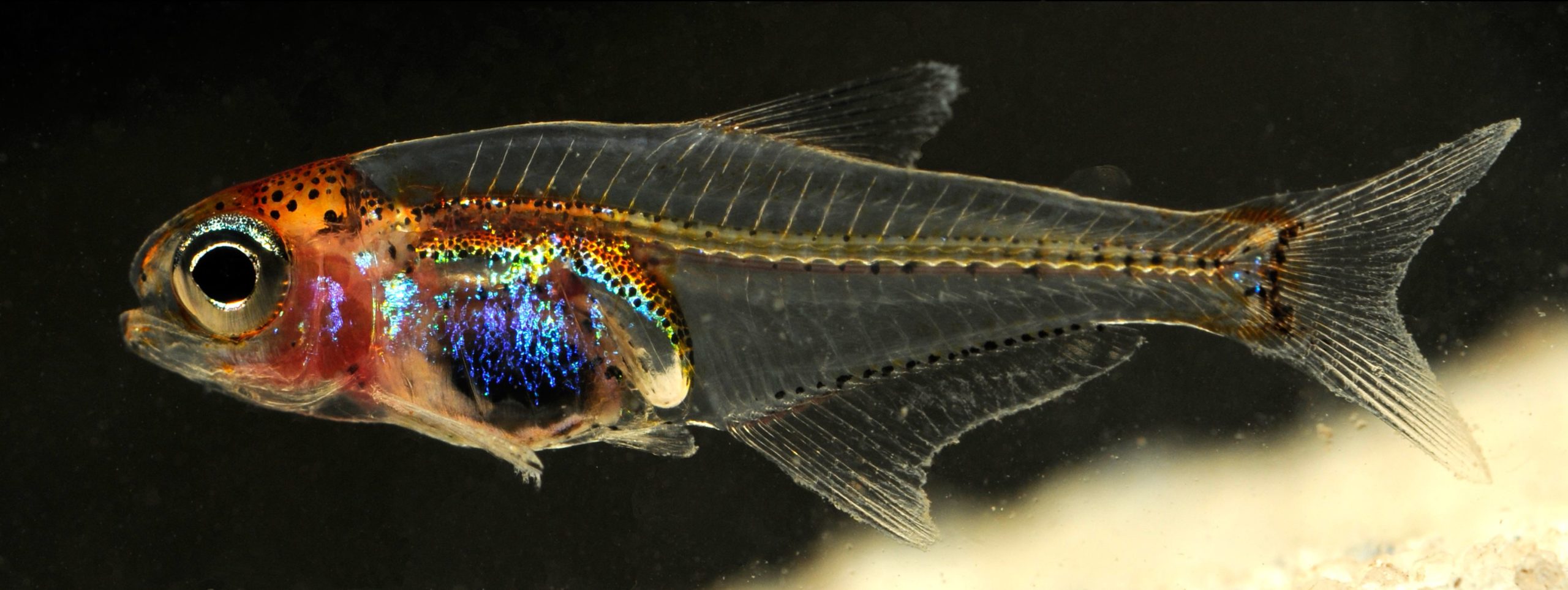
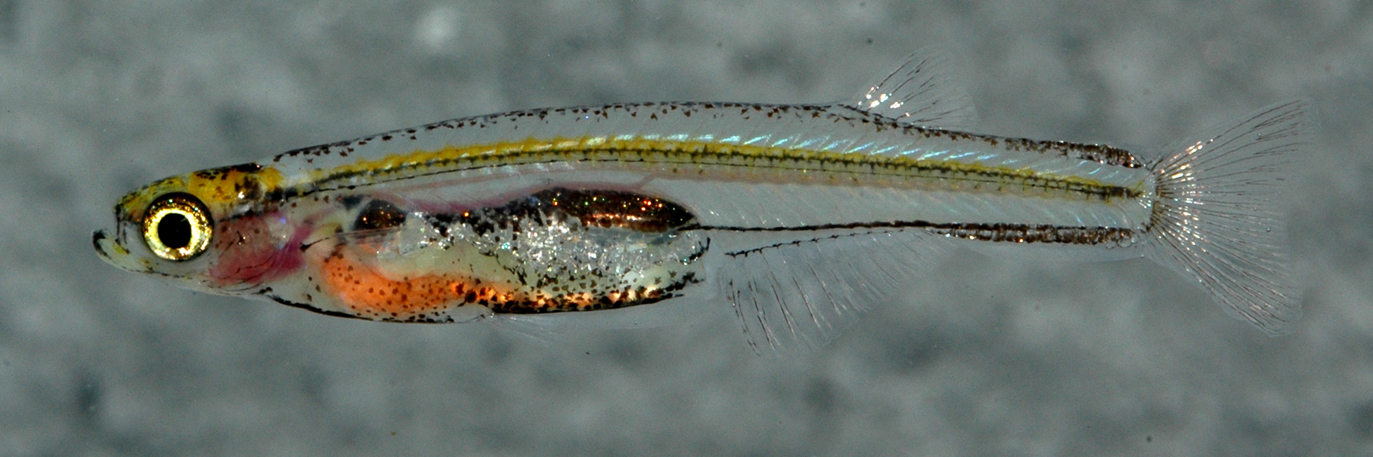
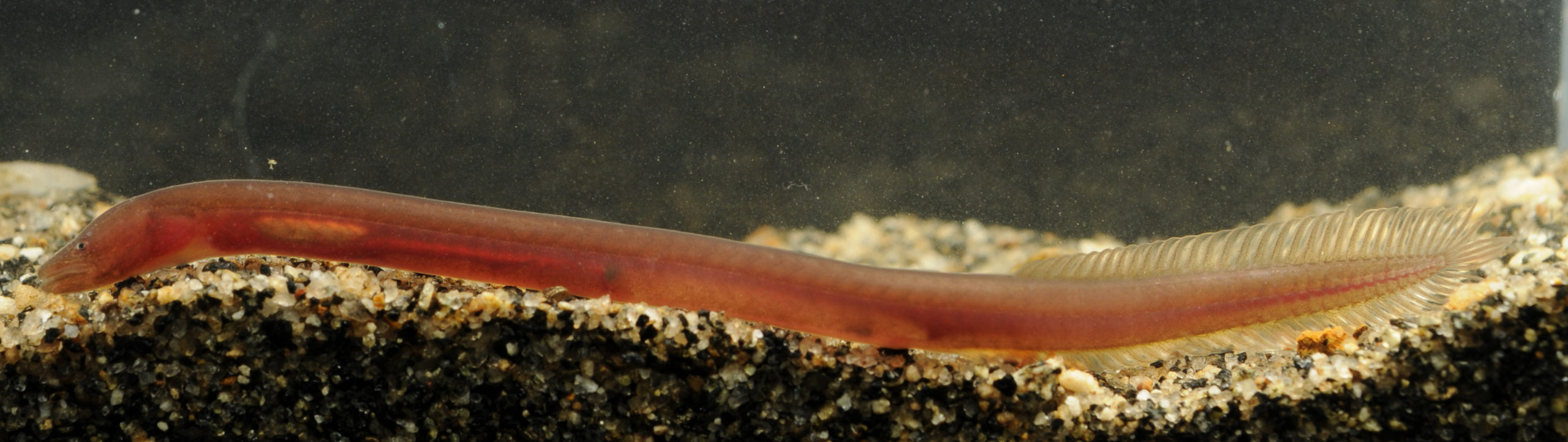
Oh yes, absolutely. I have a soft spot for the weird and wonderful. I was involved in the description of Paedocypris progenetica, the smallest fish and vertebrate species. Then Danionella dracula, an equally tiny relative of D. cerebrum. But D. dracula has impressive large fangs. Then there was a new species and genus of earthworm eel from Myanmar, which I named after my daughter, Pillaiabrachia siniae. And during night collecting in the Rio Negro in the Amazon basin we found a new brilliantly blue coloured little fish, the blue bellied night wanderer, as we named it, Cyanogaster noctivaga. But the most memorable is Aenigmachanna gollum. When I first saw a photo shared on social media and sent to me by my colleague Rajeev Raghavan from Kochi, my heart stopped, as I had no idea what kind of fish I was looking at. Well, it ended up in a genus and family of its own.
212 new freshwater fish species sounds like a lot in one year. What does this level of discovery tell us about the extent of what remains unknown in the planet’s freshwaters?
It sounds like a lot, but this has been the general trend of freshwater species discovery over the last few decades. There are still large parts of our planet that have not been explored and we keep discovering new animals that we had no idea existed. Finding a new species of an already established genus is exciting, but discovering entirely unknown lineages of higher taxonomic categories still today teaches us how much we do not know. And then keep in mind that only a tiny, tiny fraction of earth’s water volume, just around 0.03%, is freshwater in lakes and rivers and habitable for fishes. And yet, we have all this incredible diversity there. Mindboggling.
What is it about freshwater that leads to such incredible biodiversity?
I would say it is the more local situation and more diverse habitats that you get in freshwaters: you have river basins that are separated by land from other basins. There species evolve that are endemic to this river basin. Then you have ecological separations of river mouths from lowland parts of the rivers, separation of these from the more mountainous faster flowing parts of rivers and finally the rapidly flowing headwaters. This leads to endemism in different parts of the same river. These different parts of the same river will not only differ in the velocity of the water but also in the water temperature, amount of dissolved oxygen, pH, conductivity. Imagine that you have this basically in every major river.
Add this to the fact that through geological events over millions of years you have separations of parts of rivers and reunion of others, so there is a multitude of habitats changing over time and often very restricted endemisms.
All of these factors together act as species pumps that are obviously working much faster than in the oceans.
Why is it important to discover and describe new species?
There are many different aspects to this question. One is this: if we consider the entire picture of lifeforms that evolution has produced on our planet, then we would miss many pieces of a complex puzzle if we stopped exploring. Think of the painting of Mona Lisa with hundreds of thousands of holes in it. You would not want to look at that.
Understanding diversity may also enable us to better understand how this diversity interacts. Something may seem insignificant but is sometimes of the greatest importance. Just think of invasive species, pests of crops, indicator species that help you evaluate the quality of a habitat and our environment. New species may become important in research: just think of the zebrafish discovered back in 1822 but also Danionella cerebrum only described last year. New species are pieces of the evolutionary puzzle we did not know existed and because of that we had no idea what they may have to offer.
Do you think it is important for people to care that new species are still being discovered and described? Why?
My experience is that people are generally excited when you tell them about new species discoveries. To imagine there is still so much out there that is unknown to us is a fascinating thought.
It is also more urgent than ever that we go out and discover, as the diversity is disappearing fast. Just think of the image of Mona Lisa with the hundreds of thousands of holes. Would
it not make you sad to know that these will never be filled as the species disappeared before we identified them?
What can we hope to learn from new species discoveries and descriptions?
The most important part we can learn is that there are so many fascinating organisms out there that we have not even discovered. Sometimes it is a new species that looks very much like one we already know, but often we discover a true gem, something unimaginable, unexpected, something we would have bet money does not exist. And these are special moments when you sit there quietly in awe of the evolutionary diversity our planet has produced.
Is there anything you would like to add?
Taxonomy, discovering, describing and understanding the evolutionary diversity that surrounds us to me is one of the most satisfying parts of my life. I would never trade it for anything else.


)
)
)