The SHOAL is the global ecosystem of partners and collaborators who work together to safeguard the health of Earth's freshwater habitats and conserve the most threatened freshwater species. As with a shoal of fish, the strength of the SHOAL lies with the number of partners all working together.
Blueprint for Conservation Action for 1,000 Freshwater Fishes
SHOAL's flagship initiative sets out a plan for how significant collaborative conservation effort can lift freshwater fishes and potentially thousands of other neglected freshwater species to a new elevated platform of conservation attention and greatly enhance freshwater conservation efforts globally.
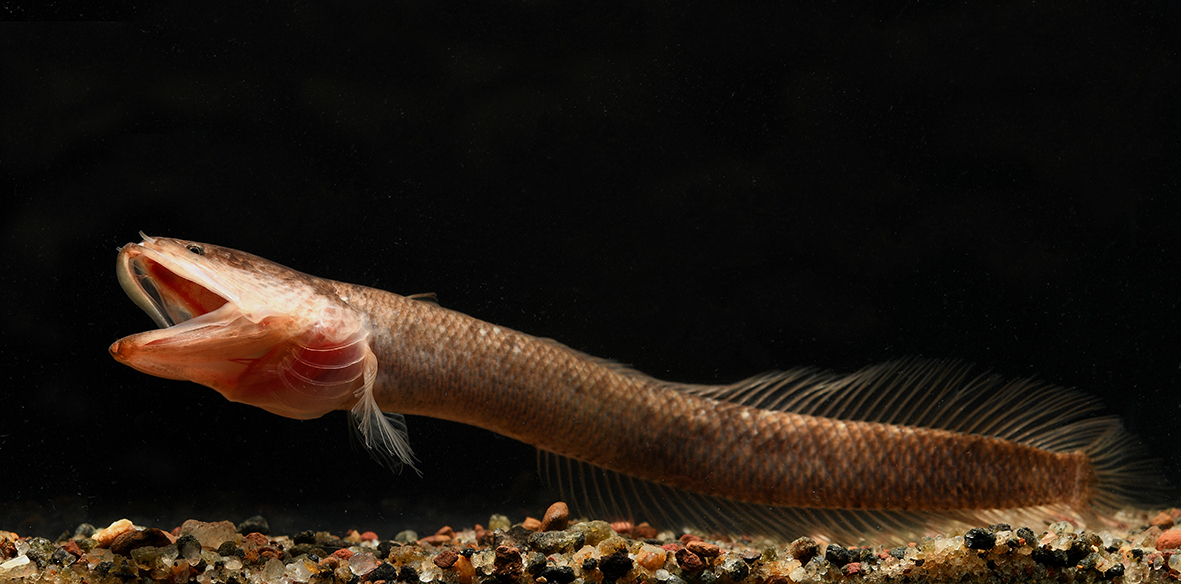
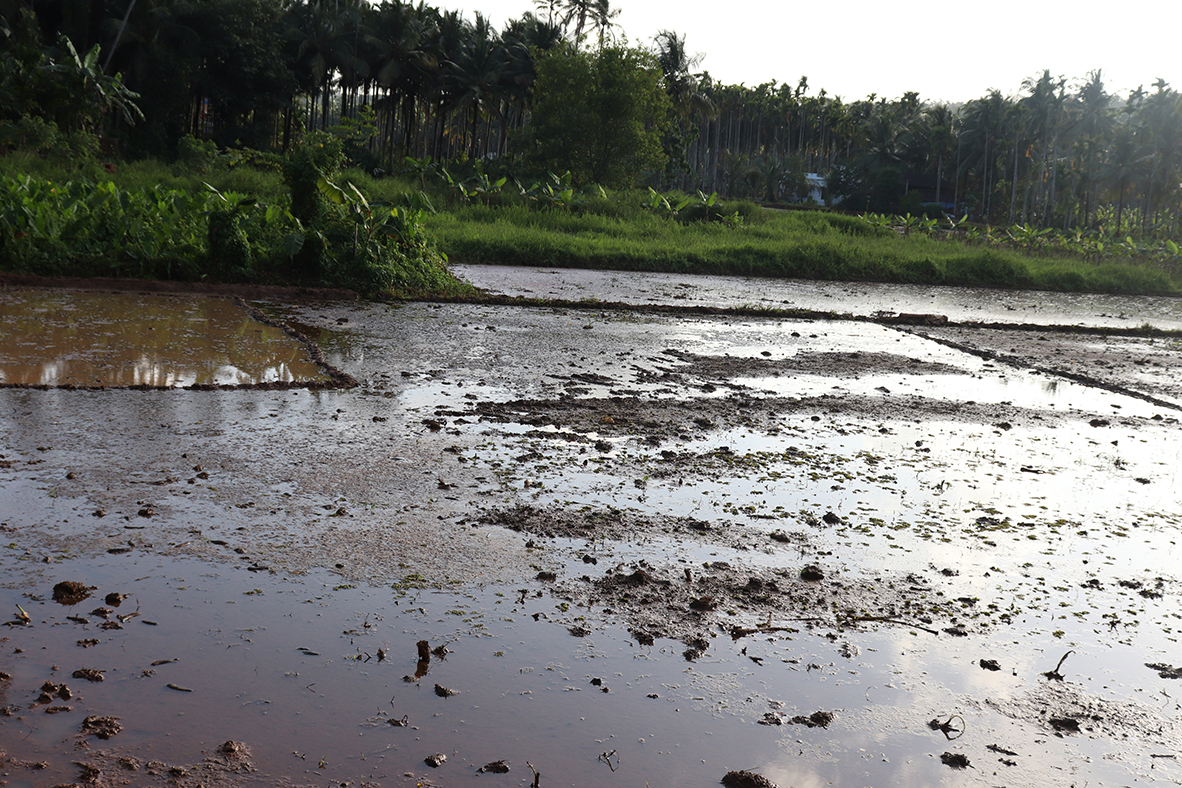
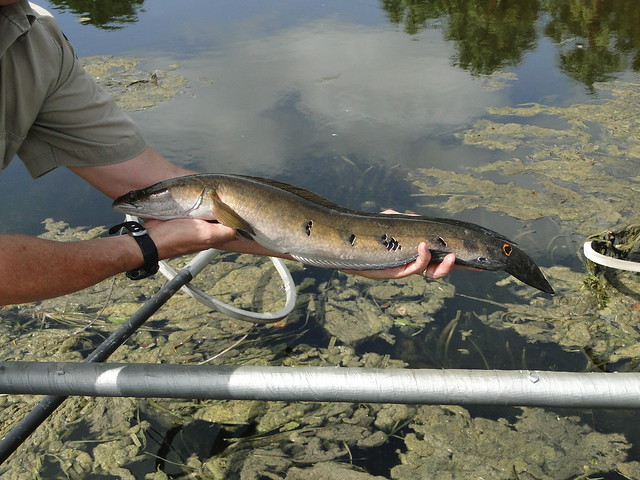
August 2018, in Oorakam in the southern Indian state of Kerala, local fish hobbyist Ajeer spotted three strange-looking fish in one of the paddy fields surrounding the village. Long, dragon-like bodies framed by bony fins, the creatures looked different to anything Ajeer had seen before. He put some photos on social media and asked if anybody could help identify the species.
It was not long before the images reached the desk of freshwater conservationist Rajeev Raghavan. Rajeev was intrigued by the species: he did not recognise it and knew it called for further investigation, so he contacted Ajeer and sent his team into the field, where they were able to collect live samples.
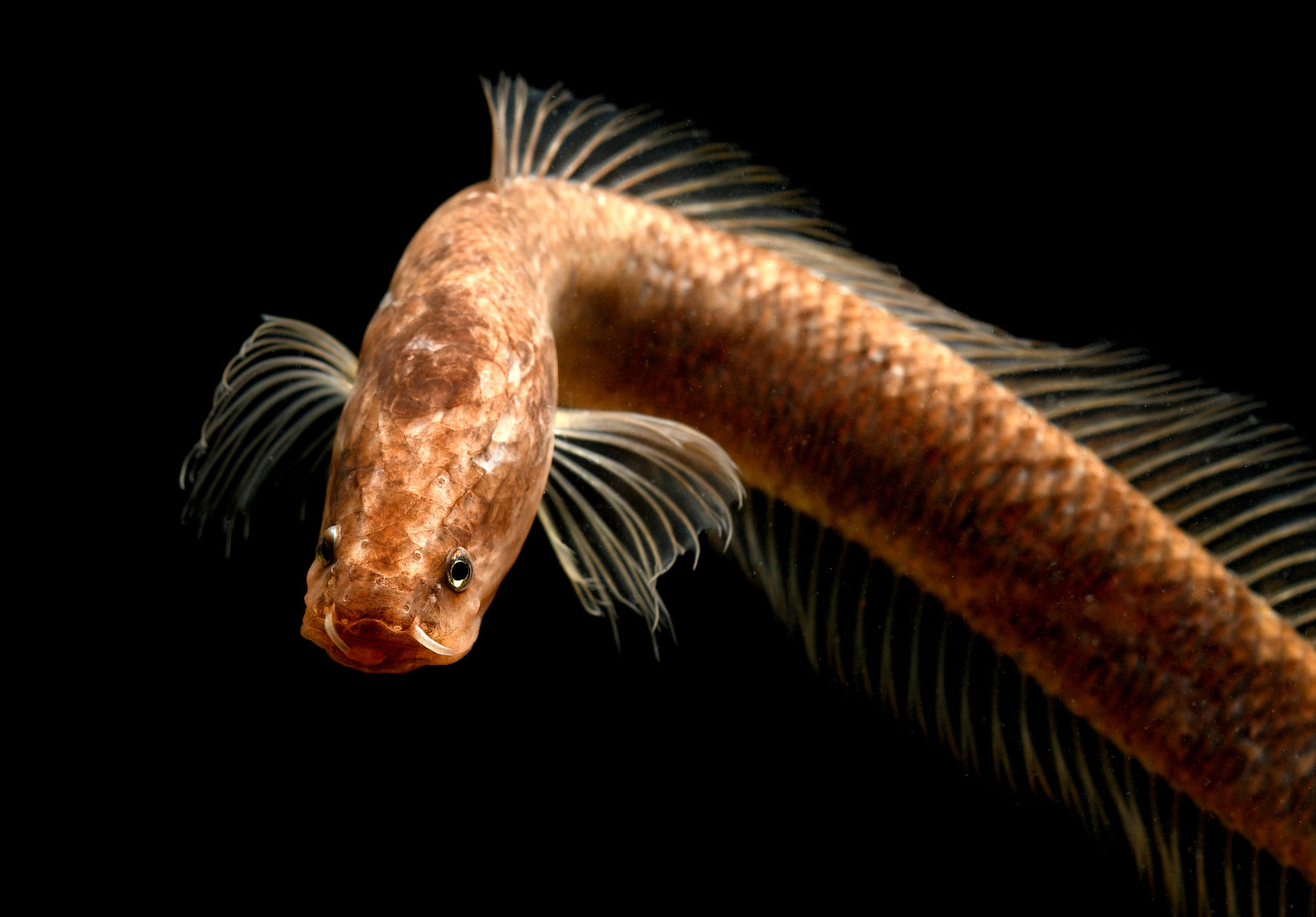
Back in the lab, Rajeev examined the fish and concluded it must be a hitherto unrecognised species of snakehead. To be certain, he shared some high-quality images with Ralf Britz, one of the world’s leading authorities on snakeheads. Ralf previously discovered the Dracula fish in the peat swamps of Southeast Asia and according to Rajeev: “has worked on some really strange fish”. This, though, was “stranger than any fish he had seen in his life”.
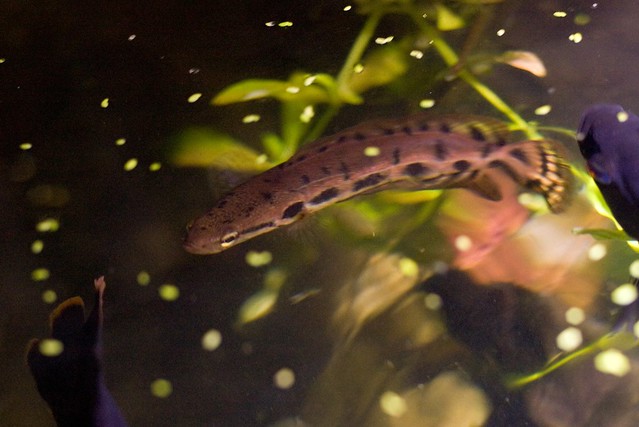
As the researchers suspected, the fish was new to science. They named it the ‘Gollum snakehead’ as it is a subterranean creature, spending most of its life underground like the slippery character in The Lord of the Rings.
But the discovery had bigger implications than simply being a new species. Another snakehead species – the Mahabali snakehead – had also been collected in Kerala a few months before and was published as a new species after the Gollum snakehead had been described. Rajeev, Ralf and an international team of ichthyologists recognised many clear similarities between the Gollum and the Mahabali, and proved that not only were the two species new to science, they were actually members of a whole new family of fish.
Rajeev: “We looked at the fish in detail – its morphology, anatomy and DNA, even analysed its mitochondrial genome and found that it was a completely unique family that is an ancestor to the family of snakeheads that currently dwell in Africa and Asia.”
The family was named Aenigmachannidae. And it is old. Really old.
“We looked at its molecular dating and its origin was traced back to 100 million years, when the Gondwana supercontinent was in existence.”
That puts the evolution of the Aenigmachannidae family squarely in the Cretaceous period, when the largest animals ever to walk the planet still ruled. Incredibly, the Gollum snakehead and most likely the Mahabali snakehead species are older than Tyrannosaurus Rex.
Rajeev again: “We hypothesise that the fish evolved in Gondwana and drifted along with the Indian subcontinental plate across the oceans before hitting the Eurasian continent, and then it got trapped in the subterranean systems and didn’t evolve for the last hundred million years – it has these very primitive characters not seen in other snakehead fish”.
Due to the difficulties of researching a species the lives underground, not much is yet known about their natural behaviour. But through observing a group of the fish maintained in an aquarium, Rajeev and his team have noted displays of territorial aggression not seen in other snakeheads. The fish are also unselective about what they eat: “It eats aggressively. We first started with live feed, e.g. bloodworms, earthworms, live shrimp, and they even take live fish: whatever we’ve tried to feed them, it chomps everything up”.
Potential threats to the family:
Kerala is blessed with an abundance of bizarre subterranean fish, with ten species that are not found anywhere else in the world.
But they face multiple anthropogenic threats.
Due to the majority of these species living in areas of human habitation, there is a high likelihood that the paddy fields and land under which the fish live will be developed, leading to habitat loss.
The fish’s novel appearance means most locals do not recognise them and fear they may be poisonous and harmful to the water that they drink. There is thus a tendency for the locals to kill them.
A third pressure is that of invasive species. According to Rajeev: “People introduce invasive species like the African catfish into the wells. It serves no purpose and we don’t yet know how it can harm these very unique fish.
“There is a range of threats we need to address, so I think we need to have a very organised, systematic education programme aimed at the regions where these subterranean species are found, making people aware of the importance and uniqueness of these organisms and the endemic wealth of these communities”.
Rajeev says it is by: “Mapping the areas where the fish are likely to be found, and then working with local governments at the village level and working through educational material to show them the kinds of fish which may come to their notice, and asking them to save those fish for scientific study, and for future generations, instead of killing them”.
And the conversation between scientists and locals works both ways: “All of these discoveries are made as a result of seeing photographs circulated on social media. Before the scientists come into contact with them, it is the local people who come into contact with them, so citizen science I think is key to the long-term research and conservation of these unique organisms. People are the key not only for conserving them but also for bringing these unique organisms to the attention of scientists”.
Finally, what comes next for the Aenigmachannidae?
Rajeev and the team aim to learn more about their ecology and biology. They will use small tags to learn more about where the creatures live, what organisms they feed on, and how they behave. They are also trying for an ex-situ captive breeding programme, so watch this space!
Post Overview
Michael Edmondstone
November 5th 2020
Conservation, Feature, Fish, Interview
Share this post:
Recent News
One of the World’s ‘Most Wanted’ Lost Fish Is Rediscovered
Kathy is a Freshwater Specialist with experience from across Asia, Africa and Europe. She visited Ambon to see its awesome anguillids on holiday earlier this year.
When people think about the world’s most threatened animals, it’s unlikely that Anguillid (freshwater) eels spring to mind. In Europe, freshwater eels are one of our least appreciated but most critically endangered species, having declined by around 95% since the 1980s. Unlike most people, as a freshwater ecologist, I spend a lot of time thinking about animals like the freshwater eel because globally, all freshwater species are facing considerable threats. In fact, freshwater species are declining at double the rate of terrestrial or marine biodiversity and for me, freshwater eels are a bit of a poster-fish for all freshwater biodiversity.
Anguillid eels have life cycles more complex and mysterious than any other species I can think of. They are catadromous; spending most of their lives in freshwaters but returning to the ocean to spawn (a return journey of around ten thousand kilometres). Eels can live for many years, especially females – the oldest known European eel was over 100 years old. Despite being long-lived they only spawn once in their lives. The marine phase of an eel’s life remains much of a mystery – we do not know what eels do during their time in the oceans or exactly where they spawn. An exciting new project is radio-tracking eels to attempt to answer the mysteries that have eluded scientists since the time of Aristotle.
There are multiple threats facing European eels, and to different extents, all other species of freshwater eel around the world. Threats include: climate change, human infrastructure and development, disease, water pollution, habitat loss, over-exploitation and mortality caused by pumps and hydropower dams. Furthermore, as the illegal trade in European, American and Japanese eel is stopped, eels in other parts of the world where protections are less, may be at increased risk.
A critical step in the conservation of eels is ensuring people care about them and with this in mind, during a recent trip to Ambon, Indonesia, I visited Larike village, home to a population of Marbled eels, Anguilla marmorata, to find out why they are important to the local community. I met with Hafes Lauspa who is the King (or Raja) of Larike village. Hafes has taken the unusual step of protecting the eels in his village, meaning that no one can fish for them or harm them in anyway. Hafes hopes that by protecting the eels, the eels will attract tourism to the village and generate income.
What were your motivations for protecting the eels? People in my village have a big appetite for the eels as they believe they are good for achieving healthiness. But the population of eels is getting smaller and it made me think that I must do something to protect the eels so that the population does not become extinct.
What do the villagers think of the eels and the tourists that come to visit them? Since I introduced tourists to the eels of Larike in 2010, the villagers are very happy. They realised that to protect the eels is one of the ways to bring Larike village to the eyes of the world.
What are your hopes for the eels, the river, and Larike village for the future? I am the son of my father, the son of a king and the son of kings, we become a king since the village exists. It is our duty, as kings, to love, to carry and to protect the village until our last breath. As a king I hope to make the village much better in the future. The river has existed for a long time and brings so much life here to the village. I hope it exists forever and will always be with us, for current and future generations. And what about the eels – I hope the eels know that we really love them.
Whilst visiting Larike I took the chance to personally test out how much of a tourist-attraction these giant Marbled eels might be. For me the opportunity was very special, my time spent time with their eely cousins in Europe has been dominated by catching them during fish surveys – a challenging endeavour because in the hand they are extremely strong (both physically and in terms of their opinions of trying to escape) and pretty slimy which doesn’t help deal with their aforementioned strength. However, in Larike Village, I had the opportunity to observe freshwater eels on their terms for the first time in my life.
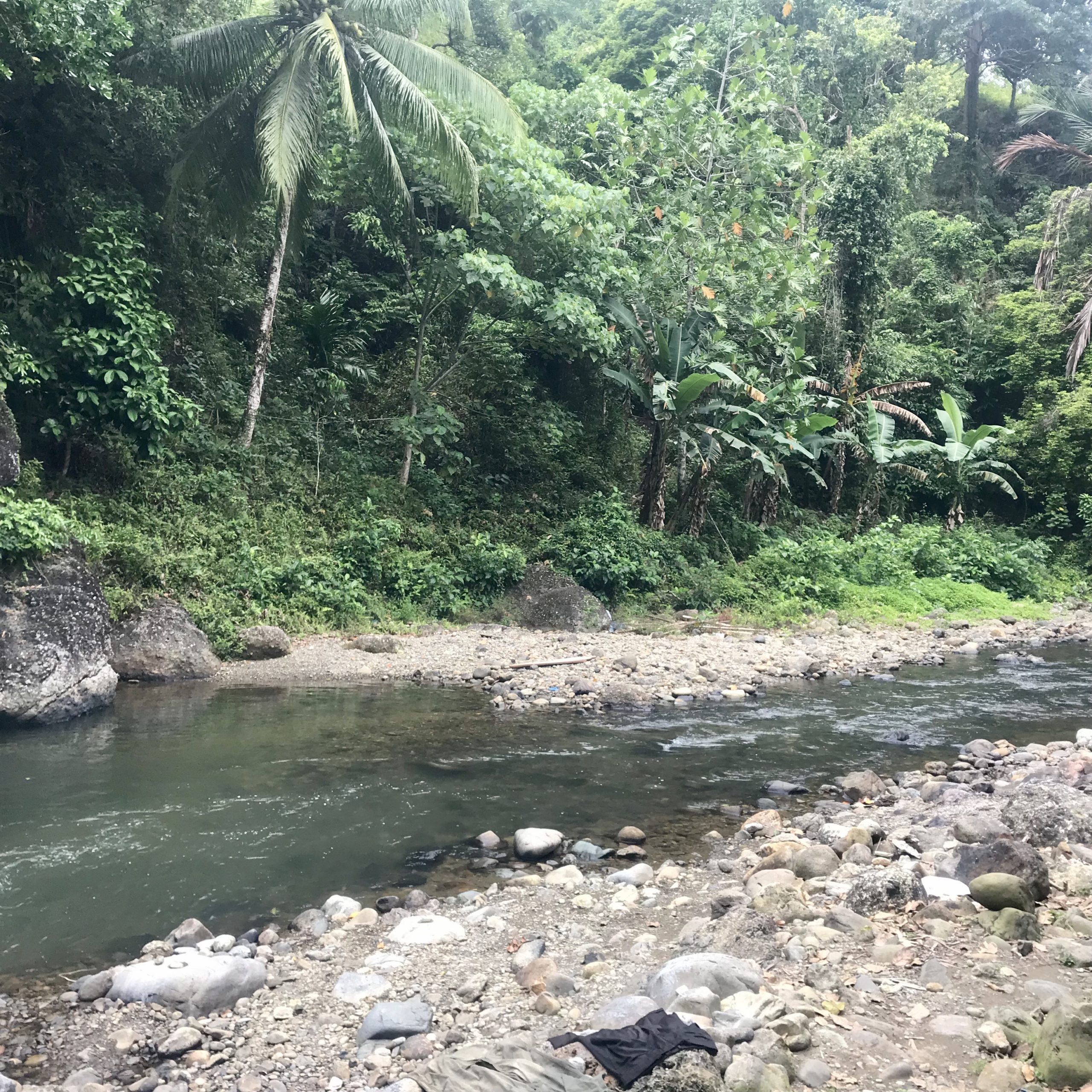
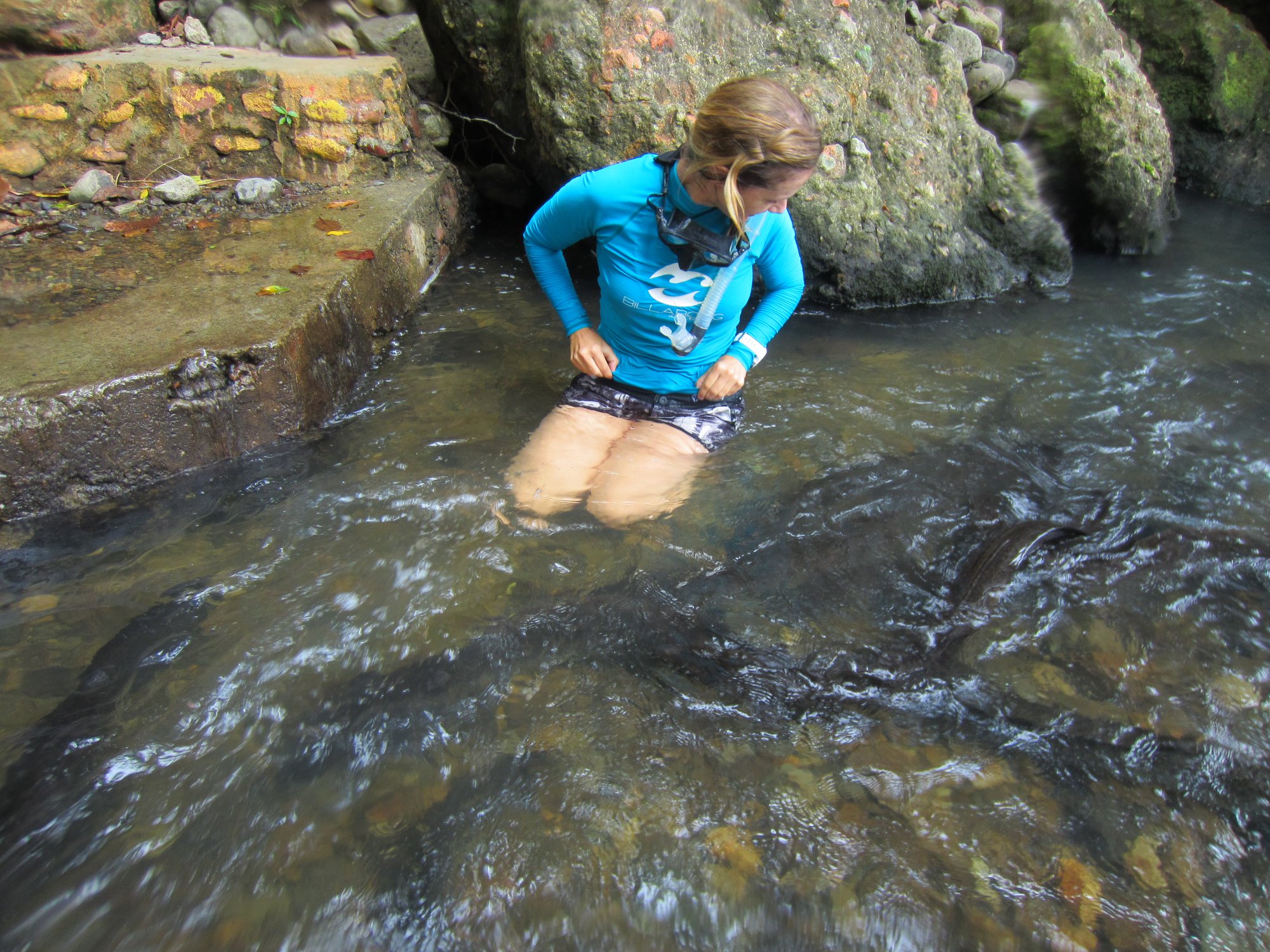
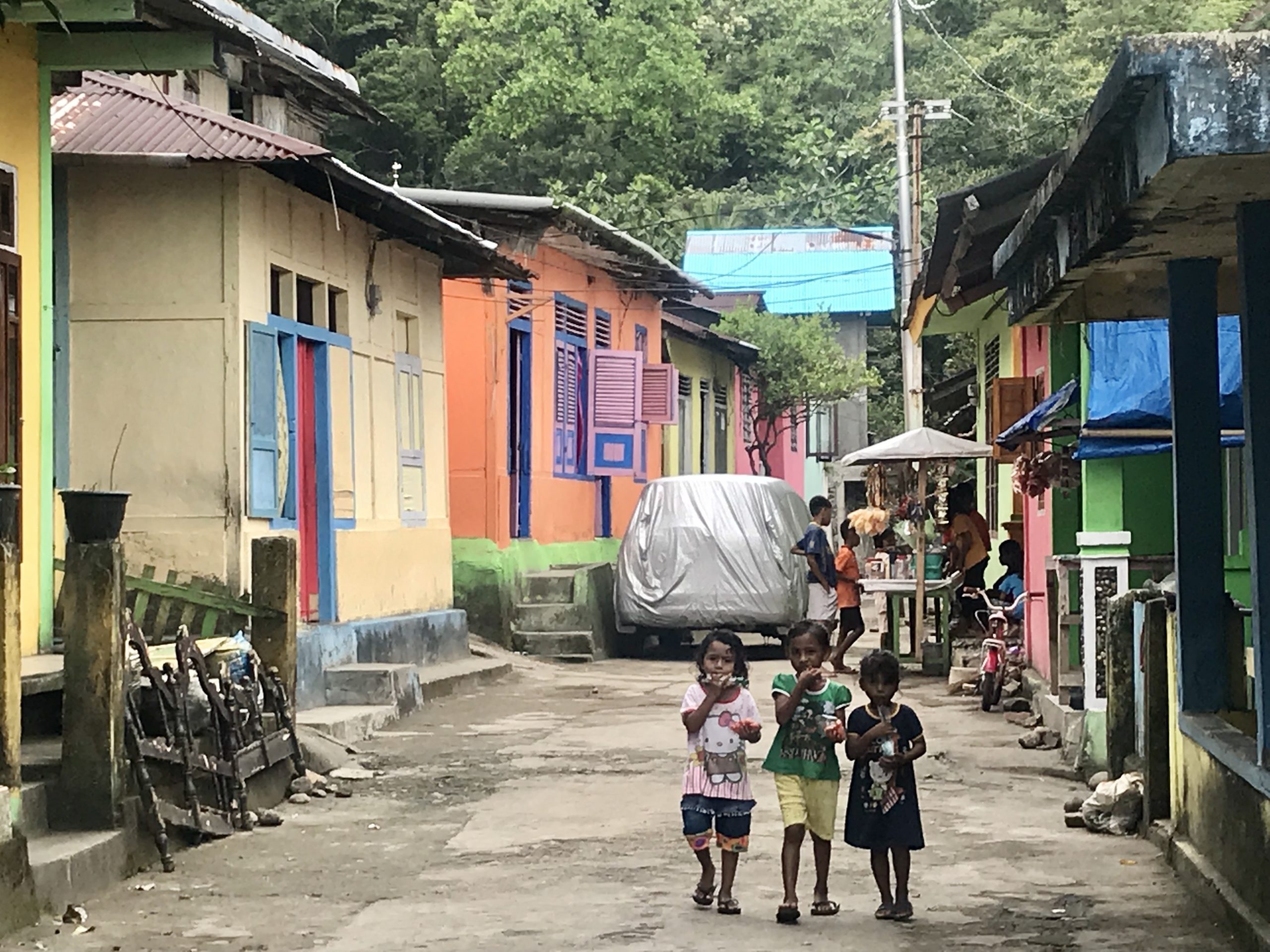
We started the visit with a walk through the picturesque village of Larike where we were greeted by curious children and locals (I must admit, we may have looked strange with our snorkelling equipment and cameras!). At the far end of the village we reached the stunning tropical and tree-lined Lady River (or Weidu Rupae as it is known locally). Hafes pointed to an area on the other side of the river that had large boulders: “this is where the eels live”. We waded across the shallow middle of the river and as soon as we got close to the boulders, around twenty eels came out of their holes and started to swim around our ankles. It was time to get our snorkel masks on! The water was pristine and cool, a contrast to the warm Indonesian day.
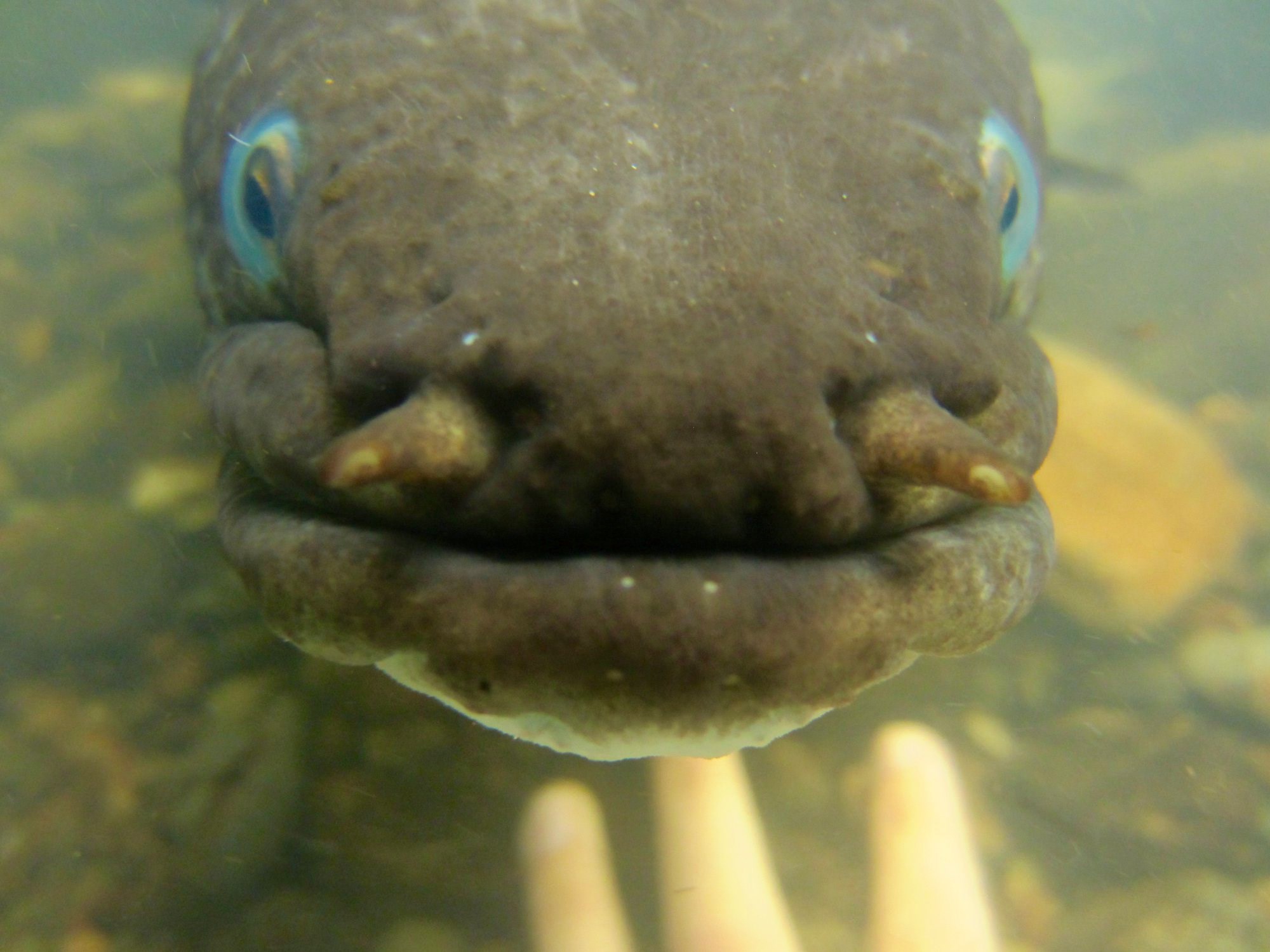
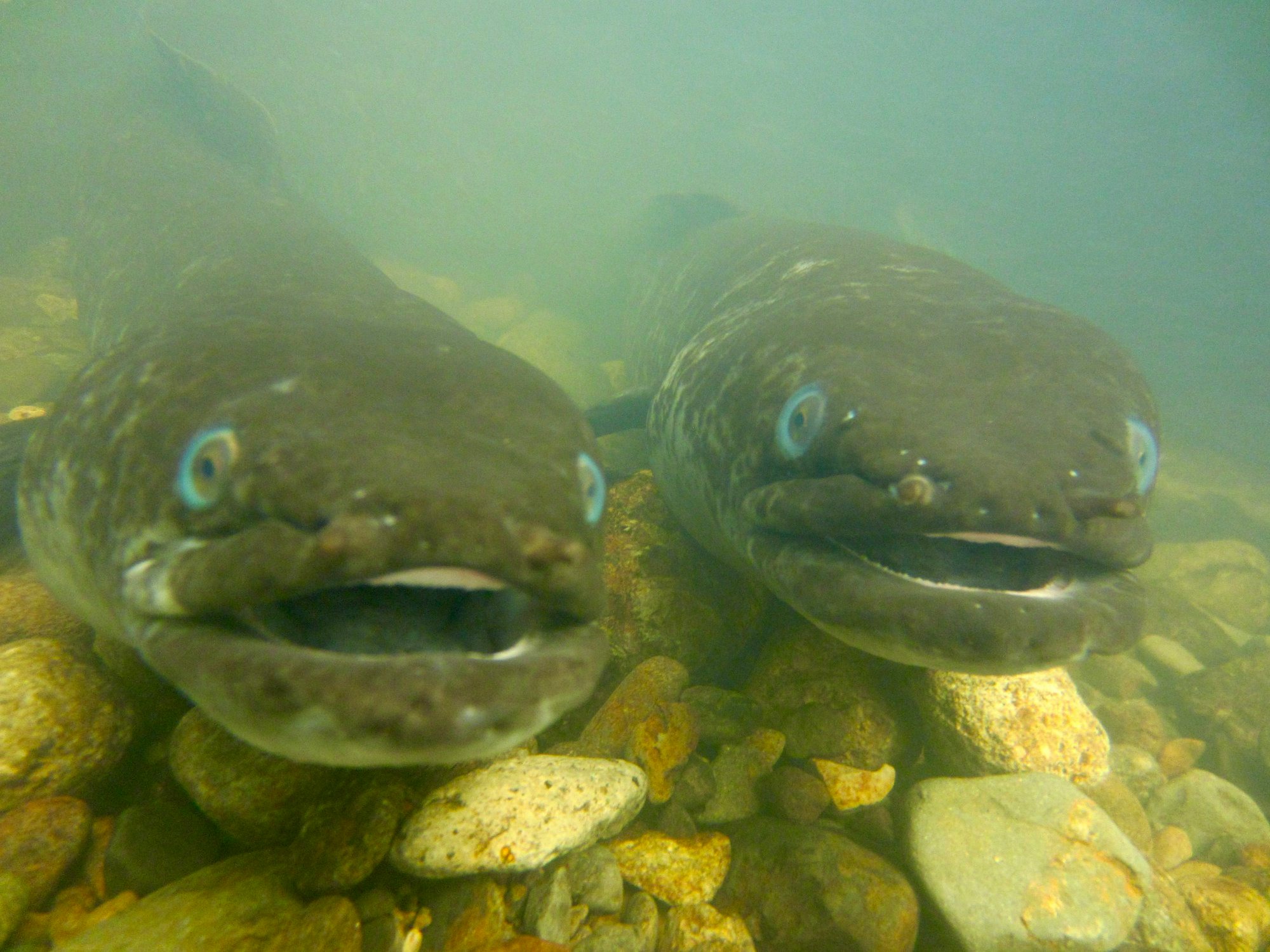
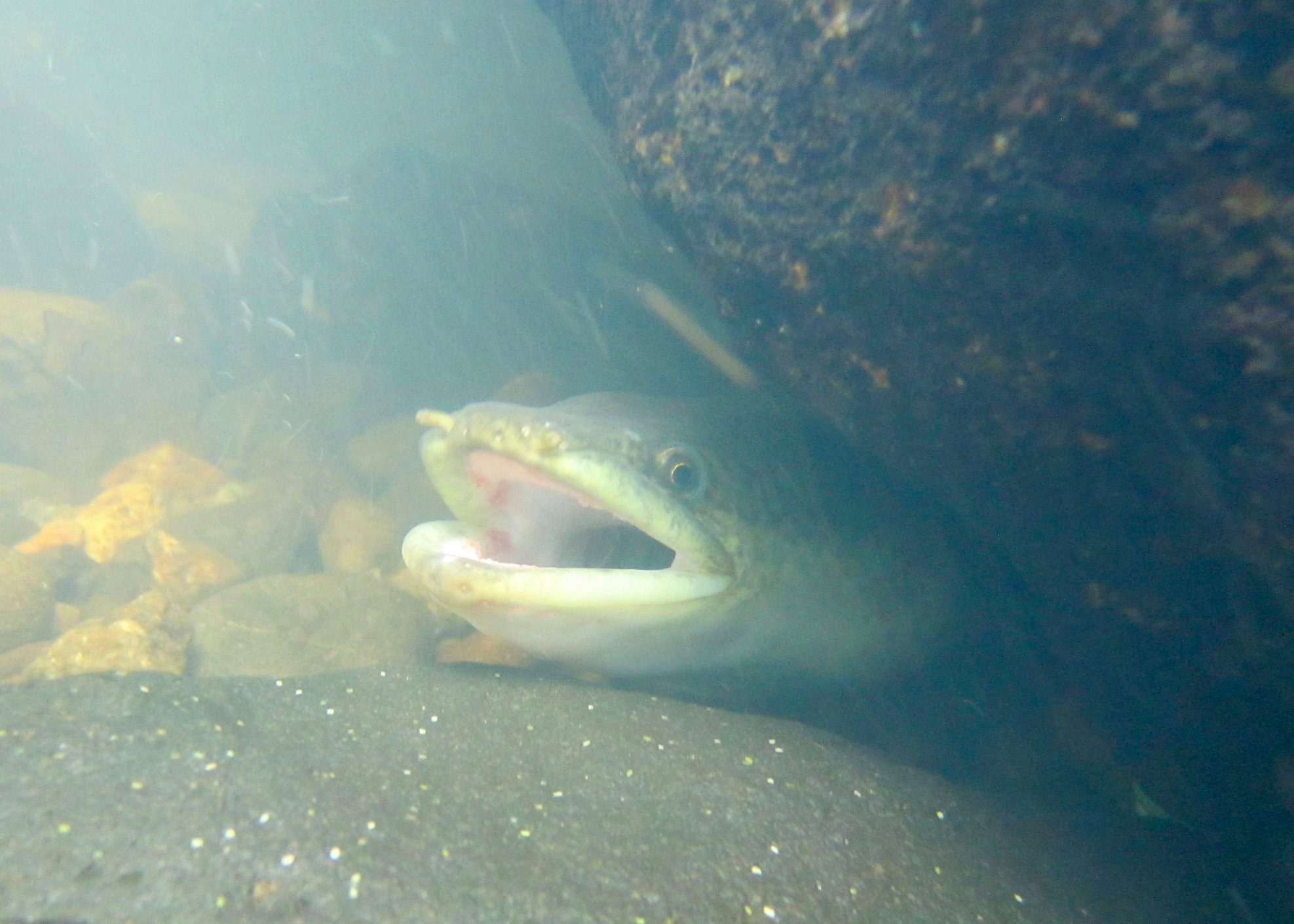
And what a treat the river had in store – as soon as I put my head underwater I had a window to a world that I would’ve never appreciated from the river bank. The water was clear and the river bed a beautiful mix of multiple shades of beige cobbles. Amazingly, the eels were not backwards in coming forwards (as my Mum would say); they were very inquisitive and in groups of two or three inched closer and closer to ‘bop’ my mask and underwater camera. This was especially true of the largest eel (named Bruce by the villagers). Bruce and the gang were clearly interested in the new strange big animal in their habitat, and that interest was mutual! It was clear to see that these fish are capable of complex and inquisitive behaviours and I was blown away that this conservation underdog is outright one of the most charismatic and charming animals I’ve hung out with. It was hard to top such a great experience, but Hafes tried – afterwards he took us to a shop in the village which sold real chocolate!
So has eel eco-tourism got legs? I’m clearly biased but in my opinion yes! If you like fish, water and exploring beautiful places, then hanging out underwater with eels should be on your bucket list. But it must be done in a sustainable way, like in Larike village where eels are in pristine natural habitat and free to come and go as they please, and where villagers benefit from tourism. Quite honestly, I’m convinced that if everyone had the chance to engage with eels on their terms like I did in Larike, everyone would become an anguillid advocate like Hafes and me.
Michael “Mick” Grant is a PhD Candidate at James Cook University in Queensland, Australia. He has been on a number of expeditions to Papua New Guinea to study its sawfish as part of his research into this fascinating and enigmatic group of fishes . Here we talk to Mick about his expeditions, why sawfish are so remarkable, and how he is hoping to help conserve this highly threatened group.
by Michael Grant and Merlin Veron
Why Sawfish?
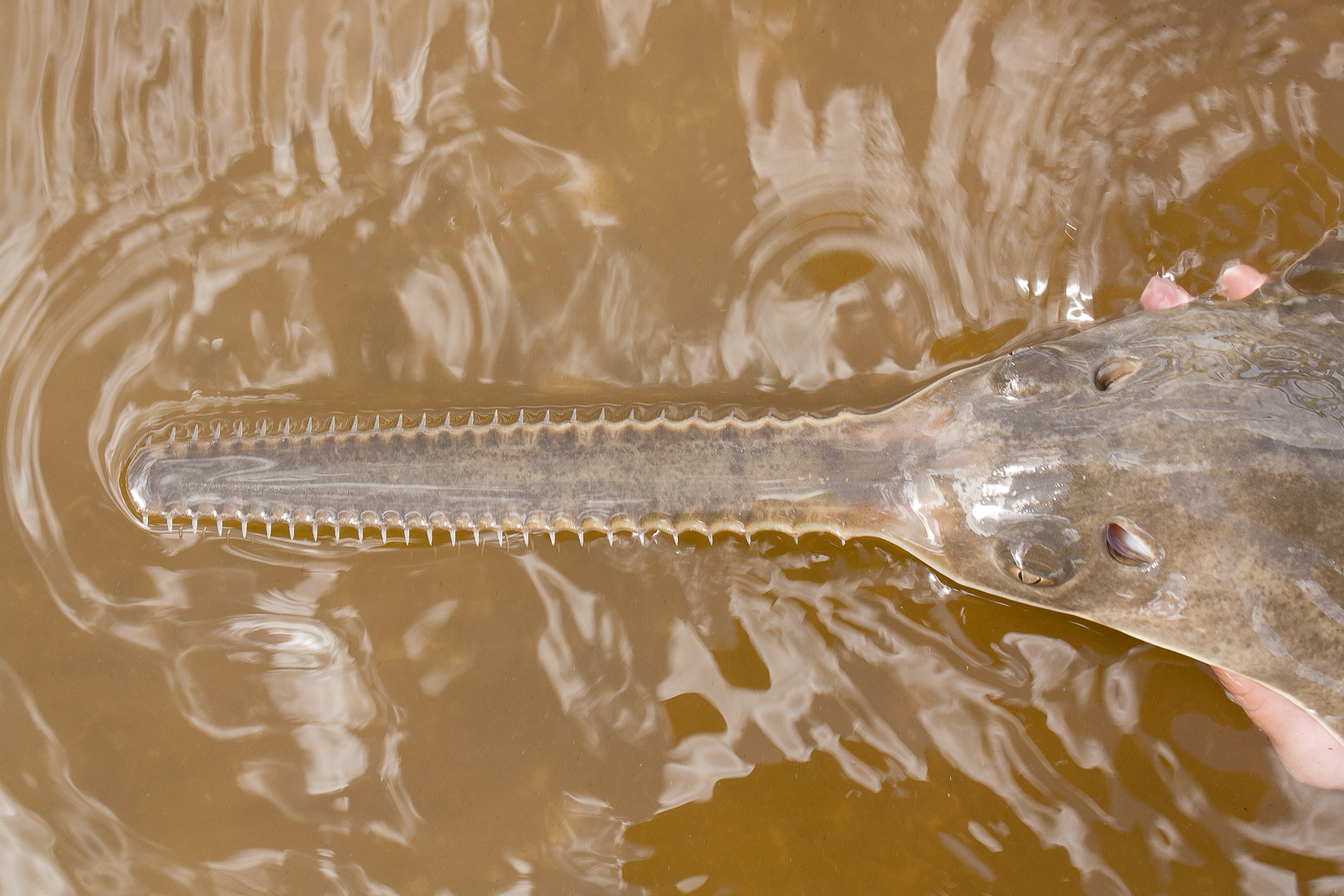
Evolutionarily, sawfish are very interesting, The toothed rostrum of sawfish make them a very unique member of the Chondrichthyes (sharks, rays, and chimaeras). There are five species of sawfish. The smalltooth sawfish, Pristis pectinata is found only in the tropical coastal waters of the Atlantic Ocean, while the dwarf Pristis clavata, green Pristis zijsron, and narrow Anoxypristis cuspidata sawfish species are found only in tropical waters of the Indo Pacific region. Meanwhile, the largetooth sawfish Pristis pristis is found globally throughout the topics.
Unfortunately for sawfish, they are one of the most threatened families across all sharks and rays. This is largely because their toothed rostrum (or ‘saw’) is very easily entangled in fishing nets. They are particularly susceptible to gillnet and trawl fisheries, which are the most common commercial fishing activities in estuaries and coastal regions where sawfish live. In recent decades, sawfish have experienced significant population declines and some species have lost up to 80% of their historic distribution. Presently, all species are either Endangered or Critically Endangered on the IUCN Red List of Threatened Species.
So there is an urgent need to focus conservation efforts on identifying where the last refuges for these species are, and to try and understand how sawfish interact with the local people in order to identify threats to these remnant populations. It would be a shame to lose such an amazingly distinct animal.
What is your research trying to discover?
Our research focuses on sawfish in Papua New Guinea, although we are also documenting other species of shark and ray as we go. While it was thought northern Australia was the last major multi-species refuge for the four Indo-Pacific sawfish species, it appears there may still be viable populations in Papua New Guinea also. Recently in 2014, my PhD supervisor Dr. William White discovered all four Indo-Pacific species still present in Papua New Guinea’s Western province when examining dried shark fin during a short visit to the region. This prompted a major research expedition throughout Papua New Guinea to try and discover where viable populations may be, which is what we are currently working on. Primarily we search for rostra around villages, as the rostrum is often kept for decoration in villages houses. Additionally, we have designed a questionnaire for local fishermen to gather information on how sawfish fit in the livelihoods of local people (e.g. if they are culturally significant), and whether fishermen have noticed a change in their population numbers over time.
We have also found lots of river sharks Glyphis spp. River sharks occur in freshwater also as juveniles, becoming more marine as they grow larger. These sharks are also endangered so it has been nice to find pockets where population numbers appear to be quite high.
When do sawfish use freshwater, and what sort of habitat conditions do they require?
Sawfish typically use lower salinity environments within tropical river systems when they are younger. This may be an adaption to avoid large marine predators, and also avoid competition from other shark and ray species that occur in coastal waters during their vulnerable juvenile years.
While all sawfish species occur in non-marine environments (salinity less than 30ppt), only the largetooth sawfish can tolerate freshwater (salinity less than 5ppt) for prolonged periods. Studies in northern Australia have shown that largetooth sawfish spend their first four to five years in the upper reaches of rivers, accessing floodplains opportunistically as they grow. They then move down into the estuaries and out into marine waters (salinities greater than 30ppt) around river mouths and shallow inshore areas as they become adults. The other species have a similar pattern of habitat use as they grow, except they do not occur in freshwater for long periods. Rather, juveniles use estuaries as nursery grounds, generally moving into more marine environments as they grow larger.
The trouble with this strategy of using both non-marine and marine environments during their life cycle is that it compounds their exposure to human pressures. These pressures include not only fishing, but also river engineering (canals, dams, irrigation etc) and habitat degradation. Most sharks and rays only use marine environments, and these extra pressures that sawfish face are further reasons why sawfish are among the most endangered shark and ray species.
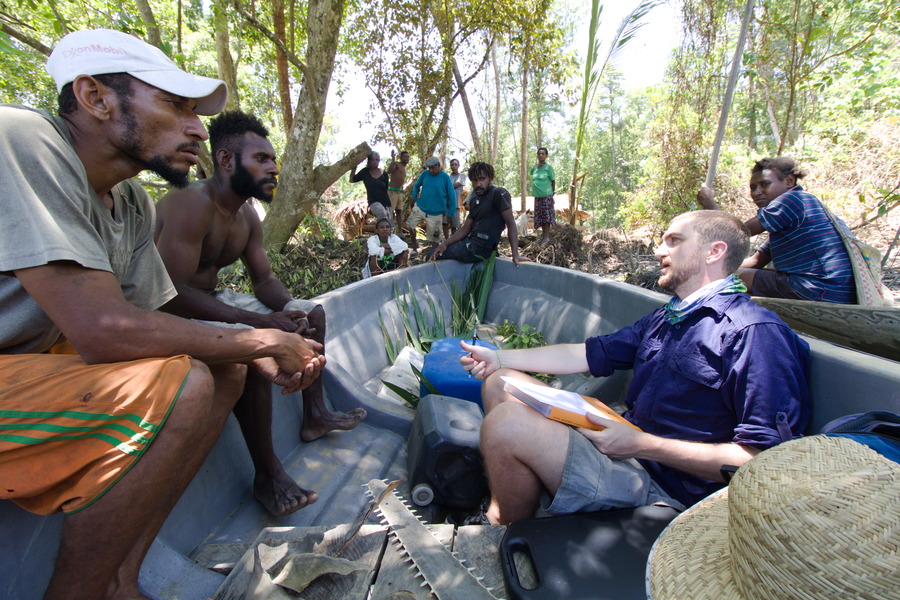
Michael Grant conducting an interview with local fishermen at Goare Village in the Kikori River Delta (c) Darcy Roeger
Just how do sawfish use their rostrum?
The rostrum has three main functions. Besides the obvious defence benefits that a sharp saw on one’s face would offer in shallow estuarine and inshore environments full of crocodiles and sharks, the rostrum is also used for feeding in two ways. Much like swordfish use their bill to stun schooling baitfish, sawfish have been observed rapidly waving their rostrum in schooling prawns and baitfish. The rostrums secret weapon however lies not in its sharp teeth, but rather a sixth-sense in small pores on its underside. All sharks and rays have pores around their mouth called ampullae of Lorenzini (first described by Stefano Lorenzini in 1678). These pores are interconnected and filled with a conductive jelly-like substance that acts as an electo-magnetic receptor. All living animals give off minute electric fields as a result of their bodily functions. These special ampullae of Lorenzini can detect these electrical signals, allowing sharks and rays to find prey that they cannot otherwise see (i.e. invertebrates and fish buried in sand). Sawfishes have a high concentration of ampullae of Lorenzini under their rostrum and they use it like a large metal detector to find food. This is a very critical adaption in the highly turbid rivers in which they live, as visibility is very low, and eyesight is not reliable enough to locate food alone.
When sawfish are caught in nets, the thrashing around of their rostrum in attempts to escape often results in damage to fishing gear. Because of this, some fishermen see sawfish as a pest, and sometimes cut the rostrum in order to untangle and discard the animal from their nets. While thankfully this practice is not considered to be common, starved sawfish that have had their rostrum cut off have been observed in northern Australia, indicating the crucial role the rostrum plays in sawfish feeding habits.
What’s your favourite fact about sawfish?
Probably the adaptability in the physiology of their blood. Weird, but first let me take you back to high school biology and explain. Fish (including bony fish, and sharks and rays) evolved in marine water. Because marine water is salty (and saltier than blood), fish lose water and absorb salt from the environment by osmosis and diffusion, respectively. To combat this, they have to drink constantly, and continuously excrete salts. If their blood gets too salty, it disrupts their nervous system and brain function.
In freshwater they have the opposite problem. They absorb water from the environment and loose salts. This means they don’t drink and retain salts as best as they can which they mainly obtain from food. If they loose to much salt, it also disrupts their nervous system and brain function. For fish that live in marine environments, they have adapted to have quite salty blood to help alleviate the ‘salt gradient’ between their blood and their environment so that they have less work to do in maintaining a balance.
Sharks and rays on the other hand have taken a different approach to the problem. They retain nitrogenous compounds in their blood, so that their overall blood salt level is loosely equal to their marine environment. The benefit of this is that they don’t loose much water by osmosis, and therefore sharks and rays generally don’t need to drink! The only problem they have is excreting salt. Unlike bony fish, sharks and rays have a special gland called the salt gland, that helps them remove excess salt from their body.
For sharks and rays this is a great adaption to marine environments, though it limits their ability to live in freshwater. For bony fish in freshwater, generally all they have to do is decrease the saltiness of their blood, so that they don’t absorb more water than the amount of urine their kidneys can produce. For sharks and rays however, they have the extra baggage of dissolved nitrogenous compounds in their blood. They have to reduce their blood salts, though keep enough for their nervous system to work, although they can’t lower their nitrogenous compounds too much. This means that in freshwater, they absorb lots of water because of the difference between their blood and the environment. They also have a very difficult time not losing all their salts through diffusion out of their gills. For this reason, there are only 43 rays that have been able to adapt to live in freshwater for their whole lives (most of which no longer have dissolved nitrogenous compounds in their blood), only 10 species of shark and ray that can occur in both freshwater and marine. The other 1200 species of sharks and ray stick to marine environments. Comparatively, around 40% of bony fish species (~15 000 species) occur in non-marine environments either full- or part-time, because this transition into freshwater is much easier for them. So the fact that sawfish can tolerate non-marine environments, and alter their blood chemistry to suit the environment type they are in is very special! We don’t entirely understand exactly how they do it at the biochemical level, though evolutionarily speaking, it’s quite a feat!
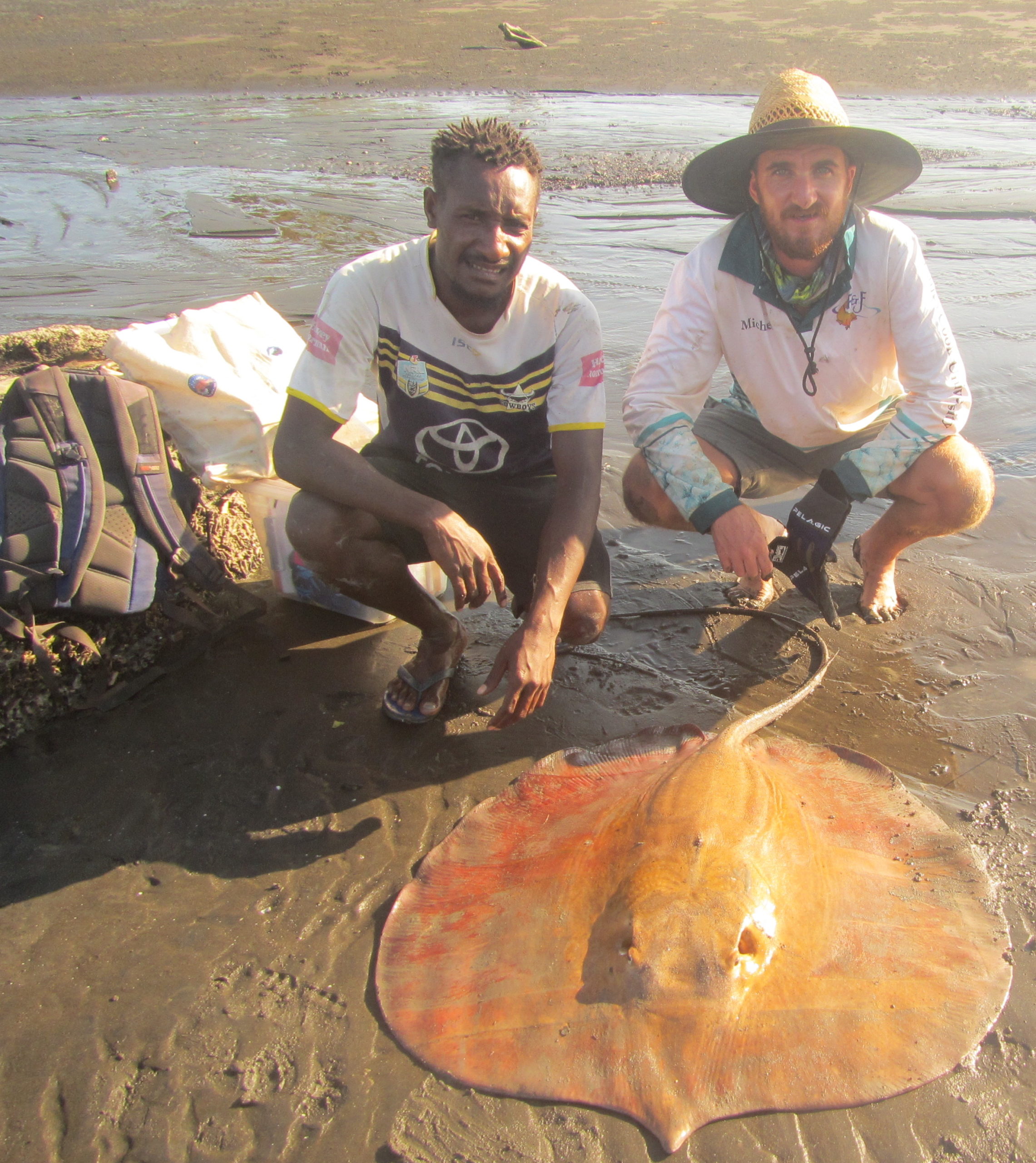
Michael Grant and Obiri, a local fisherman from Goare Village with the first confirmed account of the freshwater whip ray (Urogymnus dalyensis) in Papua New Guinea (c) Yolarnie Amepou
What is it that drew you to Papua New Guinea for your research?
What drew me to PNG wasn’t so much what we knew about the country but what we didn’t know! PNG is truly one of the last tropical wilderness areas on the planet. We know very little about what lives in its many river systems, and overall much of its coastline and riverine systems remain poorly documented. The second thing is the challenge that research in PNG presents. Outside of major towns and cities, there are no roads, limited airports, no sewage, no electricity and no running water. And to make things harder, crocodiles and disease carrying mosquitoes (including malaria) are commonplace, and wet season rainfall can be upwards of 10 metres. Accessing remote communities is a challenge within itself. Due to these challenges and inaccessibility, there a many discoveries to be made, and that’s what drives me to keep going back.
PNG is known for its birds of paradise and tree kangaroos, but what are its freshwater systems like?
The freshwater systems of PNG are truly remarkable. In the countries north, the Sepik River runs for more than 1,000km making it one of the longest tropical rivers in the world. Meanwhile in the Gulf of Papua in PNG’s south, the Fly, Bamu, Turama, Kikori, Wabo and Purari Rivers all drain into Gulf. These rivers are high flow and incredibly sediment rich, creating a highly turbid low salinity bay, perfect for sawfish. I’ve been lucky to travel up to the head waters of the Bamu, Turama and Kikori Rivers where conversely the water is crystal clear, flowing over volcanic rock through a labyrinth of dense rainforest. The natural beauty and shear expansiveness is truly hard to justify in words!
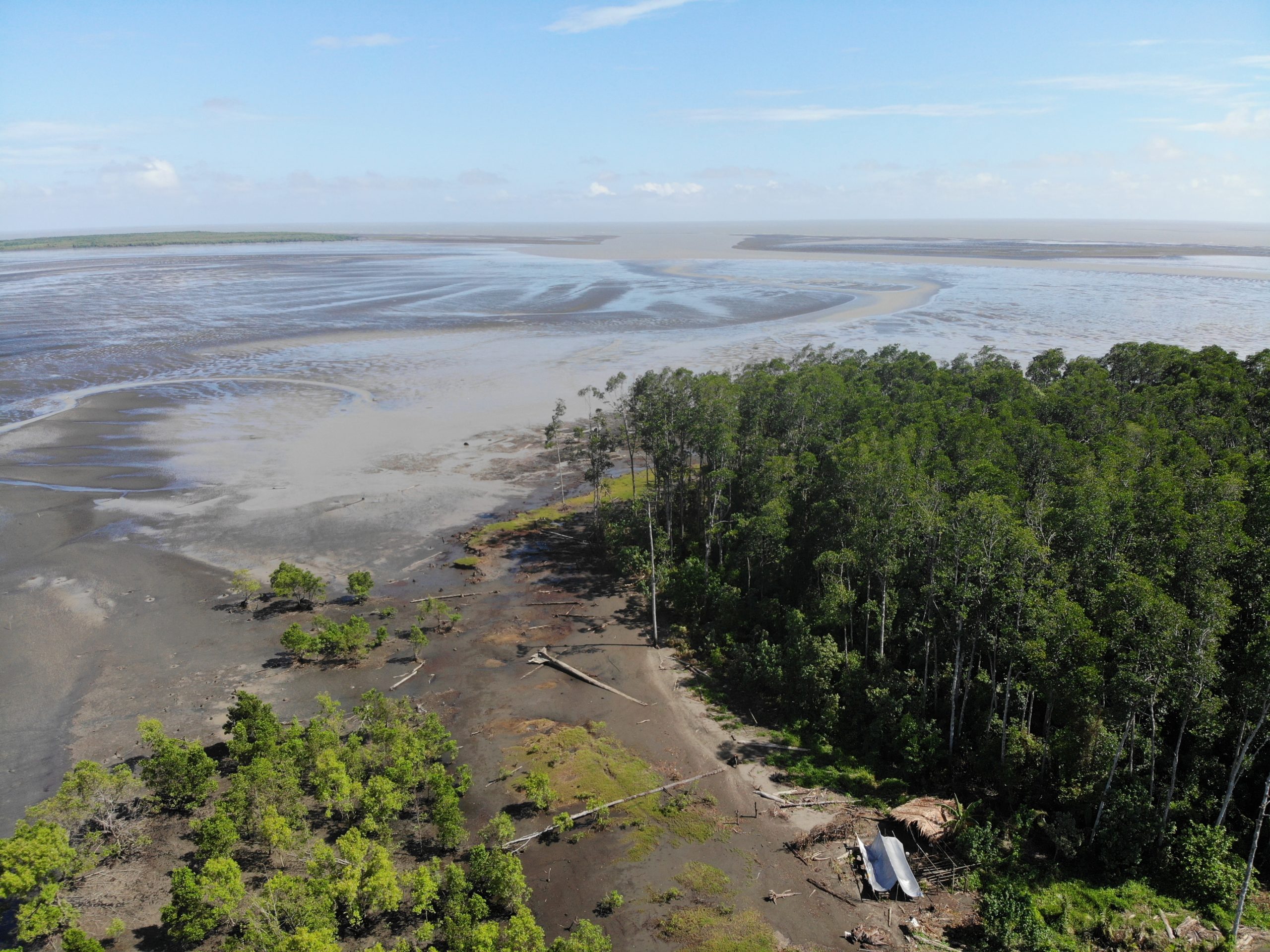
An expansive sand bank at the coast of Kikori River Delta. Shallow turbid sand banks are ideal habitat for all sawfish species (c) Michael Grant
Have PNG’s freshwater fishes been well documented, or do you think there are still many more to be described by science?
There have been only a few concerted expeditions over the years. The first assessment dates back as early as 1896, when the German botanist Carl Adolf Georg Lauterbach visited the Ramu River in PNG’s north (Lauterbach also collected the first sawfish specimen from PNG, a juvenile largetooth sawfish which is still preserved whole in the Museum für Naturkunde in Berlin). Since then there have been other surveys, while in more modern times the likes of Gerald Allen and David Coates have led extensive surveys throughout the 1980’s and 90’s, again largely focused on the Sepik and Ramu Rivers in the countries north. My PhD supervisor William White recently conducted a large shark and ray orientated project from 2014-2018. The project resulted in 132 documented species in PNG, 12 of which were previously undescribed.
That is what appeals to me about working in the Gulf of Papua. The rivers are so inaccessible that I’m sure there are many freshwater fish waiting to be discovered throughout the multitude of floodplains, creeks and tributaries. For example, in late 2018 we confirmed a species of freshwater whipray, Urogymnus dalyensis, at the mouth of the Kikori river. This species was formerly only known in northern Australia.
What’s the most breathtaking/jaw-dropping moment you’ve had while on your expeditions?
The whole experience is quite amazing. Travelling down the Fly River was certainly up there. We passed about 400km of floodplain stretching to the horizon on either side of the river. The volume of freshwater habitat was incomparable to anything I’ve ever seen.
What is the most hair-raising moment you’ve had while on your expeditions?
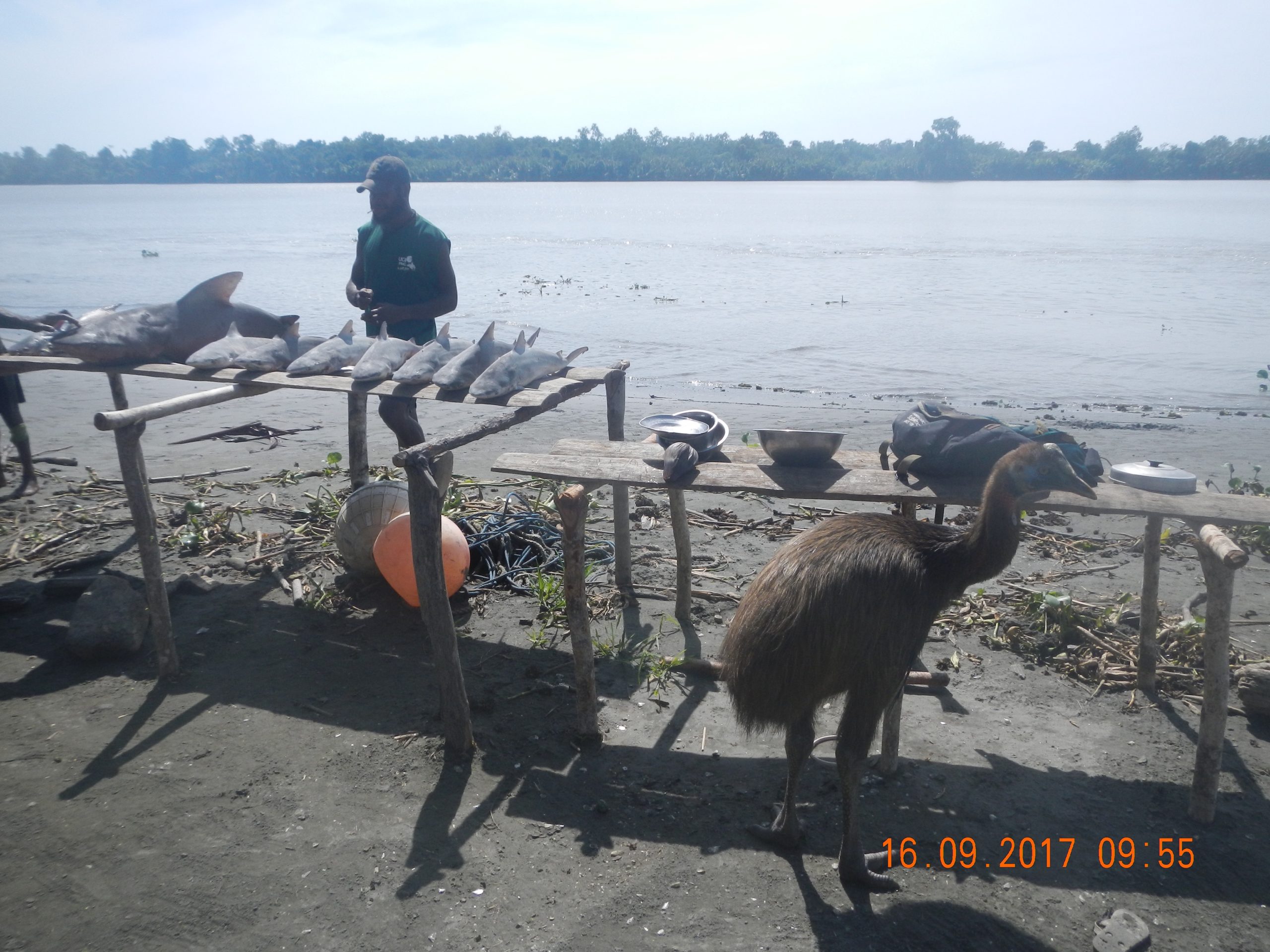
The standout ‘only in PNG’ moment would have to be having a cassowary (a large aggressive flightless bird endemic to PNG and northern Australia) interrupt our assessment of the mornings catch during a visit to Kopar Village at the Mouth of the Sepik River. It turns out the cassowary was actually a semi domesticated ‘pet’ of one of the local villagers, though it was a hair-raising experience for a while there! Other experiences have included crossing sand bars at the mouths of rivers on a 20ft banana boat during 2m plus swells with the outflow of rivers providing a strong undercurrent. When you are 200km from civilisation seriously thinking about ‘if we capsize here, where can I swim to and if I make it, then what?’ it certainly gets the heart rate up! The skippers however drive those sort of conditions regularly, and they never seem too worried.
A cassowary holds up assessment of the overnight shark catch, Kopar Village, Sepik River (c) Michael Grant
What advice would you give young conservationists trying to research and protect rare and unique fish?
Admittedly, it can be a hard space to get into. There is often limited funding for such research and usually a bit of luck is required. I think volunteering is a great way to start out, and importantly not being afraid to reach out and offer assistance however you can. I’m a big believer in the old adage ‘it’s not what you know, it’s who you know’. If you are not meeting and talking to people, it’s hard to get anywhere! I think social media is a good platform, lots of scientists are on Twitter. Starting a professionally orientated account has paid good dividends for me personally. For undergraduate or postgraduate researchers, attending conferences in also important. For me, actually presenting a poster or talk comes secondary to having the opportunity to meet people. That being said, pick a conference that will attract the type of people you want to meet. Lastly, recognising that management of fisheries is not about managing the fish, it’s about managing the people. This cannot be overstated enough. I think social sciences, and studying how animals fit into the livelihoods of people is still in its infancy. There’s lots to learn and any conservation orientated project needs to include the local people.
What’s next for you and the wonderful sawfish you study?
A dangerous question to ask a mid-end term PhD candidate! It’s all a bit of an unknown at this point (for me and sawfish!). I’ve got a few things lined up to continue working in Papua New Guinea. There is lots of capacity building required to get things moving over there, and I’m fortunate to have good relationships with the University of Papua New Guinea and Provincial Fisheries officers. Gathering information to inform fisheries management plans is what the focus will be moving forward. If we can develop some sort of legislation to protect sawfish that would be fantastic, although community based awareness measures are probably more realistic in the short term. I’m planning on writing a children’s book to distribute to remote communities in PNG which will help inform people on sawfish, and concepts of overfishing. Taxonomic research is also high on my future agenda. I’m lucky to research under Dr William White at Australia’s National Fish Collection so we’ll see what happens. 10 years from now I’d like to be pulling the strings in my own lab, but for now its about completing research projects and ticking boxes.
The author would like to acknowledge and specifically thank William White for giving him the opportunity to work in Papua New Guinea and to his other PhD supervisors, Andrew Chin, Colin Simpfendorfer and Peter Kyne. Thanks also to Save our Seas Foundation for funding our research, and to the PIKU Biodiversity Network for their contribution to our project. Interested readers can stay up to date through the twitter account @Mickkgrant
Kathy is a Freshwater Specialist with experience from across Asia, Africa and Europe. She visited Ambon to see its awesome anguillids on holiday earlier this year.
When people think about the world’s most threatened animals, it’s unlikely that Anguillid (freshwater) eels spring to mind. In Europe, freshwater eels are one of our least appreciated but most critically endangered species, having declined by around 95% since the 1980s. Unlike most people, as a freshwater ecologist, I spend a lot of time thinking about animals like the freshwater eel because globally, all freshwater species are facing considerable threats. In fact, freshwater species are declining at double the rate of terrestrial or marine biodiversity and for me, freshwater eels are a bit of a poster-fish for all freshwater biodiversity.
Anguillid eels have life cycles more complex and mysterious than any other species I can think of. They are catadromous; spending most of their lives in freshwaters but returning to the ocean to spawn (a return journey of around ten thousand kilometres). Eels can live for many years, especially females – the oldest known European eel was over 100 years old. Despite being long-lived they only spawn once in their lives. The marine phase of an eel’s life remains much of a mystery – we do not know what eels do during their time in the oceans or exactly where they spawn. An exciting new project is radio-tracking eels to attempt to answer the mysteries that have eluded scientists since the time of Aristotle.
There are multiple threats facing European eels, and to different extents, all other species of freshwater eel around the world. Threats include: climate change, human infrastructure and development, disease, water pollution, habitat loss, over-exploitation and mortality caused by pumps and hydropower dams. Furthermore, as the illegal trade in European, American and Japanese eel is stopped, eels in other parts of the world where protections are less, may be at increased risk.
A critical step in the conservation of eels is ensuring people care about them and with this in mind, during a recent trip to Ambon, Indonesia, I visited Larike village, home to a population of Marbled eels, Anguilla marmorata, to find out why they are important to the local community. I met with Hafes Lauspa who is the King (or Raja) of Larike village. Hafes has taken the unusual step of protecting the eels in his village, meaning that no one can fish for them or harm them in anyway. Hafes hopes that by protecting the eels, the eels will attract tourism to the village and generate income.
What were your motivations for protecting the eels?
People in my village have a big appetite for the eels as they believe they are good for achieving healthiness. But the population of eels is getting smaller and it made me think that I must do something to protect the eels so that the population does not become extinct.
What do the villagers think of the eels and the tourists that come to visit them?
Since I introduced tourists to the eels of Larike in 2010, the villagers are very happy. They realised that to protect the eels is one of the ways to bring Larike village to the eyes of the world.
What are your hopes for the eels, the river, and Larike village for the future?
I am the son of my father, the son of a king and the son of kings, we become a king since the village exists. It is our duty, as kings, to love, to carry and to protect the village until our last breath. As a king I hope to make the village much better in the future. The river has existed for a long time and brings so much life here to the village. I hope it exists forever and will always be with us, for current and future generations. And what about the eels – I hope the eels know that we really love them, and I hope they can love us as much as we do.
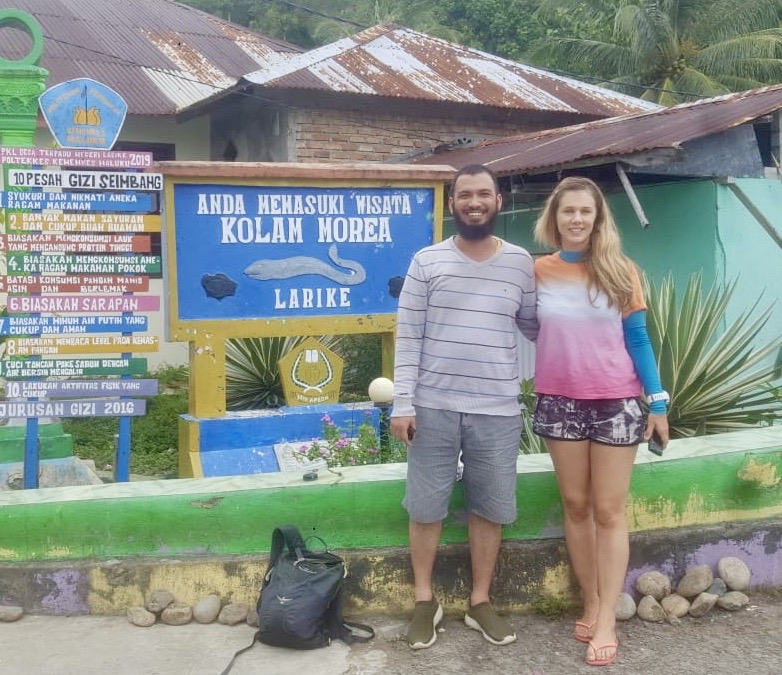
Hafes (King of Larike Village) and I posing by the sign welcoming tourists to the village.
Whilst visiting Larike I took the chance to personally test out how much of a tourist-attraction these giant Marbled eels might be. For me the opportunity was very special, my time spent time with their eely cousins in Europe has been dominated by catching them during fish surveys – a challenging endeavour because in the hand they are extremely strong (both physically and in terms of their opinions of trying to escape) and pretty slimy which doesn’t help deal with their aforementioned strength. However, in Larike Village, I had the opportunity to observe freshwater eels on their terms for the first time in my life.
We started the visit with a walk through the picturesque village of Larike where we were greeted by curious children and locals (I must admit, we may have looked strange with our snorkelling equipment and cameras!). At the far end of the village we reached the stunning tropical and tree-lined Lady river (or Weidu Rupae as it is known locally). Hafes pointed to an area on the other side of the river that had large boulders ‘this is where the eels live’. We waded across the shallow middle of the river and as soon as we got close to the boulders, around twenty eels came out of their holes and started to swim around our ankles. It was time to get our snorkel masks on! The water was pristine and cool, a contrast to the warm Indonesian day.
And what a treat the river had in store – as soon as I put my head underwater I had a window to a world that I would’ve never appreciated from the river bank. The water was clear and the river bed a beautiful mix of multiple shades of beige cobbles. Amazingly, the eels were not backwards in coming forwards (as my Mum would say); they were very inquisitive and in groups of two or three inched closer and closer to ‘bop’ my mask and underwater camera. This was especially true of the largest eel (named Bruce by the villagers). Bruce and the gang were clearly interested in the new strange big animal in their habitat, and that interest was mutual! It was clear to see that these fish are capable of complex and inquisitive behaviours and I was blown away that this conservation underdog is outright one of the most charismatic and charming animals I’ve hung out with. It was hard to top such a great experience, but Hafes tried – afterwards he took us to a shop in the village which sold real chocolate!
So has eel eco-tourism got legs? I’m clearly biased but in my opinion yes! If you like fish, water and exploring beautiful places, then hanging out underwater with eels should be on your bucket list. But it must be done in a sustainable way like in Larike village where eels are in pristine natural habitat and free to come and go as they please, and where villagers benefit from tourism. Quite honestly, I’m convinced that if everyone had the chance to engage with eels on their terms like I did in Larike, everyone would become an anguillid advocate like Hafes and I.
Lady riverIn the river with eelsSinging eelBruceLrike village
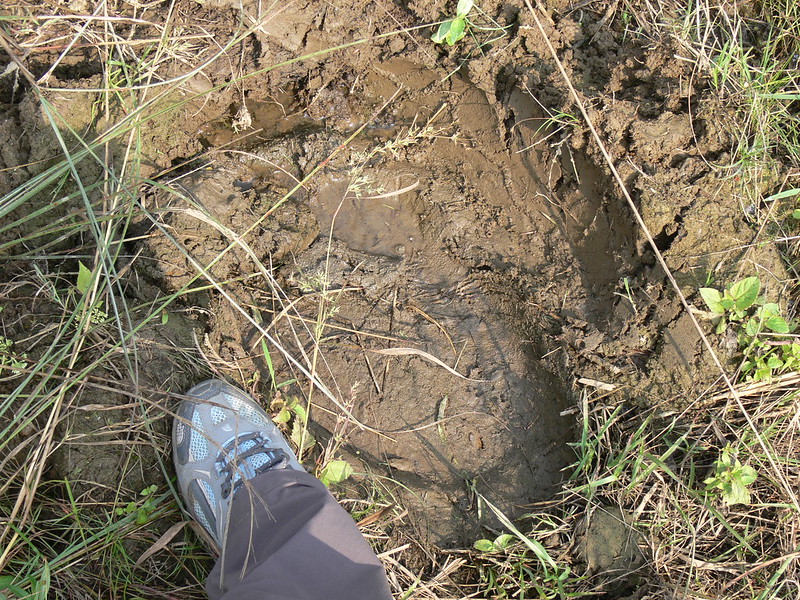
Killifish are a group of unusually small and colourful fish that have evolved particularly robust egg casings. These casings prevent the embryos from drying out and some species survive for months, even years in dry mud. This has allowed killifish to colonise and survive in the smallest temporary pools, even in an elephant’s footprint. The sudden appearance of fish in fresh puddles has given rise to the phrase ‘It rains fishes’.
Because the pools may only be wet for a short time, some species can grow and mature extremely rapidly. The turquoise killifish (Nothobranchius furzeri) is capable of completing its lifecycle within 14 days of hatching. This remarkable factor has led to the species being used in research on ageing.
From a conservation point of view, it is easy to see that temporary water bodies can be particularly vulnerable to human disturbance and many species are under threat. Aquarists have collected and kept killifish for many years and pay particular attention to keeping records of where they were originally collected. By doing this and exchanging eggs between themselves they help ensure their survival in case of habitat destruction. The British Killifish Association (https://killis.org.uk/wp/) is one such group of aquarists who are hoping to co-ordinate their conservation efforts within Shoal.
Some may well ask how it is possible to keep wild fish and support conservation. It’s a fair question and one that deserves an answer. Many of the currently described killifish species are only known to science because of aquarists, who have travelled out to remote locations to collect them. Without knowing that a species exists it is not possible to conserve it and aquarists have contributed extensively to the scientific knowledge about these beautiful fish. They often return to those same areas in subsequent years to monitor how the habitats are coping. Aquarists also support many individual conservation projects in particular areas.
As we now know the effectiveness of such small projects can be limited, but collectively we can still make a difference. So, we are looking to increase awareness of conservation within the fishkeeping hobby to make it more sustainable and help ensure the survival of many of the over 1,000 killifish species in existence. Conservation and restoration of habitats is crucial, but where this isn’t immediately possible Killifish Associations hope that they can at least preserve captive populations so that future re-stocking is at least possible. Co-ordinating that effort with scientists, conservation organisations and public aquaria can help raise the profile of these small fish species.
Killifish are little gems found across much of Africa, The Americas and even southern Europe and Asia. They are deserving of our protection, as much as land animals.
To get an idea of how colourful they are, why not visit these two excellent sites:
https://www.itrainsfishes.net/content and https://www.itrainsfishes.net/content/. Run by people who collect, document and even describe new species. It’s a fascinating world, and another astonishing part of the Shoal.
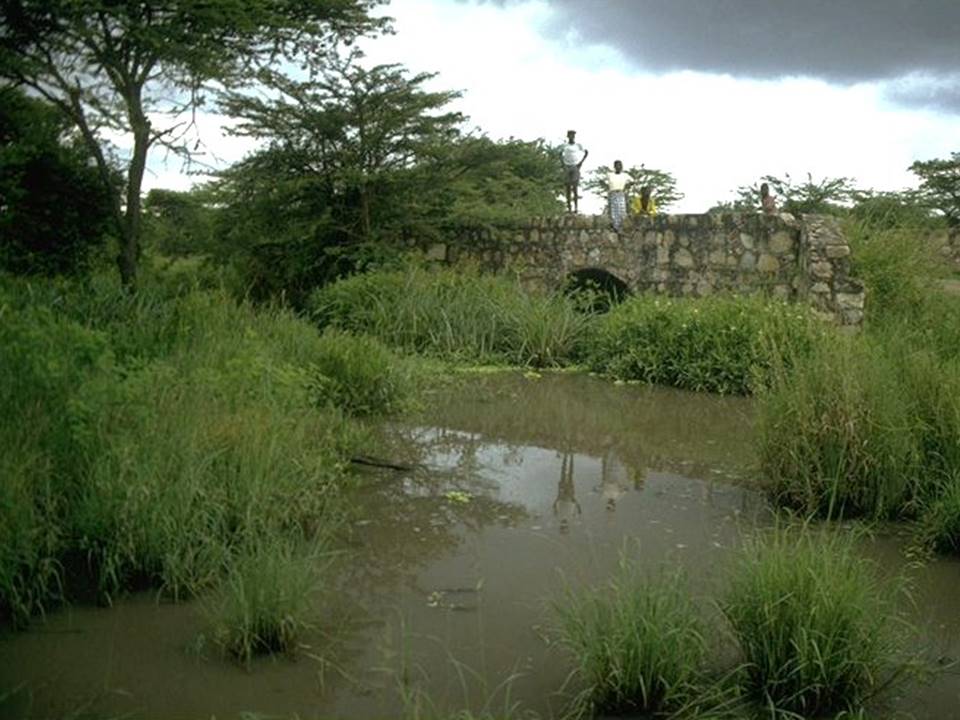
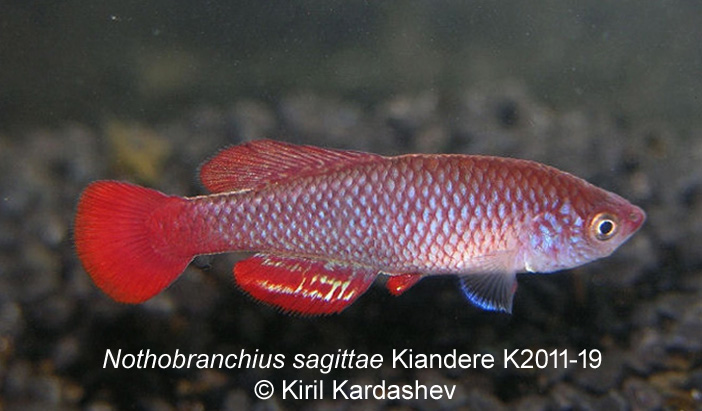
In 1993 enthusiasts from the British and American Killifish Associations ventured into a muddy pool in Tanzania to see whether any new species may be lurking under the thick grass. They found an undescribed Nothobranchius species’.‘Twenty one years after entering the hobby the beautiful fish is finally named, after study by ‘citizen scientists’, as Nothobranchius sagittae. Finally recognised by the scientific world as a species it is evaluated by the IUCN in 2016 as endangered.
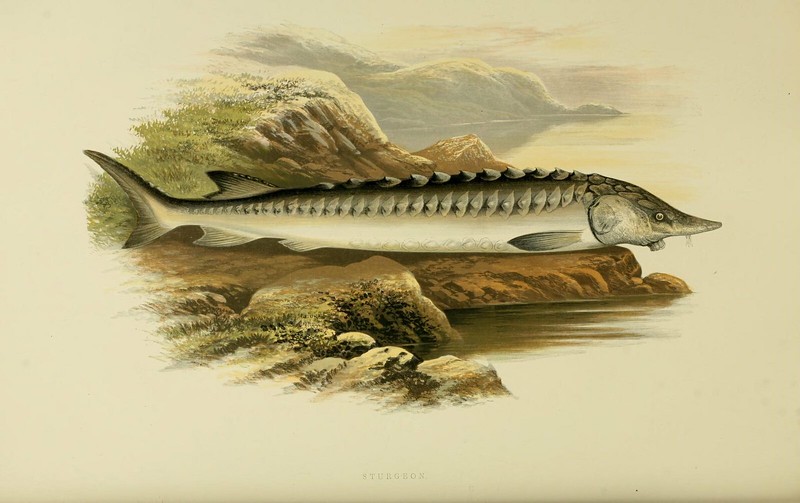
In 2017 I was fortunate enough to intern on a project that focused on protecting six critically endangered sturgeon species that have their last refuge in the Rioni River in Georgia, which unlike the Danube and Garonne rivers, had no sturgeon conservation programme.
Following drastic habitat loss, recent surveys show that the Rioni supports the world’s only population of Colchic sturgeon (Acipenser [persicus] colchicus), and some of the last populations of five other species. All species are Endangered or Critically Endangered, and populations are rapidly decreasing (>50% per generation) due to fishing, illegal trade and reduced spawning habitat with just 16% of the historic spawning area remaining!
The internship opportunity, and hosting in Georgia, was kindly supported by Fauna and Flora International (FFI) a leading environmental organisation that focuses on protecting biodiversity across the globe whilst supporting local, sustainable livelihoods. Through working with the government, WWF Caucasus and a range of local stakeholders including local fishers, the project aimed to reduce the poaching and illegal trade in sturgeon products on local markets and to address the further loss of spawning habitat.
This project was one of personal interest, as someone who grew up the coast and had a small fish tank as a child, I have always wanted to work in conservation with fish; in particular working out effective ways, at a local level to help protect species and their habitats. With relatively limited exposure to the UK, Georgia is a country that is as mysterious as it is stunning, with the opportunity to work abroad and learn a new culture making it such an attractive opportunity.
Prior to heading out to Georgia, I spent several weeks spent in FFI’s Cambridge office working out river access points. As maps and information on the Rioni River were sparse, it was important to work out a lot of the detail prior to departure so as to best utilise my time in the field. The nature of Georgia’s turbulent recent past meant that information was either hard to come by or extremely disjointed. One of the key aims of this internship was to fill in some of the knowledge gaps and help develop the foundations to further monitoring activities.
Upon touching down we headed west to the mouth of the Rioni River, at a city called Poti on the eastern shore of the Black Sea and next to the Kolkheti National Park. Over the next few weeks we visited sites along the river and interviewed local fishermen where possible. In keeping with findings from across the world’s river basins, local fishermen had noticed a dramatic decline in the abundance and size of large fish species. What was also notable was that the older the fishermen that was interviewed the greater the loss appeared, particularly the plight of local sturgeon populations. Few of the fishermen below 50 had even seen a sturgeon being caught from the river and sadly many of the fishermen stated that poaching was still a serious problem.
The time spent in Georgia helped to develop a working knowledge and local network base for the area which has contributed to the conservation of sturgeon, in particular in combatting poaching and illegal trade. Most importantly, the work that I was fortunate enough to be a part of led to the first baseline study for sturgeon being conducted. Until recently, very little was known about the status of this particular sturgeon population compared to those in the Danube and Garonne rivers, with there was uncertainty about whether these fish were even still reproducing in the Rioni at all.
I can excitedly tell you that the results from all the hard work FFI is doing is showing that juvenile sturgeon have been found, indicating that sturgeon are still spawning in the Rioni. This is fantastic news and highlights the resilience of ecosystems under extreme pressure but also serves as a warning. Sturgeon, one of the largest fish species on the planet, an animal that has existed for millions of years is surviving…. but barely.
I would urge anyone who reads this to support Shoal, FFI, and WWF with their freshwater conservation projects. Iconic and lesser known species are in decline across the globe and every effort must be made to ensure that these majestic fish can continue to spawn and in turn inspire the next generation.
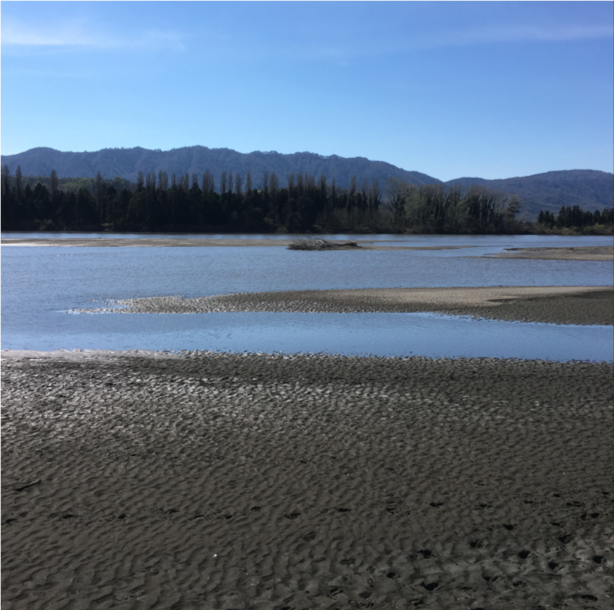
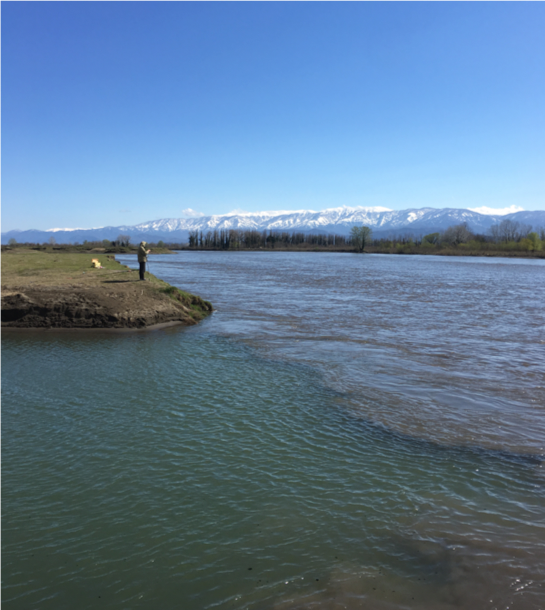
The Rioni River, Georgia (c) Matt SpencerThe FFI team conducting surveys on the Rioni River, one of the last locations in Europe where sturgeon continue to spawn. (c) Matt Spencer
In this blog, Shoal Director Mike Baltzer takes a look at the present situation in the peat swamp forests of Malaysia and Indonesia and shines a light on some of the most spectacular but little known species that call this place home.
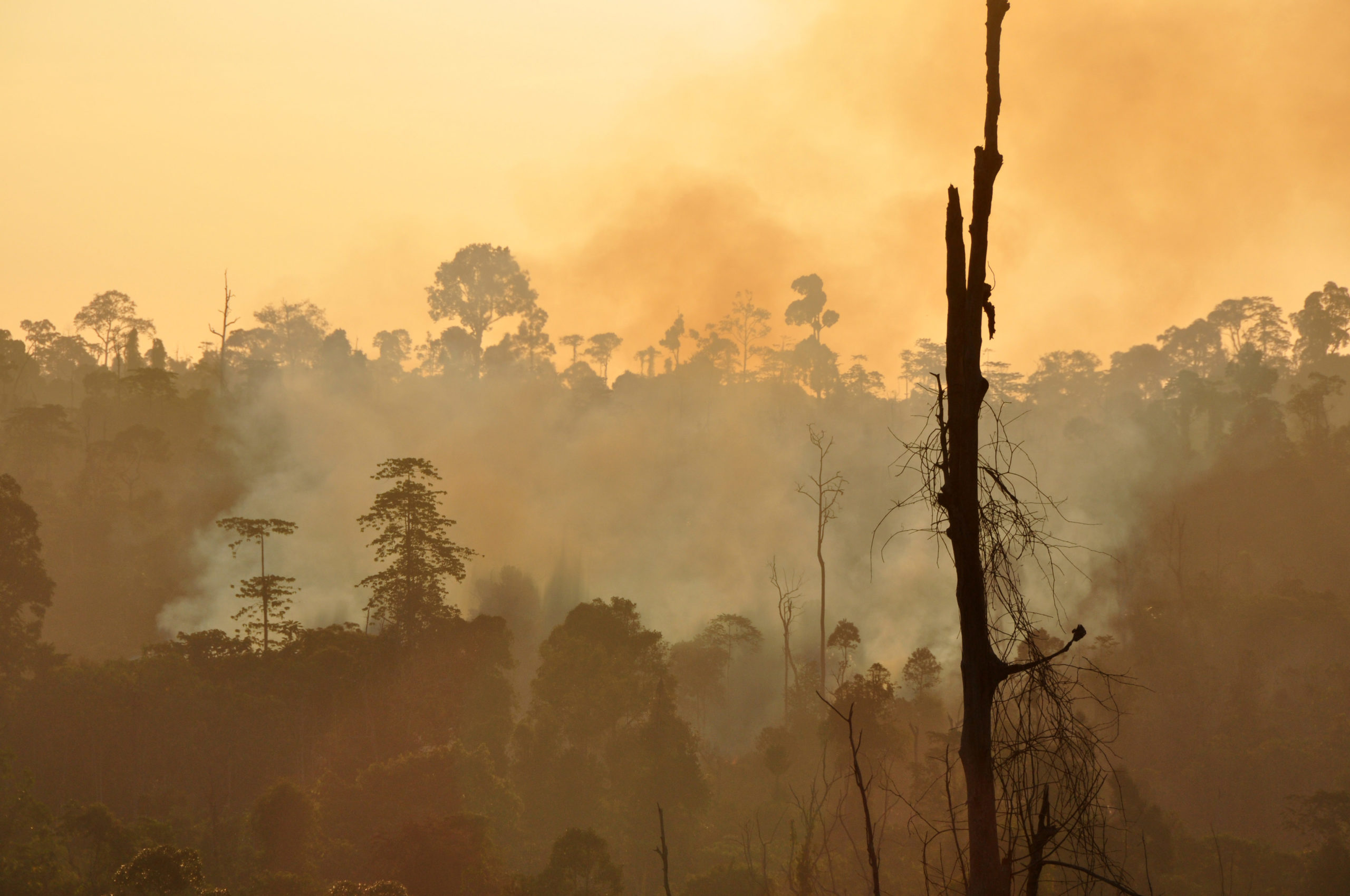
The forests of Malaysia and Indonesia are burning again. Back on our screens are the horrifying scenes of millions of people living with extreme levels of air pollution and images of homeless orangutans and tigers, the wild icons of these great wildernesses. But there is one story of a magnificent group of species threatened by the fires that we haven’t heard enough about and that is the fishes.
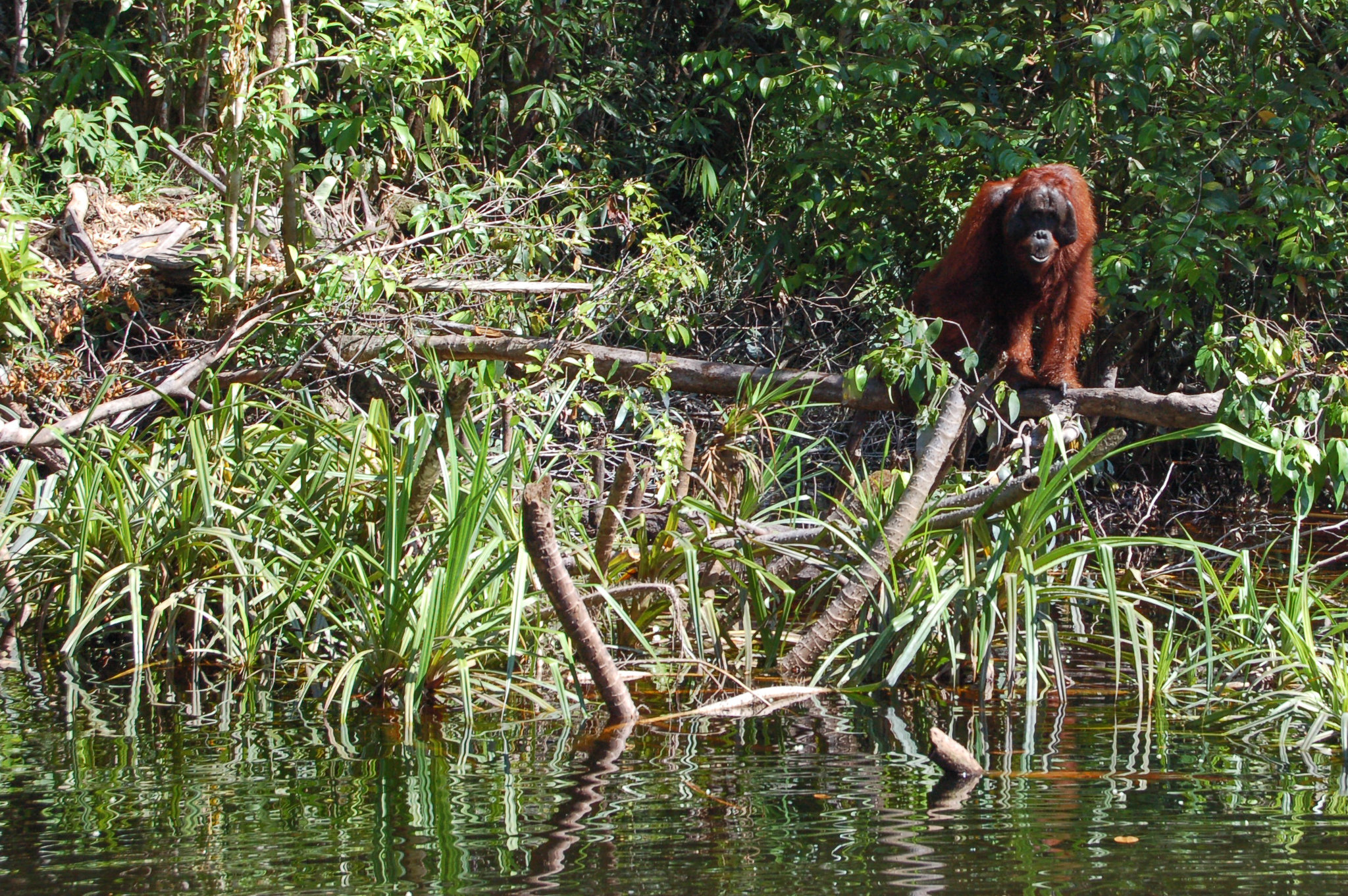
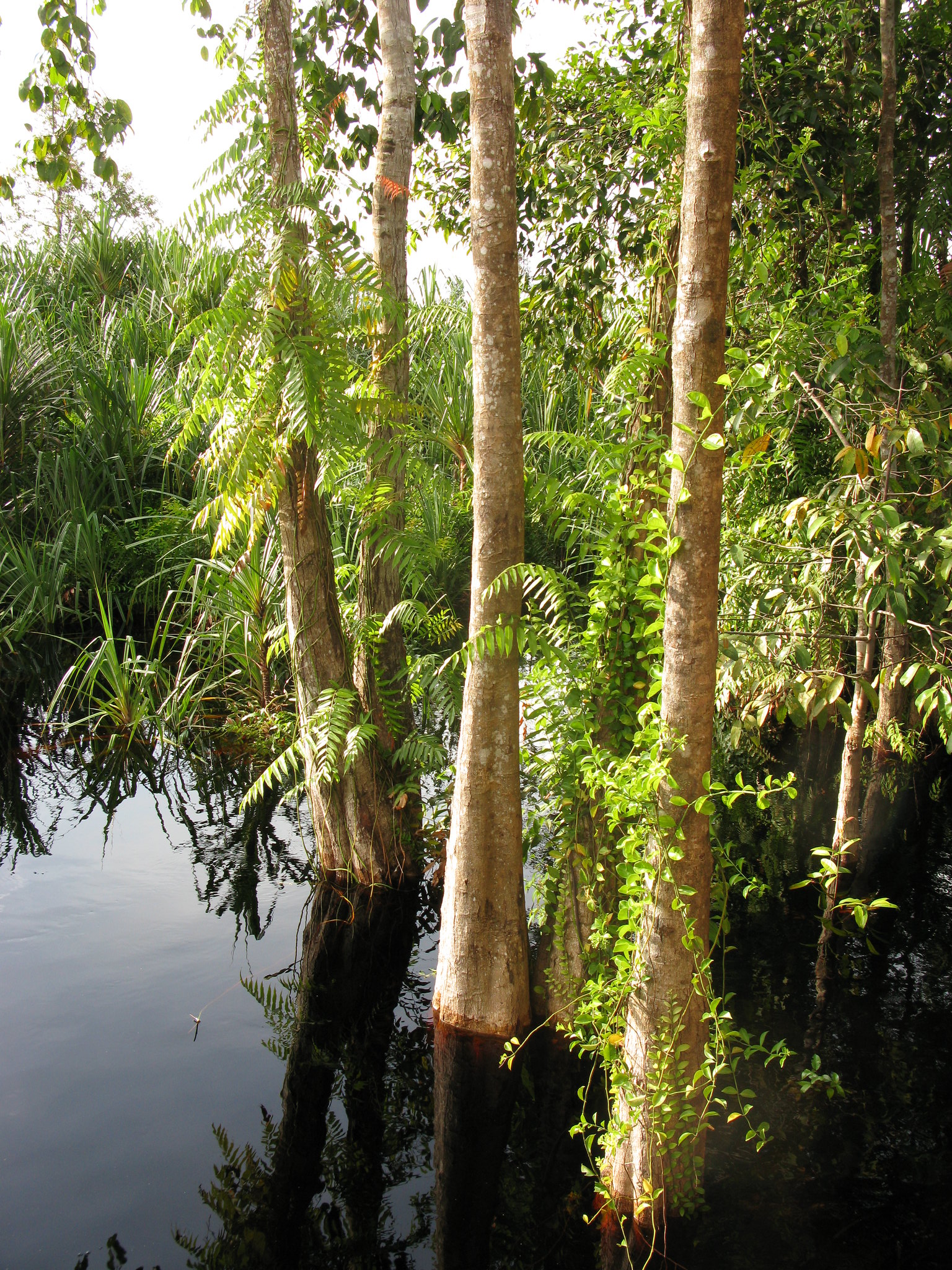
An Orangutan overlooks the Sekonyer River in a peat swamp forest in Central Kalimantan, Indonesia (c) CIFOR
It is not our first instinct to worry about life underwater when see forests burning. But the use of these fires to clear peat swamp forest for oil palm, acacia and rubber plantations is removing a habitat vital to thousands of wetland species such as fishes that are being rapidly driven towards extinction.
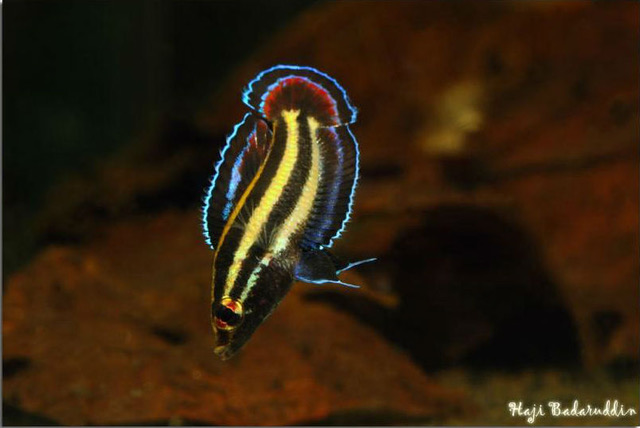
The permanently flooded peat swamp forests are ancient habitats that support thousands of unique species including many of the most threatened fish species in South-East Asia. One group of species are the peat swamp forest specialists from the Parosphromenus genus, endearingly known as Liqourice Gouramis.
These incredibly beautiful tiny jewels live hidden away in the murky blackwaters of the peat swamp forests. They are airbreathers living in the leaf litter in the tiny dark streams and channels that cut through the peat swamp forests, meaning they can tolerate the low oxygen levels in the water.
Scientists have only recently begun to understand the “Paros” as they are nicknamed. The first species was described in 19th century but new species are still being discovered. Where they live, they are often abundant but easily overlooked. The aquarists, the fishkeeping hobbyists, have not overlooked them. Liquourice gouramis are naturally very popular because of their incredible beauty and diversity. But they are generally hard to keep and often hard to see in an aquarium and so very few people keep them.
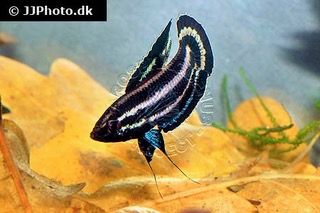
Parosphromenus harveyi, Assessed as Endangered on the IUCN Red ListParosphromenus alfredi, Assessed as Critically Endangered on the IUCN Red List
And it is the few people that do that may be part of the answer to their survival. The little known Parosphromenus Project, set up by a passionate German aquarist called Peter Finke has been quietly working to save these species through a voluntary effort organised by aquarists. Working across the world, these enthusiasts share information, maintain breeding populations of each species and raise awareness of the plight of these fishes. They have even begun to identify the habitats and seek to gain their protection in a variety of innovative ways.
The issue facing the liquorice gouramis is that their habitat is shrinking. Many of the species are now confined to very tiny patches and islands, some not much bigger than a football field of peat swamp forest in a sea of oil palm.
Shoal together with the Parosphromenus Project and IUCN ASAP, the Asian Species Action Programme are working with experts and partners in Malaysia and Indonesia to set up immediate action to halt any further loss of the Liquorice Gourami habitats and to secure sustainable populations of these species. This is a unique collaboration between aquarists and conservation agencies.
Next time you see the fires on the news, think of these tiny fishes that are facing extinction through the loss of these great forests.
If you want to know more, please contact us by email at: info@shoal.org
by Ralf Britz, The Natural History Museum London and Eleanor Adamson, The Natural History Museum London and the Fishmongers’ Company
In Europe and the Americas, if people have heard of snakehead fishes, it is usually because of their star status as the villain of tabloid headlines (Fishzilla), or horror B-movies (Snakehead Terror, Frankenfish). This “terror campaign”, stemming from the discovery of feral populations in the USA, is a good example of how the spotlight can be focused on freshwater invasive species and the damage they might cause outside their natural range.
Inside their native range, a recent scientific discovery reveals there is still much to learn about the snakehead fishes – an unusual group, where some species are important food fishes, some are famed in angling circles, and some are collected to become interesting features in home aquariums.
Snakeheads occur naturally in Africa (three species) and in Asia (about 47 species), where they live in rivers, lakes and wetlands. They are very successful predators, using their excellent eye sight to track down prey, and this has earned the reputation of some of the larger snakehead species as being worthy opponents as game fishes, especially the bullseye snakehead in Thailand and the giant snakehead in Cambodia, Vietnam and peninsular Malaysia.
A few fish hobbyists keep snakeheads as interesting, often colourful predators, including the Near Threatened rainbow snakehead, that comes from a small area in the Brahmaputra River Basin. The group have fascinating reproductive behaviour which can be observed in captivity if conditions are right; they either build and defend floating nests in which they lay their eggs, or they are mouthbrooders, with the male carrying eggs around for several weeks.
Snakeheads have a few other uncommon traits too – they are adapted to oxygen poor waters and can survive there thanks to an accessory breathing organ above their gill cavity – a special organ that enables them to breathe air. In fact, snakeheads must breathe atmospheric air regularly, as their gills are not sufficient to supply all their oxygen needs. This air breathing capability means snakeheads can survive out of water for some time, and some species use this to their advantage, “walking” overland from one water body to another by wriggling movements of their body.
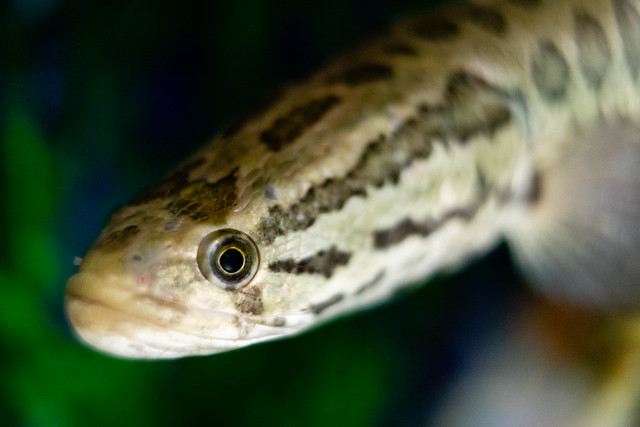
The northern snakehead is a large fish that has a long body with a mottled, snake-like pattern. Above, a northern snakehead is on exhibit at the Aquatic Resources Education Center in Washington, D.C., on March 2, 2019. (Photo by Will Parson/Chesapeake Bay Program)Bullseye Snakehead (c) Florida Fish and WildlifeForest Snakehead (c) Marcus Karlsson
Successful freshwater predators, fish that can breathe air and walk overland…… perhaps the last place anybody would expect to find a snakehead is underground.
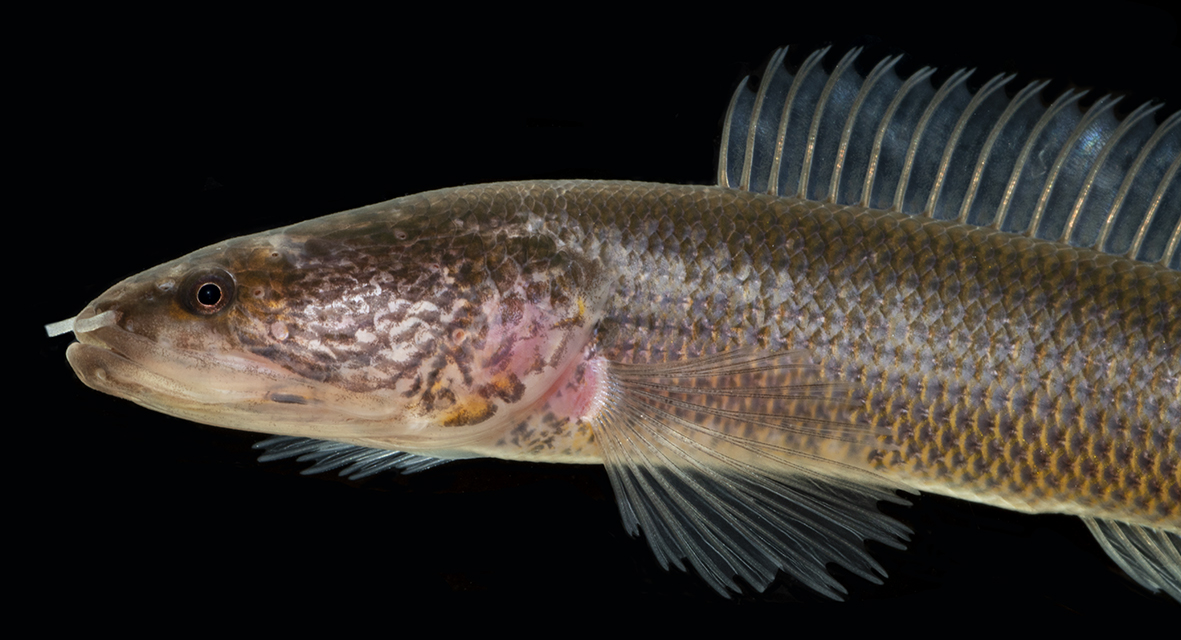
But this is exactly where the most recent snakehead species to be discovered comes from – the enigmatic Gollum snakehead, Aenigmachanna gollum.
Only a few weeks after devastating floods in Kerala in August 2018, a young Indian saw two fish that seemed unusual to him while he was at work in his rice paddies. Where had they appeared from? Most likely, from an unseen, unexplored, underground habitat, washed out by the heavy rainfall and floods. His curiosity triggered, he caught the two strange fish and photographed them, and then via his online social network, tried to find out what they were.
The photos caught the eye of Indian ichthyologist Dr Rajeev Raghavan, a conservation researcher and fish taxonomist at the Kerala University of Fisheries and Ocean Studies in Kochi. Rajeev immediately recognized the significance of this discovery, and got in touch to initiate a scientific investigation. With the help of PhD student Anoop V.K., fish molecular systematists Neelesh Dahanukar (Indian Institute of Science and Education), and myself (Ralf Britz, NHM London), the team set out to study this intriguing find in more detail.
Our results showed that not only was this surprising fish a new snakehead species, but it was also a new kind of snakehead, so different from all the other known species, African and Asian alike, that it deserved to be placed in its own, new genus. We came up with the genus name Aenigmachanna (“enigmatic Channa”) to reflect the enigmatic nature of this fascinating new branch of snakehead diversity. And the species name? As this newly discovered fish had risen from a subterranean world, we thought a fitting name would be Gollum, after JRR Tolkien’s famous fictional character who dwelt underground.
We are still in the process of studying the unique, enigmatic Gollum snakehead, trying to uncover more of its secrets from the two specimens that were discovered last year. The team also hope to find more living specimens, so we can observe it alive and learn more about its life habits, its general biology and its reproductive behaviour, as well as its evolution and phylogenetic relationships.
The area of Kerala from where the Gollum snakehead was discovered is becoming known for its unique subterranean fauna that so far includes eight fish species, all very strange looking, often blind, pigmentless, and with unknown biology and unclear evolutionary relationships. Not much is known about these weird species or the underground world they inhabit, but they probably spend their whole lives in freshwater aquifers, and most of them were discovered in the deep man-made wells that cut down to reach these natural subterranean water supplies. Such wells are typical for this part of India; and almost all rural households have one. We are about to start an exciting new project aimed at getting a better idea which organisms live underground in Kerala. And for this we need the help of as many local villagers as possible, as they are the ones who encounter the animals of this peculiar habitat when they drain their wells to clean them.
Gollum snakehead (c) Anoop VK
Post Overview
shoalstaging
September 18th 2019
Conservation, Feature, Fish, New Species
Share this post:
Recent News
One of the World’s ‘Most Wanted’ Lost Fish Is Rediscovered
My interest in freshwater fish started off as a school kid who kept goldfish, guppies and gouramies at home. Only after several years of keeping these ‘exotics’, did I understand that they were ‘enemies of nature’ – a leading cause for decline in native biodiversity, often pushing many species to extinction. I quickly quit my fishkeeping hobby, unhappy about the fact that I could not find any ‘good fish’ to keep. Field trips during my undergraduate program made me realise the importance of my backyard, the Western Ghats, as one of the world’s finest natural repositories of freshwater biodiversity.
What’s the best memory you have from all the times you have had working on the rivers of India?
There are several, and I come back from each of my field trips with several interesting incidents. This includes watching shoals of the endangered Redline Torpedo Barbs to monster-like mahseers. But the moment I will always cherish is describing the world’s only known subterranean snakehead fish, Aenigmachanna gollum, probably one of the most enigmatic species of freshwater fish ever described from India! This was such an unusual fish – like a beast from outer space!
Rajeev on a recent scoping trip for a conservation project to save the hump-backed mahseer (c) Michael Baltzer
What changes have you seen since you first visited those river systems?
The crystal-clear waters in the mountain streams of the Western Ghats had fish species a hundred times more beautiful than the goldfish I kept in my tank, but their habitats were being quickly threatened in the race for development. Very few rivers of the Western Ghats are now free flowing, with the majority of them being dammed for irrigation and hydropower. Alien Invasive Species have colonised habitats from headwater streams to the estuaries with species such as Amazonian Sucker Catfish and African Catfish now dominating many water bodies and resulting in severe declines of native species. Clearly, we have lost more than 50% of critical freshwater habitats of Western Ghats, and have no idea how many silent extinctions have taken place!
Why do freshwater fish need our help?
The ‘freshwater paradox, where more than 16,000 fish species live in less than one percent of the Earth’s surface, and subjected to a range of anthropogenic stressors is one of the greatest challenges for global biodiversity conservation. With more than 60 species already extinct, 22% of the species (of over 7,600 species assessed for their conservation status) facing a high risk of extinction, and recent extinction rate estimates several hundred times higher than natural extinction rates, freshwater fish are truly a group ‘living on the edge’. As many human-induced stressors are predicted not only to persist but also intensify in the foreseeable future, and several emerging threats adding to the woes, freshwater fish and the ecosystems they rely on will require immediate and sustained conservation interventions if they are to overcome the Anthropocene. Despite this, freshwater fish conservation is often invisible, and ignored on the global conservation agenda.
Is there a particular species which you think epitomises the challenges of conserving freshwater fish?
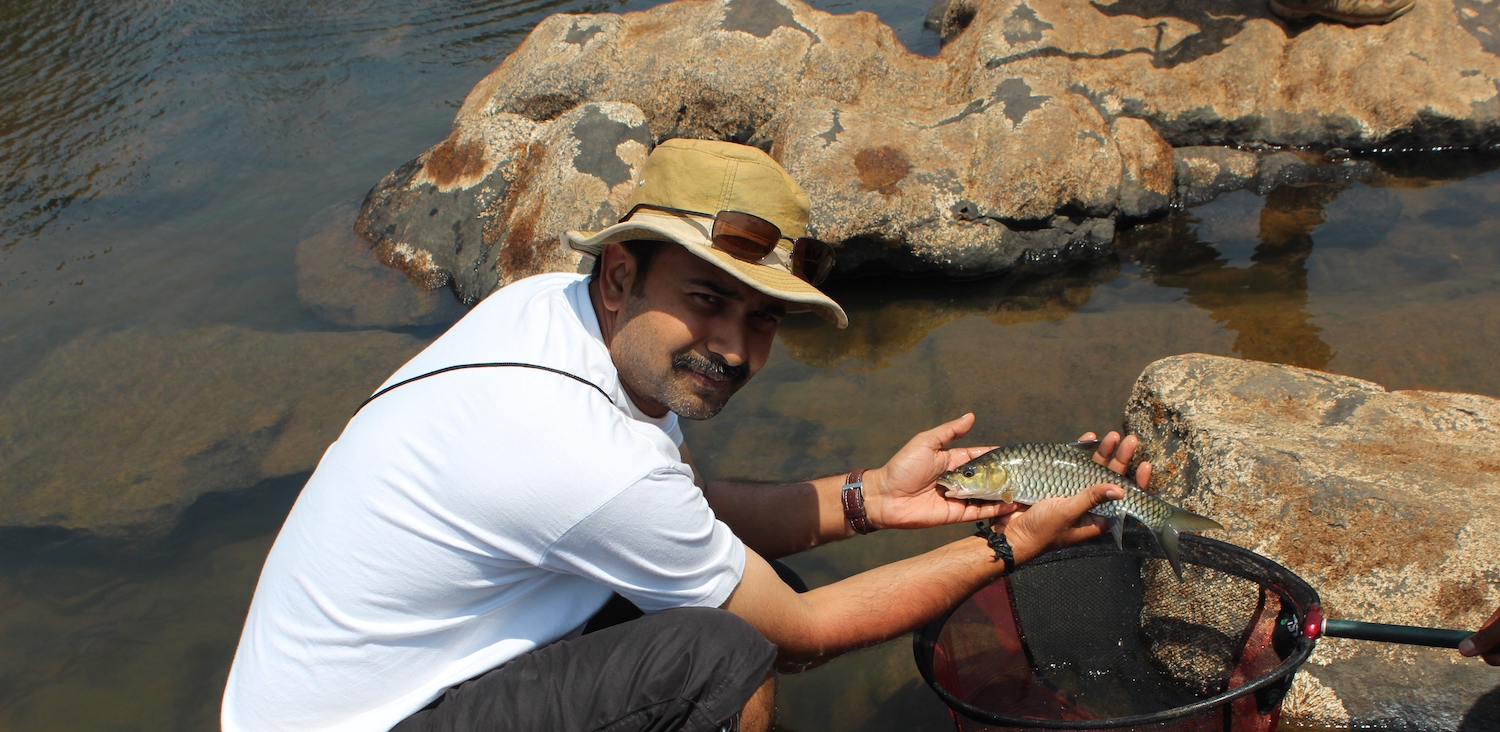
No doubt, this would be the humpbacked mahseer, one of the world’s largest and rarest mahseer species. Working with colleagues from the Mahseer Trust and the Bournemouth University, I was fortunate enough to have resolved the identity of the humpbacked mahseer – a mystery that lasted for 150 years. A megafish, and an icon of freshwater conservation in the Western Ghats, the humpbacked mahseer has shown catastrophic declines (>90%) since the early nineties, and is now listed as Critically Endangered on the IUCN Red List. Despite these striking statistics, there is absolutely no on-ground conservation action in place to save these giants from going extinct! The remaining populations of the humpbacked mahseer lives in some of the remotest habitats in the Western Ghats including the ‘Moyar Gorge’ – also infamous as the ‘Mysore Ditch’. Saving the humpbacked mahseer would mean working in some of these isolated river systems inside forests teeming with wildlife, including elephants, tigers, leopards and bears, and where accessibility is extremely limited, and movement severely compromised.
Why is the research you do so important?
Regardless of over three centuries of ichthyological research, we know very little about the diversity (around 240 new species continue to be described every year!), distribution, biology and ecology of freshwater fish species, thus hindering the development and implementation of on-ground conservation actions. For 90% of tropical freshwater fish species, the only information we have is their name, type locality and basic morphology. Bridging this knowledge gap has been hampered by the lack of organised and continued investment for freshwater science and policy making.
Why are you involved in the Shoal Partnership?
Conserving the world’s freshwater fish species requires a proactive strategy and a combination of approaches from public awareness, to scientific research, and on-ground conservation practice. There is still time to conserve and sustainably manage the Earth’s freshwater biodiversity but we should act now! Shoal arrived at the right time, providing hope that we can all work together to protect critical freshwater habitats and threatened species. It is indeed heartening to see some of the world’s top conservation organisations working for the cause of freshwater species and it gives me immense happiness to be working alongside them.
What can people do to help freshwater fish?
Firstly, freshwater fish need to be recognised and treated as ‘wildlife’! Making sure that freshwaters are not treated as dumping grounds of waste and are allowed to flow freely, will no doubt create healthy ecosystems where fish can survive and flourish.
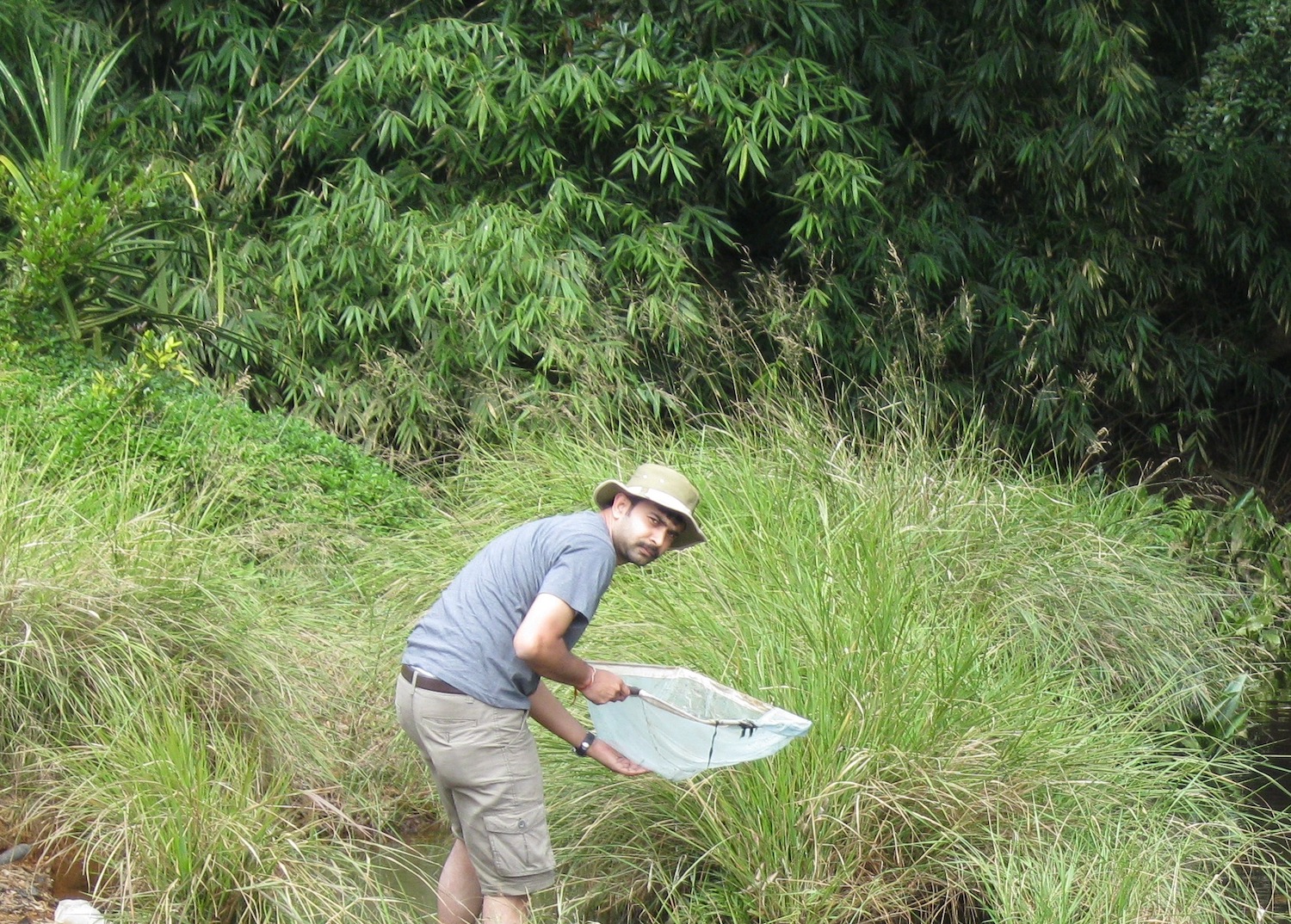
Rajeev conducting field work (c) Rajeev RaghavanThe Bhavani River, a potential reintroduction site for the hump-back mahseer (c) Michael Baltzer
On May 8, I travelled to southern India with a team of fish experts to scope out a joint project to save the hump-backed mahseer. The trip comes at the tail of a long story of conservation detective work of one of the world’s most charismatic fishes that has led us to take action, in the eleventh hour, to save a critically-endangered fish before it disappears forever. Mike Baltzer, Executive Director of Shoal, reports from a project scoping trip to southern India.
There are some creatures that have inspired and awed people through the ages. Some real animals like lions, tigers and elephants and some legendary like dragons or the unicorn. The mahseer (Tor spp.), a genus of very large, often beautiful and powerful fishes found in South and south-east Asia, fall right between the two. Mahseer are a real animal that has reached legendary status.
Often referred to as the “tiger of the river”, mahseers have been revered by the Indus Valley civilisation for more than 3000 years, worshipped by Buddhists and Hindus and treasured by local communities throughout the region. More recently, their fame has been maintained by featuring as one of the great icons of wild river angling – and it was this angling that has helped propel a species into conservation limelight.
For many years, anglers have yearned to fish for mahseer. Many stories and books have been written on the wonders of fishing for mahseer and the ultimate target, the holy grail of mahseer fishing, is the largest of the mahseers, the hump-backed mahseer.
The story of the hump-back has its own twist in its tail. Hump-backs are only found in the Cauvery River system in southern India and were first popularised in the late 19th century by British officers who considered mahseer angling to present a superior sporting challenge to shooting big game. Following Indian independence in 1946, many believed the mahseer had gone extinct, until a new era of conservation minded catch-and-release anglers (including Jeremy Wade of River Monsters fame) proved the fish was still extant and reignited a global interest in mahseer fishing in the late 1970’s. This drove the establishment of a recreational fishery, where the income from international anglers was used to employ local villagers as angling guides, drivers, bait makers and cooks. This quickly led to the realisation that local livelihoods now relied on the mahseer and that a live mahseer had a renewable value over a dead fish. Accordingly, whole communities started protecting this river from the poachers who often used highly destructive fishing methods (such as dynamite!).
In 2010 Adrian Pinder, a fisheries scientist from Bournemouth University and Director of the Mahseer Trust, took a curious and thankfully scientific look at the detailed records of the daily catch. In the records, together with the photos taken by the proud anglers, he noticed that there were two types of fish recorded, one with blue fins and the other with orange fins. He also noticed that overtime the larger orange-finned fish was declining while the blue-finned version was increasing. Could it be that these two were separate species and that one was beginning to push the other out? Pinder set off to find out and in 2018 he presented the results of his detective work which afforded the hump-back mahseer its first valid scientific name allowing the species formal recognition and qualification for conservation status assessment. In November 2018 the hump-backed mahseer was assessed as Critically Endangered on the IUCN Red List of Threatened Species. Without action, Pinder and his colleagues concluded, the hump-backed would be lost in our generation
smacap_Brightsmacap_BrightDiscussing with the localssmacap_Bright
rhdrMeeting Photosmacap_Brightburst
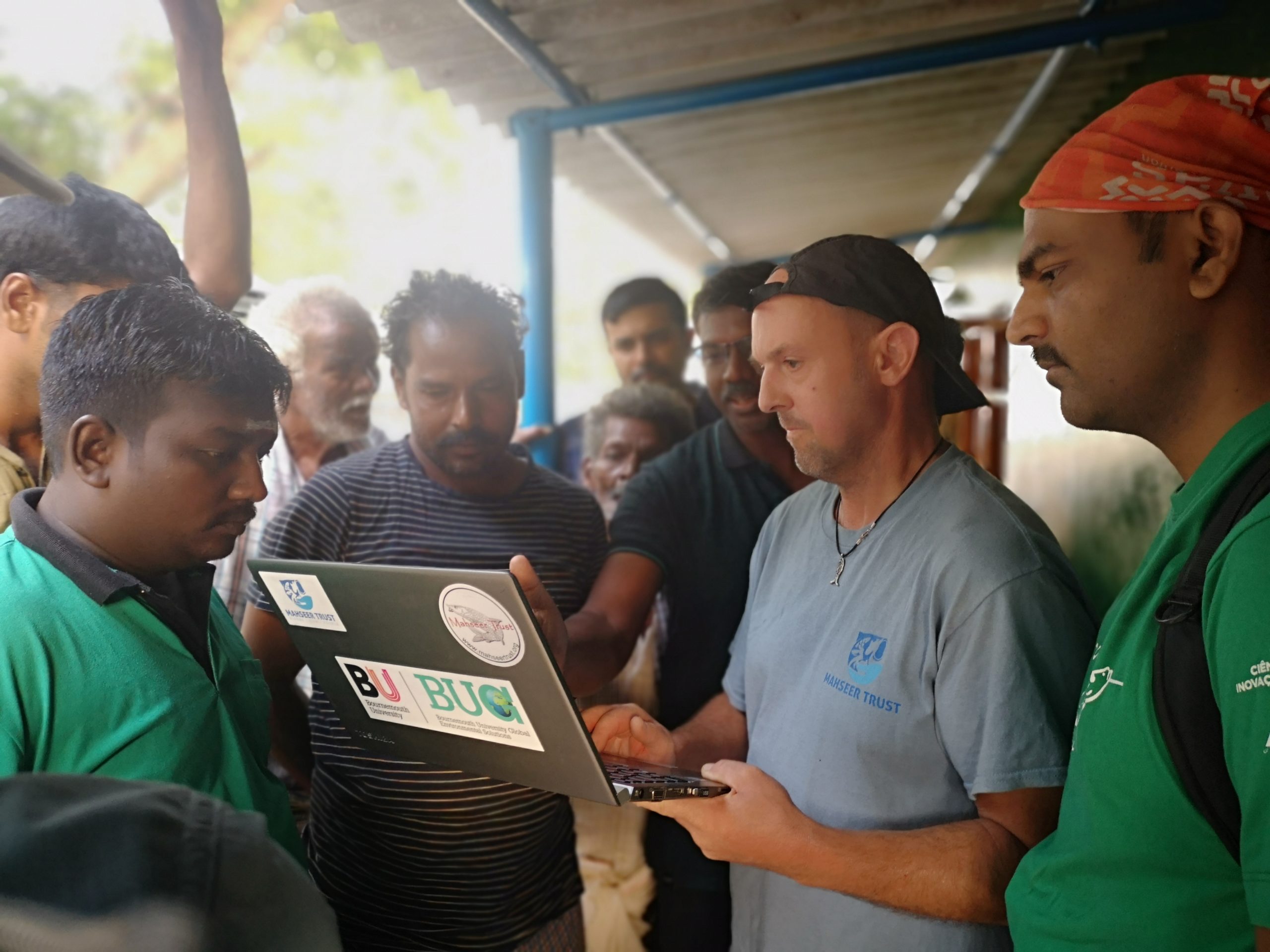
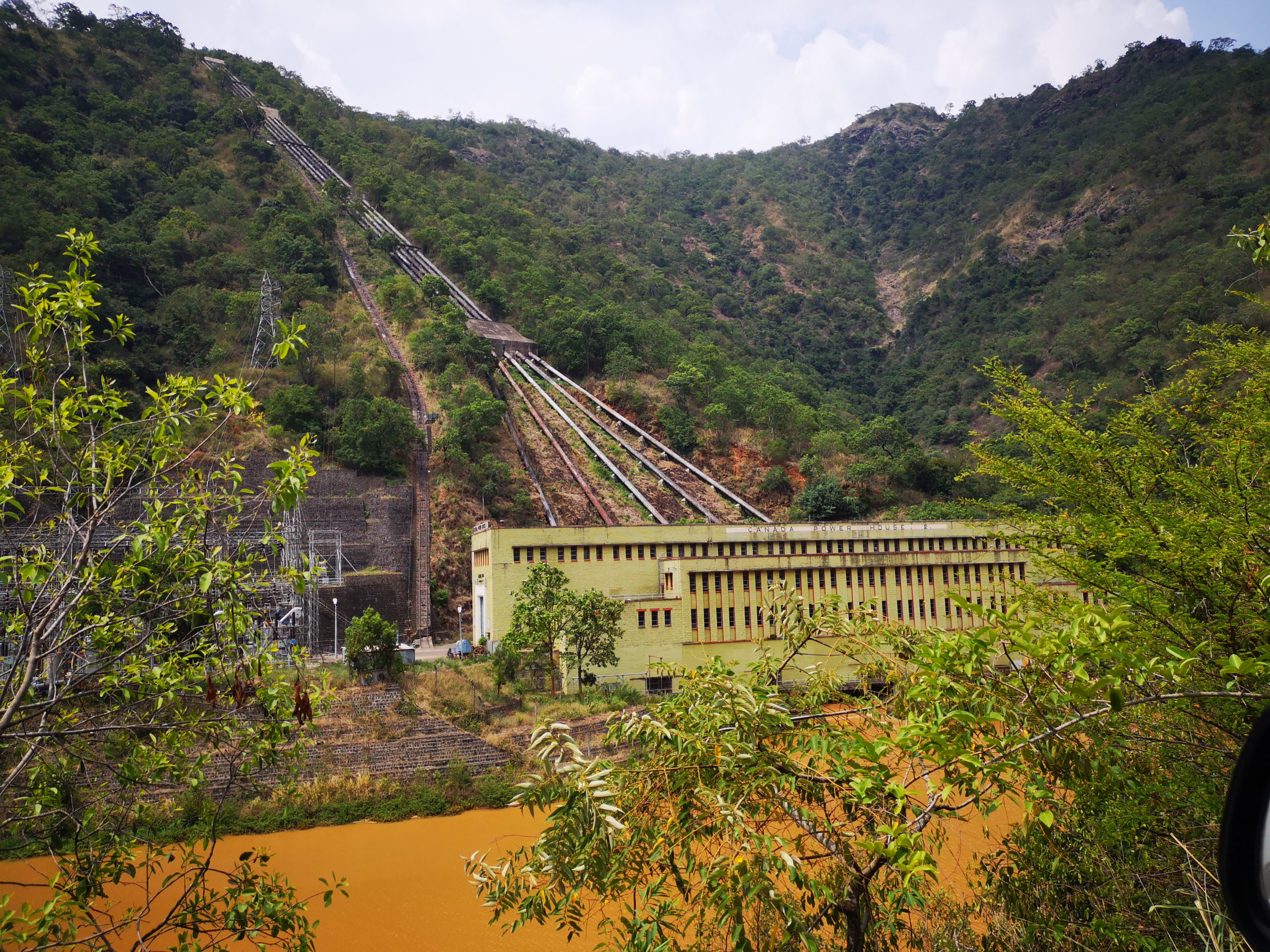
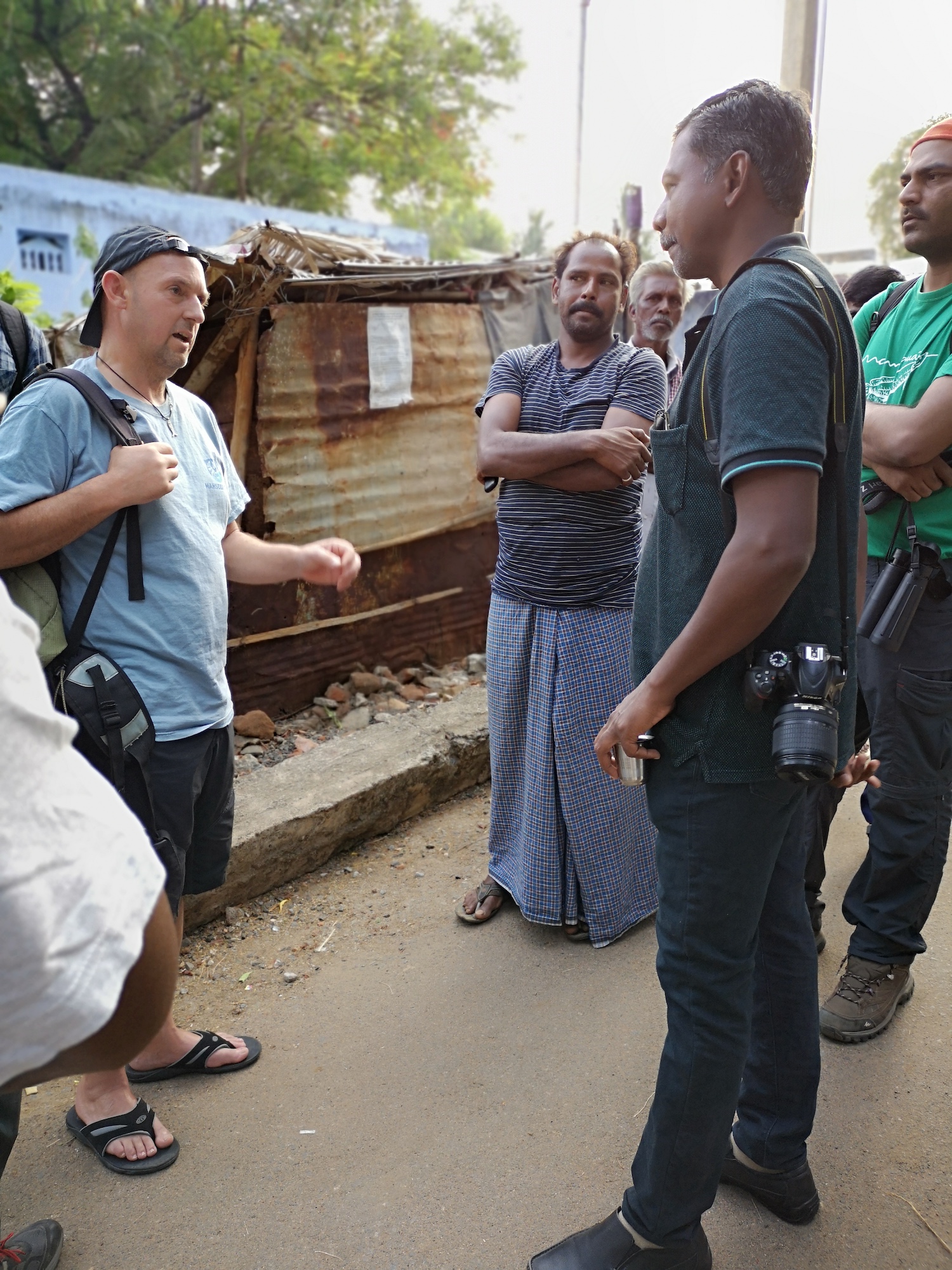
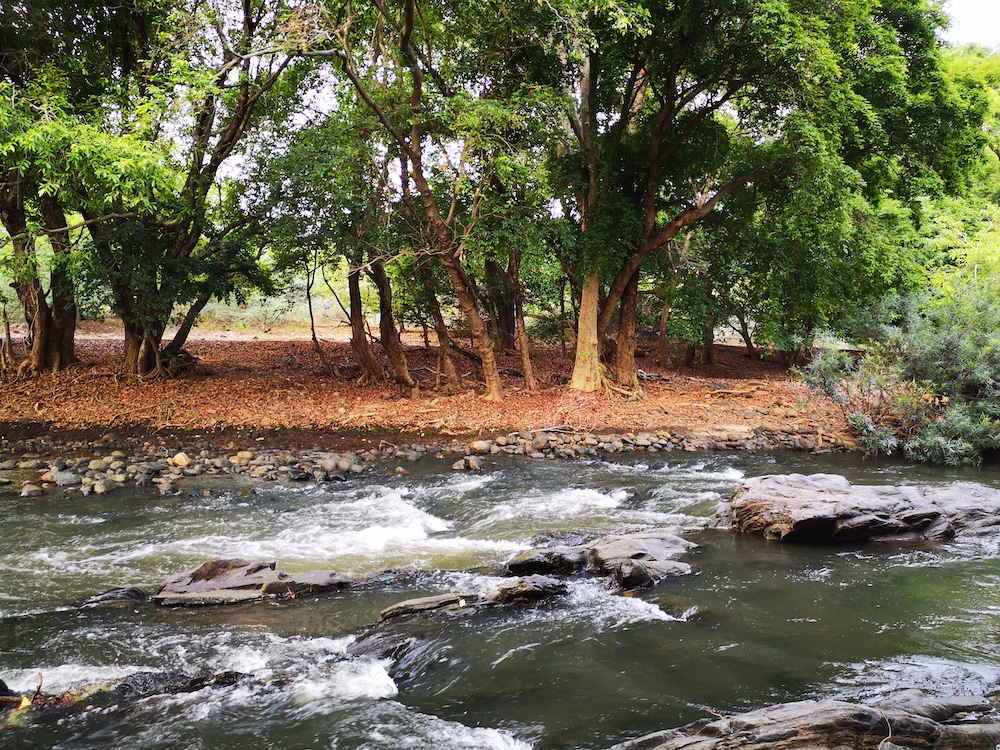
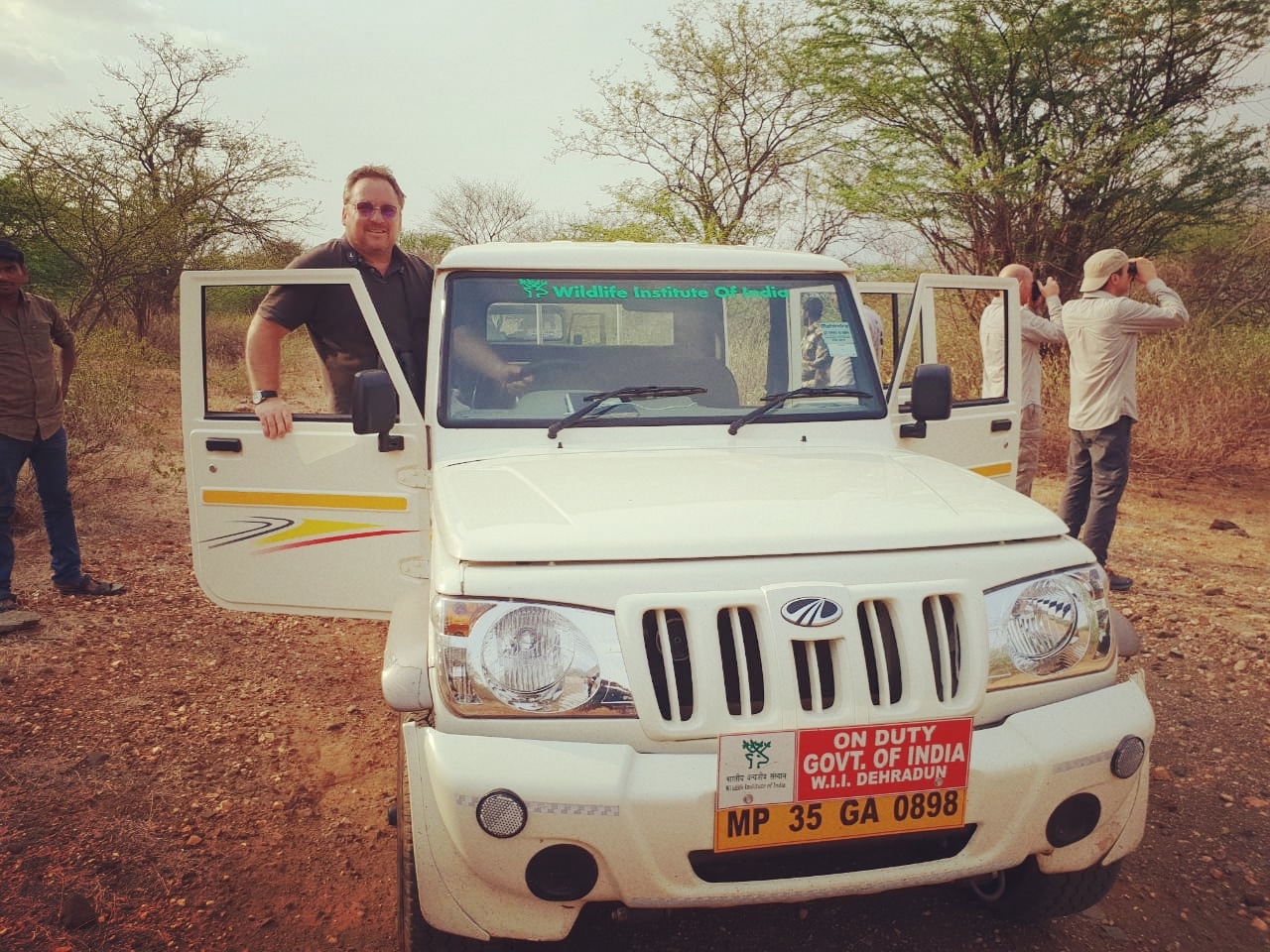
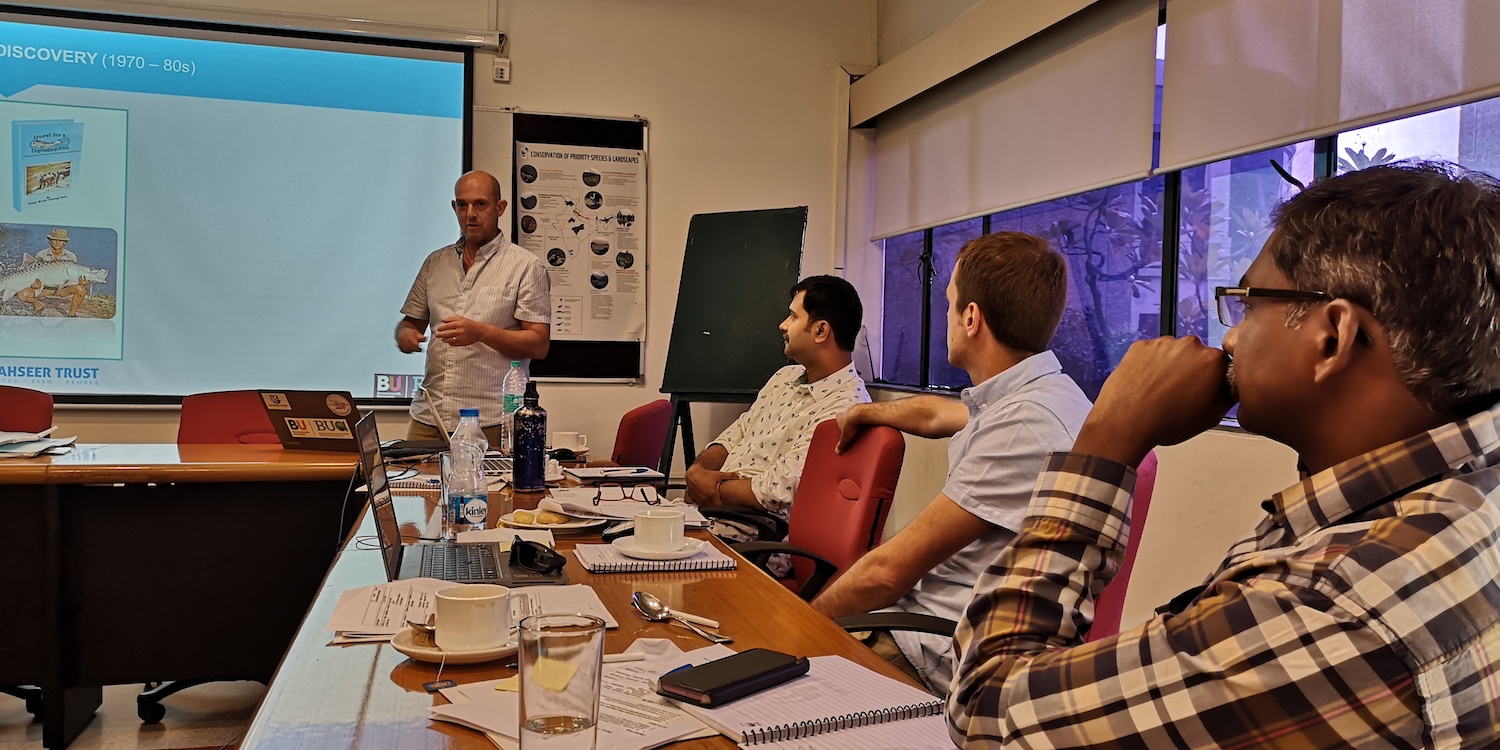
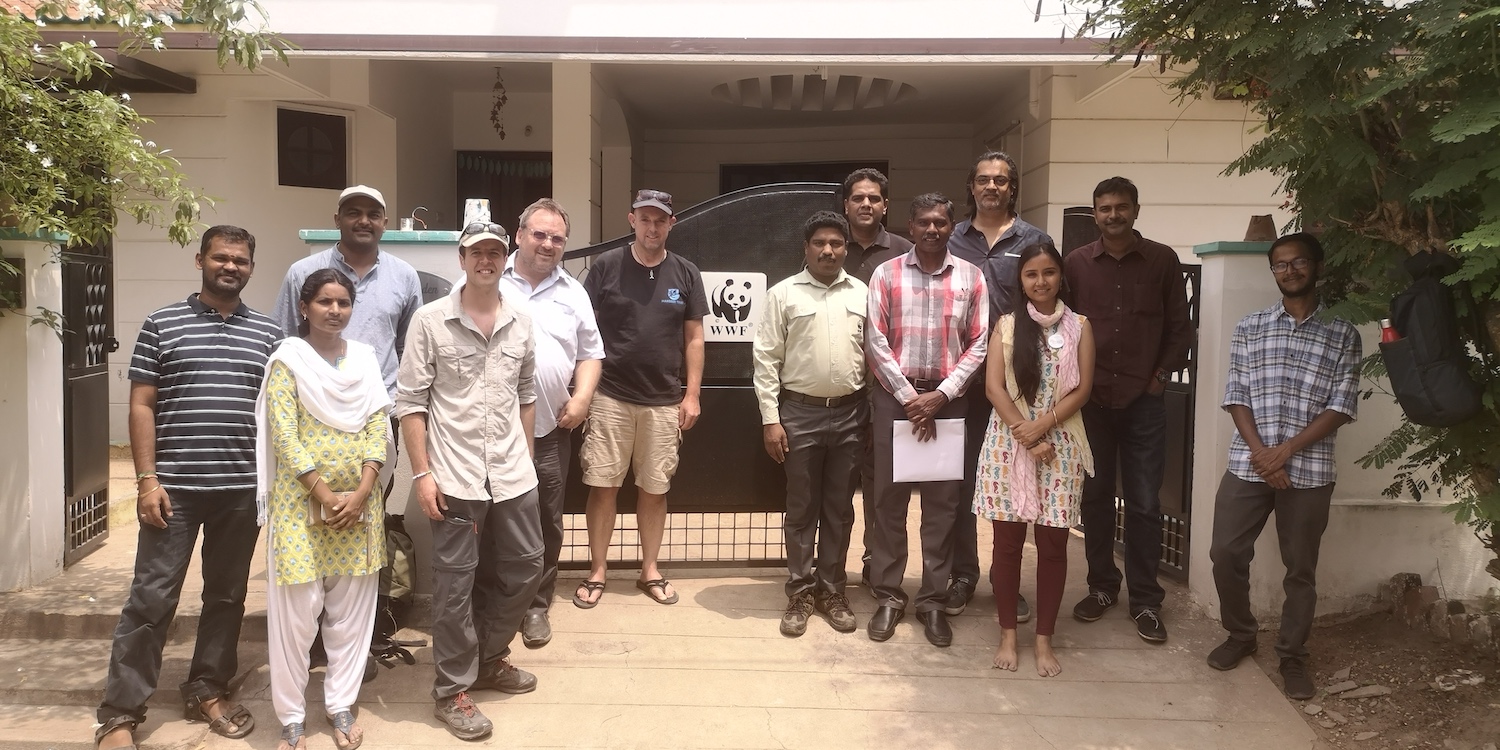
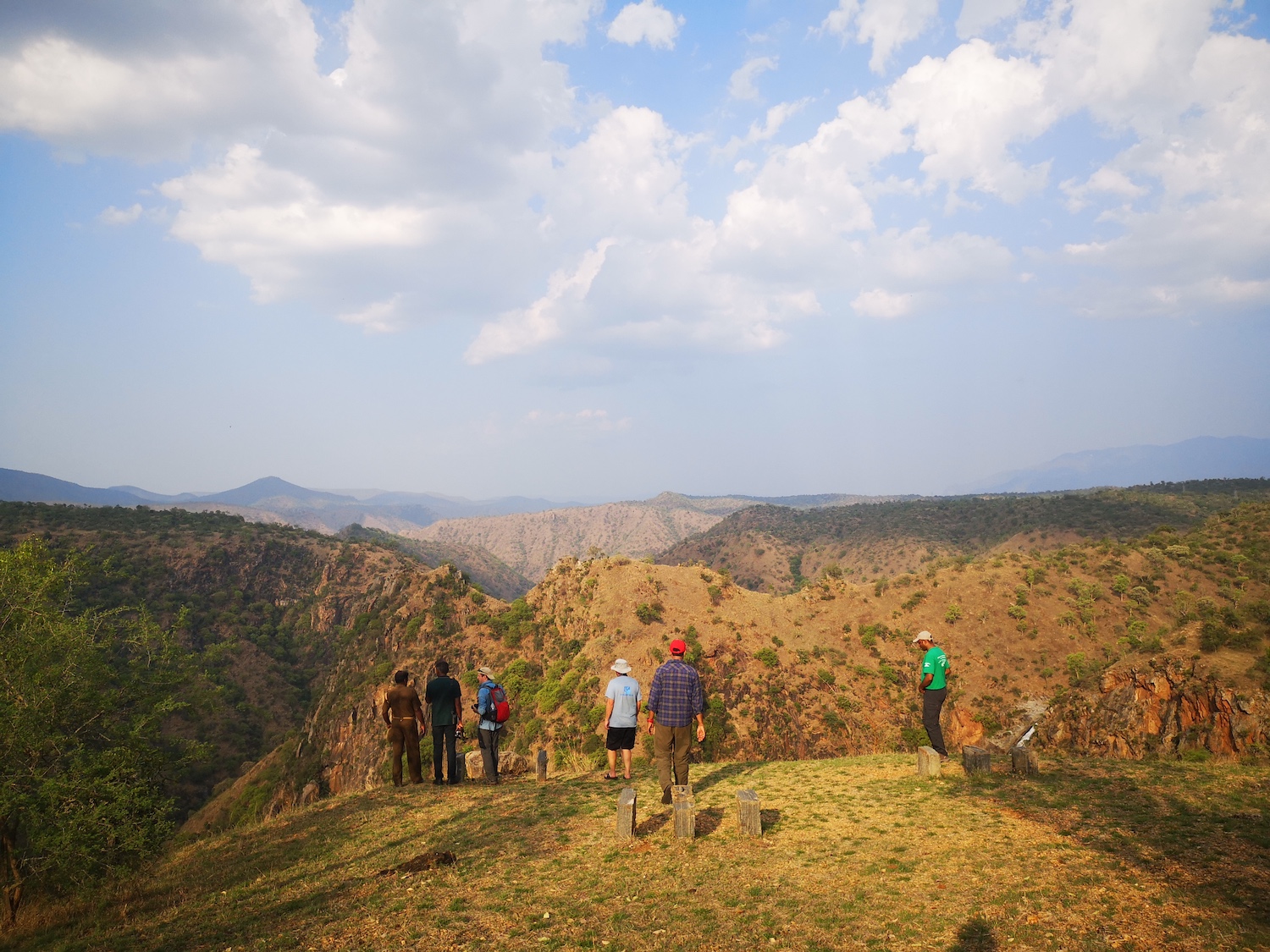
Images top to bottom, left hand coloumn to right hand column: 1) The Bhavani river, once home to the hump-backed mahseer and a potential relocation site; 2) Rapid flowing section of the Moyar River 3) The Moyar River, last stronghold of the hump-backed mahseer; 4) A dam on the Moyar River 5) Mike Baltzer with the jeep lent to the expedition by the Wildlife Institute of India; 6) The team searching for radio-telemetry sites over the Moyar Gorge; 7) Adrian Pinder (Mahseer Trust), Dr Anthony Johnson (WII) and Vidya Atkore (WWF) interviewing local experts on the hump-backed mahseer; 8) Meeting at WWF India to discuss the future of a regional programme for all mahseer species; 9) Outside WWF Coimbatore Office
What Pinder and his colleagues including southern India’s most respected fish taxonomist Dr Rajeev Raghavan discovered, was that the “blue-finned” mahseer had originated from a single hatchery and had been released into the Cauvery river basin in an attempt to conserve this species. Now the dominant mahseer species throughout much of South India, including the Cauvery, the fish had not only established, but become highly invasive – outcompeting the hump-backed mahseer for resources and pushing it towards extinction. It was only a dam (so often the scourge of fish populations) that had stopped the blue-fins from spreadinginto the final refuge of the hump-backed mahseer. There was therefore a chance to save it before it was too late. In late 2018, Pinder approached me and Shoal to suggest that we help the Mahseer Trust and others establish a project to save the hump-backed mahseer.
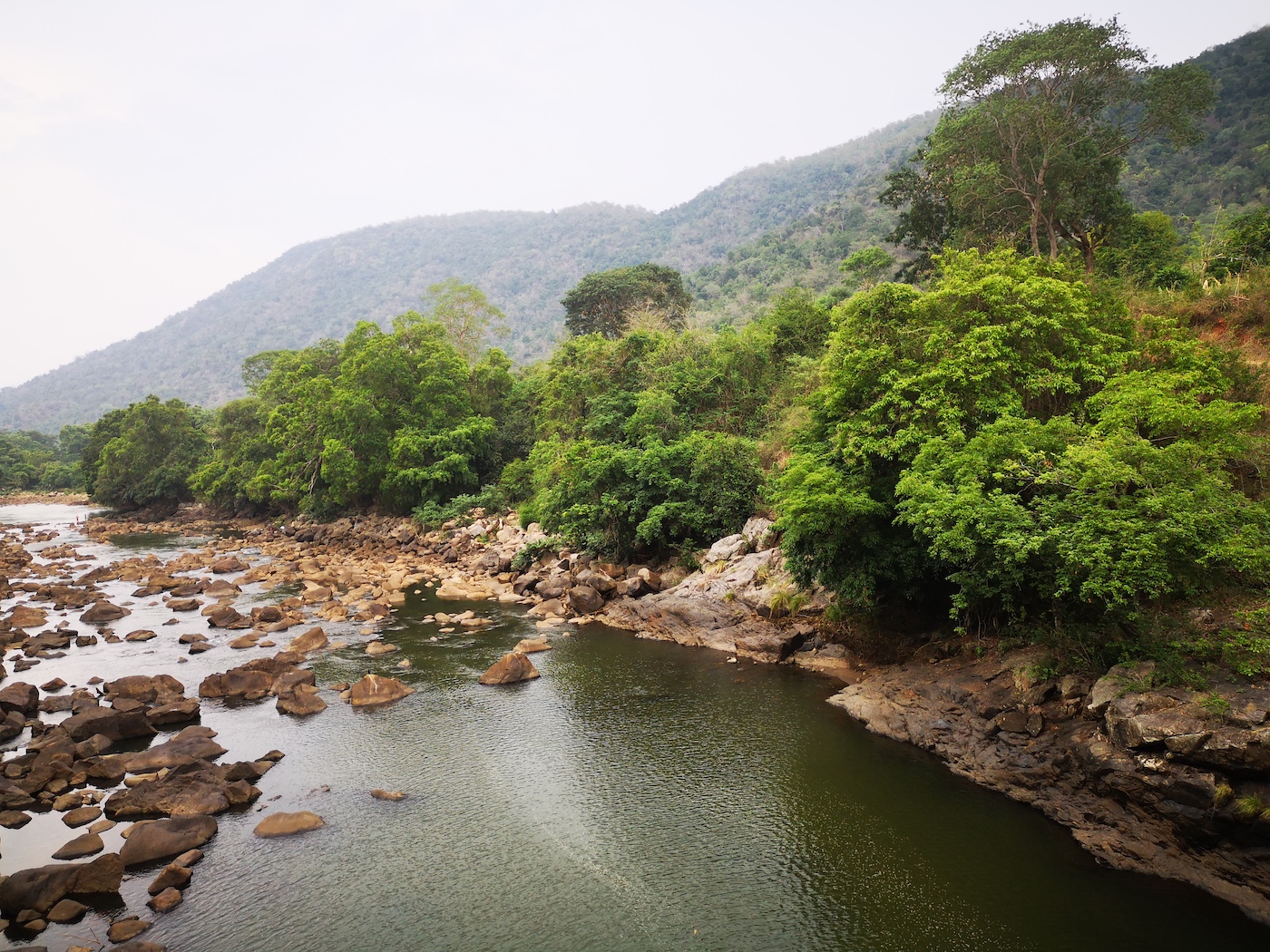
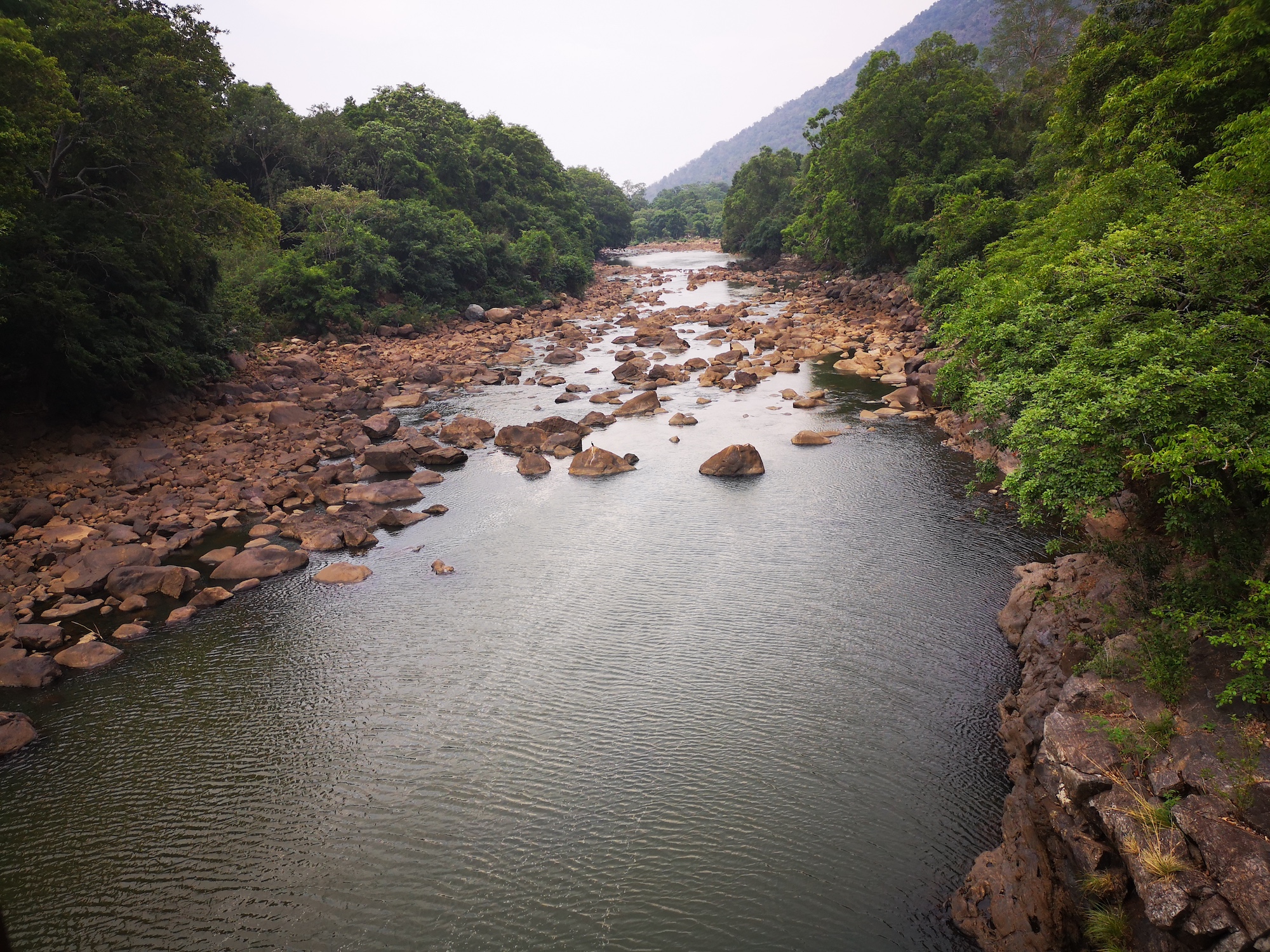
The last refuge of the hump-backed mahseer is found in the Moyar River one of the tributaries of the Cauvery and is confined to the stretch upstream of the Bhavanisagar dam. The Moyar River is set in the stunningly beautiful location of the Nilgiri mountains. It is famous for its outstanding gorge and the wealth of its wildlife. The area is home to one of the largest remaining populations of Asian elephant and falls between three highly important tiger reserves. The Moyar Valley itself has witnessed a remarkable recovery of its tiger population in the last ten years.
The trip this May was to establish the location and the research strategy for the project. The first stage of the project is to gather, as fast as possible, information on the status, distribution, ecology and most important, the breeding cycle of the hump-backed mahseer. While for many fish species this would be a straight forward exercise, our project scoping trip has shown that it certainly will not be easy for this fish. The project will require access to some of the most inaccessible areas in Asia and once there, the field teams will need to deal with the daily threat from tigers, elephants, leopards, sloth bears and crocodiles.
The initial work will require tracking the movements of the mahseer using bio- telemetry. This will involve inserting transmitting tags into individual fish and placing receiver stations at strategic locations along the river, extending into the unexplored and mysterious Moyar Gorge. This work will be led by the Mahseer Trust, Bournemouth University (UK), the Wildlife Institute of India and Kochi University Fisheries and Ocean Studies (KUFOS). In addition to the ecological research, the status of the environmental conditions such as water flow and pollution levels will be monitored. The project will also need to make the first steps towards preparing local community support, potentially involving WWF and Lively Waters. Once the team has better knowledge about the fish and the opportunities and threats to its conservation, a recovery plan, potentially centred on assisted breeding and reintroduction will be put in place.
Shoal’s role in the project is to help secure the funds to undertake this vital project. We will begin fundraising immediately and aim to start the project in November.
If you would like to support the project contact: mike@shoal.org
Post Overview
shoalstaging
June 18th 2019
Angling, Conservation, Feature, Fish, Mahseer
Share this post:
Recent News
One of the World’s ‘Most Wanted’ Lost Fish Is Rediscovered


)
)
)