

)
)
)


Scientists, conservationists and policy specialists from around the world gathered at University of Nevada, Reno Oct. 14–16 to launch the Global Springs Alliance. The launch culminated a two-year effort that began at a springs conservation session in Abu Dhabi in 2024 and produced a roadmap to protect some of the planet’s smallest, most distinctive and most threatened freshwater ecosystems.
The “Springs of Life” workshop combined expertise in freshwater biodiversity, groundwater and international conservation policy. Participants focused on identifying priority spring ecosystems and turning knowledge into action to prevent extinctions and protect water sources that support dependent communities.
“A single spring can be its own unique underwater world, home to an entire suite of species that exists nowhere else on the planet,” said Chouly Ou, SHOAL US Coordinator and workshop co-organiser. “We want to find and protect these places before they disappear, and support the people whose water, livelihoods and cultural traditions depend on them.”
Small habitats with worldwide significance
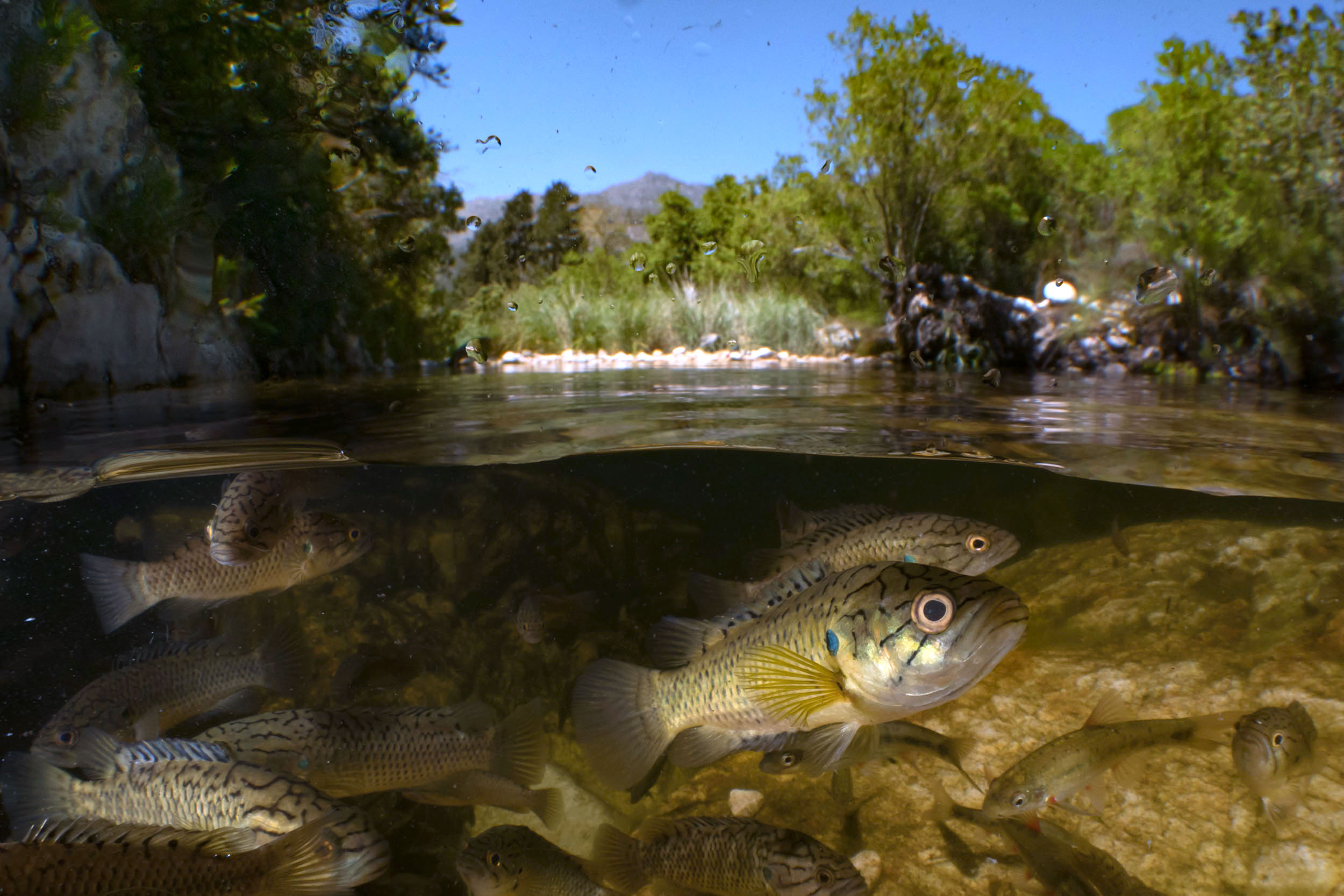
Springs occur in environments ranging from cold mountain seeps and desert oases to geothermal pools, limestone aquifers and extensive groundwater-fed wetlands. They sustain species with exceptionally small ranges while supplying water for drinking, agriculture and livestock, feeding rivers and supporting recreation and tourism. People and highly threatened wildlife often depend on the same flows and aquifers.
“That is what makes springs so extraordinary. But if the water stops flowing, the whole world of those species can disappear,” said Dean Gilligan, a springs ecologist participating in the workshop.
Springs also have major economic and cultural importance. In Nepal, an estimated ten million people in the mid-hills and mountains depend on natural springs for drinking, cooking, sanitation and livestock. Communities use recharge ponds, check dams and infiltration structures to replenish groundwater and sustain dry-season flows, showing how springshed protection can strengthen water security, livelihoods and climate resilience. Across the Hindu Kush Himalaya, springs support terraced farming and livestock while sustaining sacred places, cultural practices and connections to ancestral lands.
A 2021 global review led by Lawrence E. Stevens of the Springs Stewardship Institute examined approximately 250,000 spring ecosystems in 78 countries. It found widespread damage, with impairment exceeding 90% in some developed regions, and documented declines, local losses and extinctions among spring-dependent species. Major gaps in mapping and assessment leave many springs and their biodiversity poorly documented.
“Springs fall through the cracks in policy because they are rarely mapped or monitored as ecosystems. Water ministries typically manage them as water sources, focusing on quantity and quality, while others are responsible for species and habitats. Too often, these institutions plan and act separately, leaving no single authority responsible for the spring as a whole,” said John P. Simaika, Senior Researcher in Aquatic Ecology at IWMI and a member of the Global Springs Alliance. “Closing this coordination gap requires shared data, joint planning and clear responsibilities, alongside formal roles for Indigenous Peoples, local communities and women who have long stewarded these systems.”
From global policy commitment to coordinated action
The two-year effort began at the 2024 IUCN Species Survival Commission Leaders’ Meeting in Abu Dhabi, where John P. Simaika organised the session “Springs, Pools and groundwater under threat: mobilising urgent action for neglected freshwater systems.” Participants from IUCN specialist groups, Synchronicity Earth, Center for Species Survival Freshwater, Re:wild, SHOAL and other expert groups jointly developed the motion that became IUCN Resolution 016, Springs under threat: mobilising urgent action for neglected freshwater systems, which was adopted at the 2025 IUCN World Conservation Congress in Abu Dhabi. At Lake Tahoe, participants translated that mandate into coordinated work through the Global Springs Alliance and advanced plans for an IUCN Springs Task Force, including a four-year agenda for inventories, biodiversity and threat assessments, conservation priorities and practical guidance.
The Alliance will connect expertise and data with government agencies and local partners. Its four initial priorities are:
- Identify irreplaceable springs. Combine species records, habitat assessments and local knowledge to identify exceptional sites and those facing the most immediate threats.
- Assess threatened species and ecosystems. Coordinate contributions to the IUCN Red List of Threatened Species and Red List of Ecosystems, giving overlooked springs and their biodiversity greater visibility in conservation decisions.
- Secure recognition for priority sites. Work with national experts to evaluate potential Key Biodiversity Areas and opportunities through Ramsar wetland conservation and national biodiversity programmes.
- Turn recognition into protection. Use assessments to guide protection of spring flows and groundwater sources, habitat restoration, invasive species management, monitoring and investment with communities and government partners.
“The first challenge is knowing what we stand to lose, including the creatures small enough to escape our notice,” said Joseph Holway, Assistant Director of the Springs Stewardship Institute and workshop co-organiser. “A survey that overlooks snails, aquatic insects or tiny crustaceans may overlook the very species that make a spring globally important. Connecting records and expertise will help us find those places and act before their biodiversity disappears.”
The Alliance will seek broader participation from Indigenous and local knowledge holders, groundwater scientists, wildlife agencies, conservation organisations, community groups and funders.
About the Global Springs Alliance
The Global Springs Alliance connects organisations and people working to protect, restore and sustainably steward springs and spring-dependent species worldwide. It supports collaboration, access to expertise and tools, and the application of knowledge to conservation policy and practice. Learn more at globalspringsalliance.org.

)