The SHOAL is the global ecosystem of partners and collaborators who work together to safeguard the health of Earth's freshwater habitats and conserve the most threatened freshwater species. As with a shoal of fish, the strength of the SHOAL lies with the number of partners all working together.
Blueprint for Conservation Action for 1,000 Freshwater Fishes
SHOAL's flagship initiative sets out a plan for how significant collaborative conservation effort can lift freshwater fishes and potentially thousands of other neglected freshwater species to a new elevated platform of conservation attention and greatly enhance freshwater conservation efforts globally.
Michael Köck European tour update 1: Mexico City – Rostock, Germany
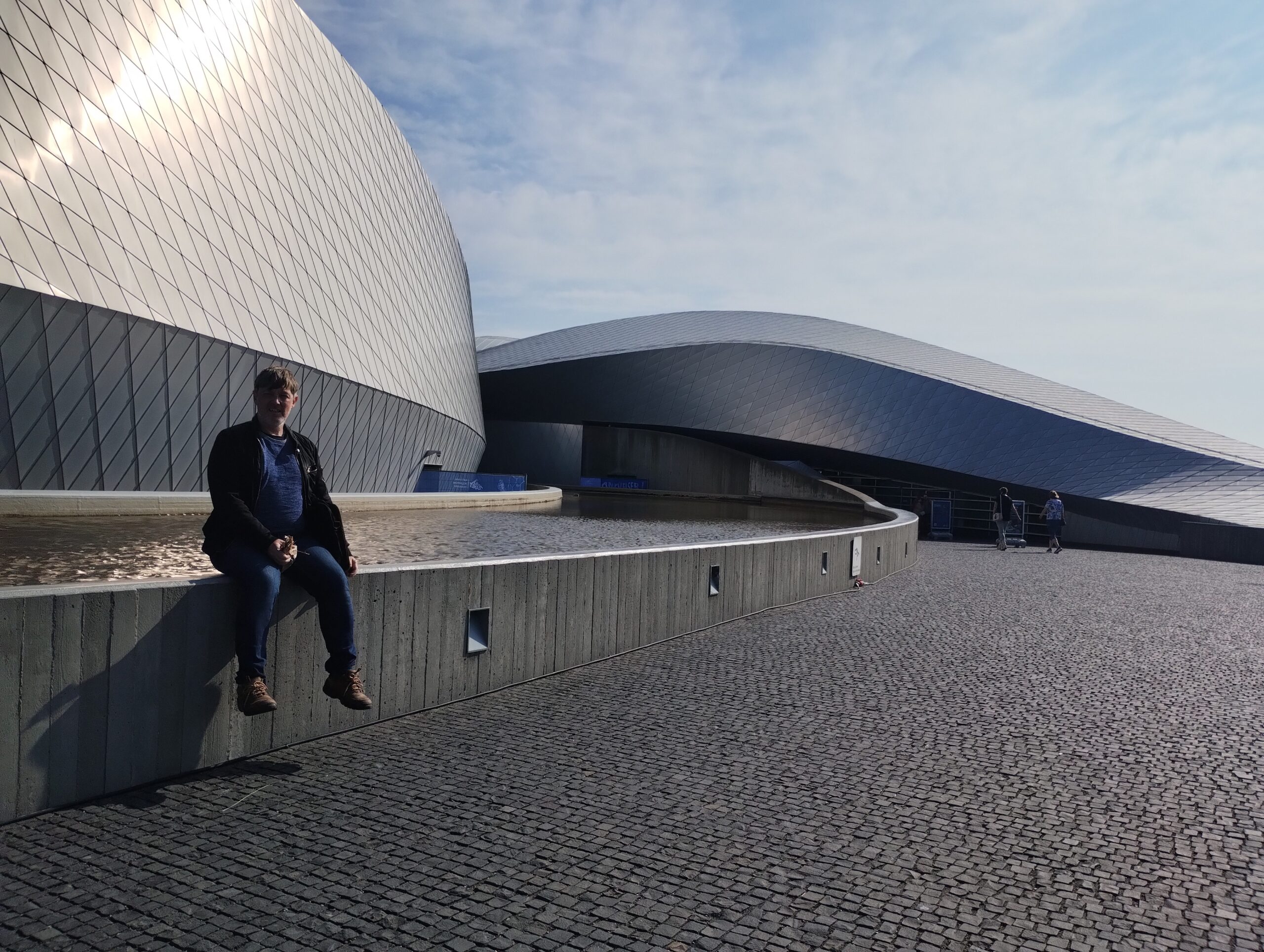
Den Bla Planet Aquarium, Copenhagen, Denmark
Michael Köck European tour update 1: Mexico City – Rostock, Germany
Michael Köck, Chair of Plan G: the initiative to save the highly threatened Goodeinae family of Splitfins in Mexico, is currently touring zoos, public aquaria and museums across Europe with the aim of engaging stakeholders in Plan G’s conservation plan. Here, he gives his first update on the trip.
Leaving Mexico on 27 August, I arrived the following day in Copenhagen, Denmark. Next day I took a connecting flight to Sandefjord, about 20 km west of Oslo, Norway. I got picked up by a friend who brought me to his farm in Porsgrunn where I spent two days acclimatising. He is a hobby fishkeeper who has been to Mexico a few times, so we spent those days talking a lot about fish, Mexico and Plan G.
Two more friends visited us and we created some really nice ideas around Plan G. For example, one of these guys works with several friends in a company that plans ecological and sustainably functioning cities and towns, and they would be very interested to work with Teuchitlán [the town where the Golden Skiffia was successfully reintroduced] on a pro bono basis. He wants to convince his partners to support Plan G financially.
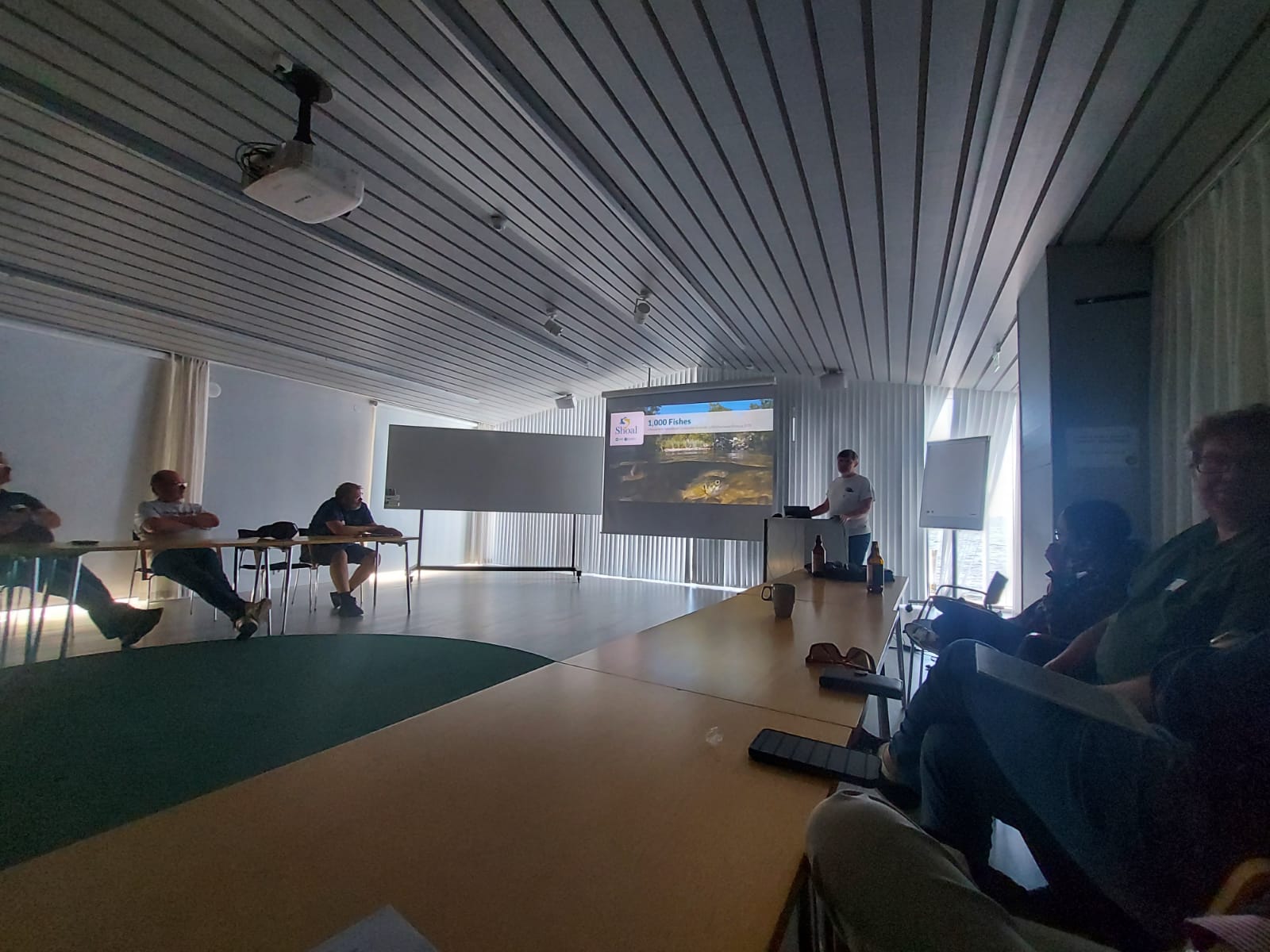
On 31 August, we all went by car to Fiskebäckskil, Sweden where I gave a talk at the 50-year anniversary of the hobbyist organisation Poecilia Scandinavia about Plan G. More than 20 people from five countries joined the meeting and the talk was well received. Directly after, Poecilia Scandinavia donated €3,000 to Plan G and another €1,500 to the Aqualab in Morelia and asked me to write an article about Plan G for one of the next issues of their magazine.
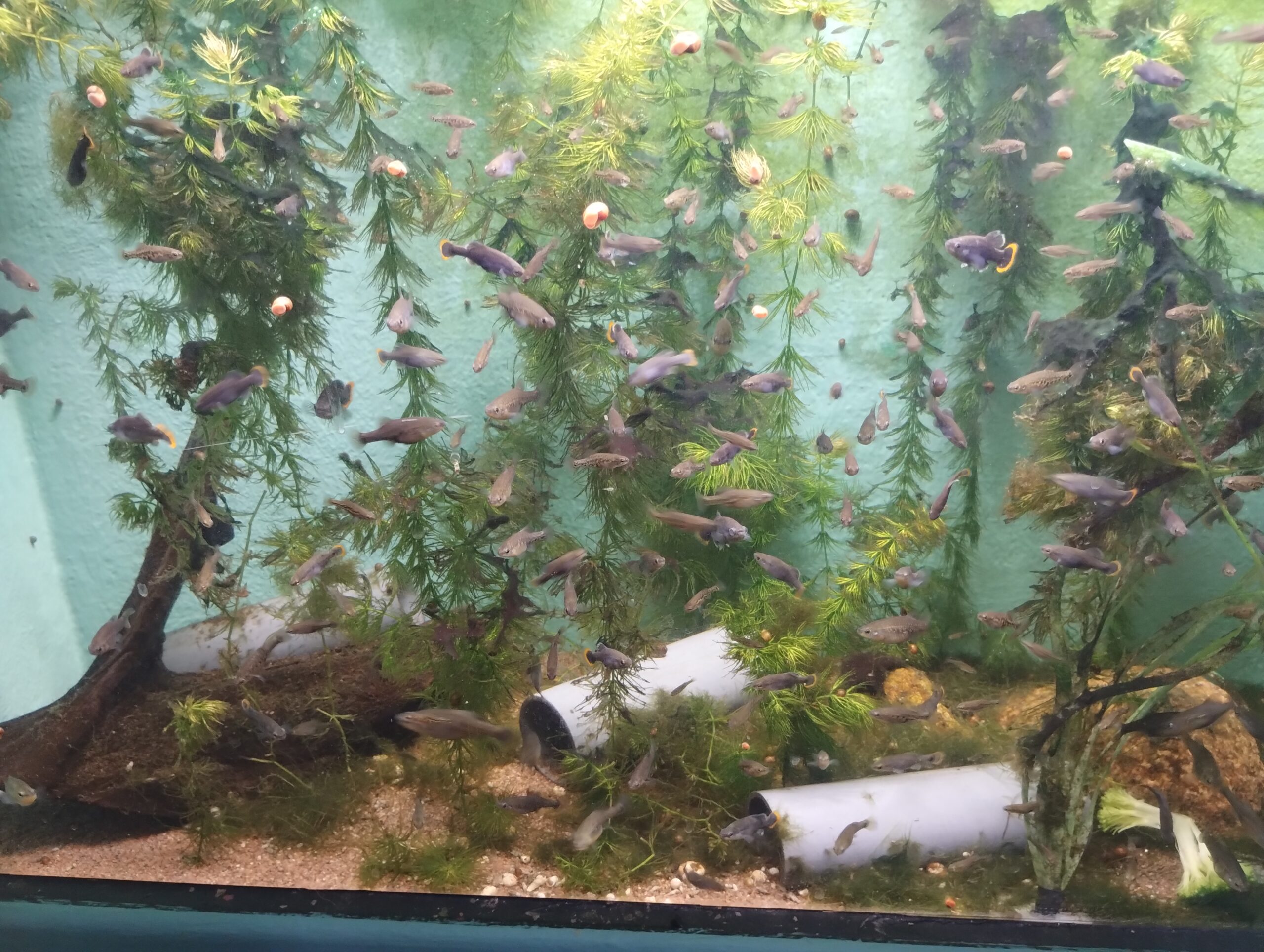
Backstage breeding tank Zoogoneticus tequila, Malmö Museum, Malmö, Sweden
I headed to Malmö on 2 September, where I had a meeting with the leader of the Aquarium of the Malmö Museum, Jesper Flygare in the morning and gave a presentation about Plan G to him and the staff. The people were impressed by our conservation work and promised to help. The museum is run by the town of Malmö and the concept doesn’t allow any straight donations, but we agreed on making an exhibition with Goodeids and a donation function for visitors, as well as promoting Plan G to the local fish club. The aquarium already keeps two species of Goodeid and even runs an ex situ conservation project for one of them, so there is already a strong connection. My presentation was followed by the head animal keeper of the Tropikariet Indoor Zoo in Helsingborg, Jonas Östander, who got invited to my presentation by the Malmö Museum team. He invited me to present Plan G to his director who is interested in supporting new conservation projects. Though my schedule was very tight, I promised to find a time slot for the next day in the late afternoon.
Presenting in front of Poecilia Scandinavia, Fiskebäckskil, Sweden
On 3 September, I paid a visit to the Den Blå Planet, Denmark’s biggest public aquarium. The head animal keeper Peter Petersen showed me around and I was impressed not only by the number of rare fish in their show tanks, but also to see huge colonies of several Goodeid species backstage. They have joined the EAZA Goodeid Ex Situ Program (EEP) and are focusing on ex situ conservation of many endangered fish species from many fish groups. I presented Plan G to Peter and he suggested he will present it to the board of directors to select Plan G to get funded by their conservation fund. Luckily, I prepared USB sticks with the Plan G logo in a little bag with Mexican sweets and a pen made of copper – a little gift from Santa Clara del Cobre near Lake Pátzcuaro for all my contacts on the tour. The USB sticks hold information about the “Guardianes del Río Teuchitlán” and SHOAL, as well as my Plan G presentation.
Starting at 14:00, I started for Helsingborg, knowing time would be tight for Tropikariet Zoo, as it closes at 17:00. Unfortunately, a taxi driver brought me to the wrong train station and I arrived 10 min too late. The zoo was informed but unfortunately no one could wait for me. I was however able to leave my little present with the USB stick, and I will for sure contact them after my return to Mexico.
On September 4 I took a ferry transfer from Trelleborg, Sweden to Rostock, Germany, where I have a visit to the local zoo scheduled for 5 September, and one to the zoo in Schwerin in the afternoon. I will let you know how these visits and the ones in Berlin thereafter went.
Stay tuned!
Post Overview
Michael Edmondstone
September 17th 2024
Mexico, Stories
Share this post:
Recent News
One of the World’s ‘Most Wanted’ Lost Fish Is Rediscovered – Yale Environment
Interview with Michael Köck – European tour of zoos, aquaria and museums
“I thought I should introduce myself and Plan G to potential new partners in this exciting conservation plan, which has the potential to raise the bar for other projects and set new standards in freshwater conservation.”
Michael Köck
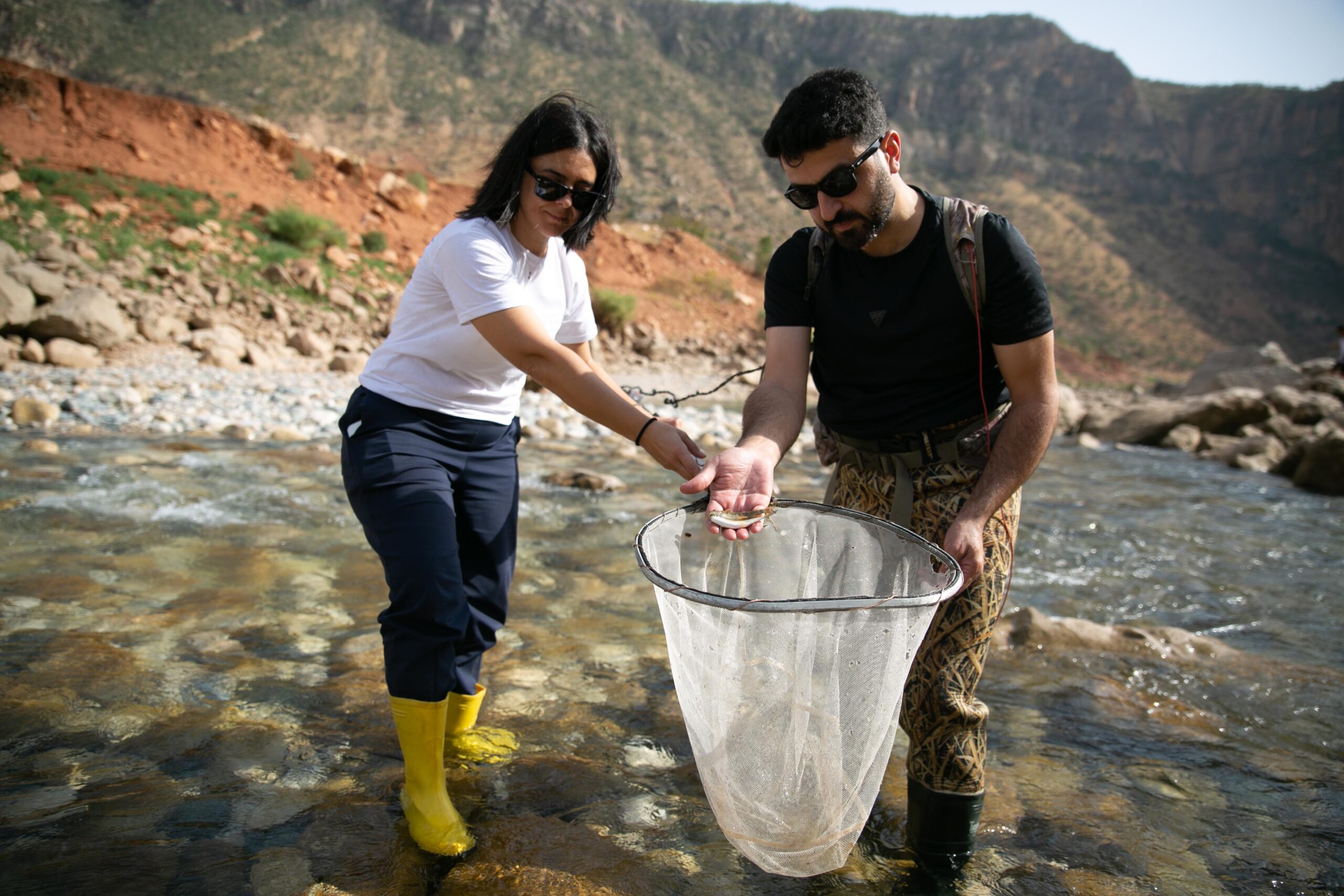
Michael and team in the field collecting goodeids in Mexico.
Over the coming weeks Michael Köck, Chair of Plan G: the initiative to save the highly threatened Goodeinae family of Splitfins in Mexico, will travel around zoos, public aquaria and museums across Europe in a bid to engage stakeholders in an exciting and ambitious conservation plan. His travels will take him through Denmark, Sweden, Germany, the Czech Republic, Austria, Hungary, Switzerland, France and the United Kingdom and it is hoped the trip will inspire relevant organisations and generate vital funding to save these species from extinction.
We caught up with Michael to learn more.
Could you say a bit about your background – introduce yourself a little?
Michael: I am a 56-year-old Austrian biologist who worked as a curator in a public aquarium in Vienna for 18 years. Last year I gave up this well-paid job and started working in freshwater fish conservation in Mexico, as the Chair of a 10-year conservation plan for an endemic Mexican fish group called Splitfins (subfamily Goodeinae, family Goodeidae). If you ask me why I gave up my job to work in Mexico, I will answer because I have seen what the people in this country are capable of achieving. I was impressed by the success they were able to reach with limited resources and I wanted to be part of this movement. I have faith in this community: Mexicans are incredible when they want to arrive at something and the people I work with are passionate about succeeding in conservation. I’m here to help them where I can and to learn from them whenever I can.
What is the purpose of this European tour?
Michael: The overall aim of this European zoo tour is to encourage zoos and public aquaria to become more involved in the conservation of Mexican Goodeid fish and to create something like a Goodeid Conservation Alliance. This unique group of fish is one of the most endangered in the world: 90% of the described species are threatened with extinction according to the IUCN and are therefore already in the focus of conservation efforts by many zoos and organisations. However, we want to unite all these efforts under one umbrella, and as the projects in our Plan G portfolio follow the one plan approach, meaning they include both ex situ and in situ work and involve local communities, they are certainly of interest to many zoos and public aquaria.
What are some of the key places you’ll visit?
Michael:Certainly the big zoos in Berlin, Leipzig, Nuremberg and Munich are important places, as well as Basel and Zurich, but there are others I’m looking forward to, such as Budapest and the museum in Malmö, which already play an important role in the conservation of Goodeids, or the zoo in Pilsen with a house for endangered fish. Honestly, every place I visit will be a highlight on my tour and I’m looking forward to each and every one of them.
Michael and colleagues
Why did you choose these places in particular?
Michael:I have selected zoos and public aquaria that are already contributing to the conservation of the Goodeids or Mexican freshwater fish and that I will be able to reach on my tour. There are public institutions that I have known for many years and where people I call friends work, and there are others where I only know the key people virtually, and finally there are zoos that claim to be strongly committed to conservation but have not worked with fish before. These are the most exciting ones as you never know if they are also interested in freshwater fish, but as freshwater habitats are the most threatened in the world, some zoos have broadened their focus and are open to dialogue. All in all, a mixture of good old friends and hopefully new contacts.
It’s a lot of travelling! And a lot of visiting zoos, aquaria and museums. Have you done anything like this before?
Michael: No, this is something I’ve never done before. That’s what came to mind when we launched Plan G, and with it my role of chair and ambassador. So I thought I should introduce myself and Plan G to potential new partners in this exciting conservation plan, which has the potential to raise the bar for other projects and set new standards in freshwater conservation. Every penny and cent counts for these fish, and every metre on this journey is worth it. In the end, I should have visited more than 30 zoos and public aquaria in 48 days and hopefully gained more members for the Goodeid Conservation Alliance.
What can zoos, aquaria and museums offer as key allies in conservation?
Michael:Zoos, aquaria and museums reach a large group of people. Zoo visitors, who don’t really think of fish when they think of endangered animals, are awakened and interested, and lectures in museums could reach a whole new audience. By working together with them, the circle of people we can reach with our conservation efforts expands enormously. Temporary actions in zoos to create support or raise money, or the conservation euro collected by several German zoos, contribute directly to conservation and the network between zoos strengthens such an alliance and makes it very stable. As it stands, however, it is easier to approach zoos and public aquaria than museums, although the latter probably need a slightly different approach.
Michael and colleague in in the field.
Finally, what are your hopes and expectations with this tour?
Michael:It would be presumptuous to have any expectations for this tour. The budget for this year has already been spent or committed, so I’m not thinking about immediate support. In the long term, I hope that I can convince many of the places I visit how important their contribution is. Protecting freshwater fish is not just about reintroducing a species, but also about listening to the local people, trying to understand their problems, aspirations and hopes, and it involves trying to get them on board and working with them to solve their problems.
This also includes environmental education and social work. A healthy, clean lake is something that everyone wants, but that the people who live on it and from it often cannot afford. But with smart and clever ideas and the will of multiple stakeholders, we could build something like a constructed wetland that helps clean the lake’s wastewater, and if you plant it with flowers that a women’s startup can sell at markets, you are not only cleaning a lake, but you are also helping to increase the community’s wealth and promote gender equality. Conservation work starts with the people and ends with them. I hope that many of the places I visit in Europe recognise this and help us find a balance between freshwater habitat conservation and people’s needs that can serve as a model for the rest of the world.
The zoos, aquaria and museums Michael will be visiting:
Monday 02 September: Malmö Museum.
Tuesday 03 September: Den Blå Planet Aquarium.
Wednesday 04 September: Rostock Zoo.
Thursday 05 September: Schwerin Zoo.
Friday 06 September: Aquarium Berlin (morning), Tierpark Berlin (afternoon).
Saturday 07 September: 1000 Arten-Projekt and Berlin Group of Livebearer breeders.
5 freshwater conservation highlights of 2024 (so far)
This year’s been one of our busiest yet, so take a midpoint deep dive into our most memorable moments so far.
Rediscovering the leopard barbel
In January we were thrilled to announce that the leopard barbel was been rediscovered by a team of ichthyologists in Türkiye, led by Cüneyt Kaya and Münevver Oral.
“We dropped everything and would have gone to the ends of the Earth to see this fish, this legend, alive in the wild.”
Münevver Oral, Assistant Professor at Recep Tayyip Erdogan University
“With both the Batman River loach and now the leopard barbel, we have an obligation to mobilise conservation efforts to ensure neither becomes lost again.”
Cüneyt Kaya, Associate Professor at Recep Tayyip Erdogan University
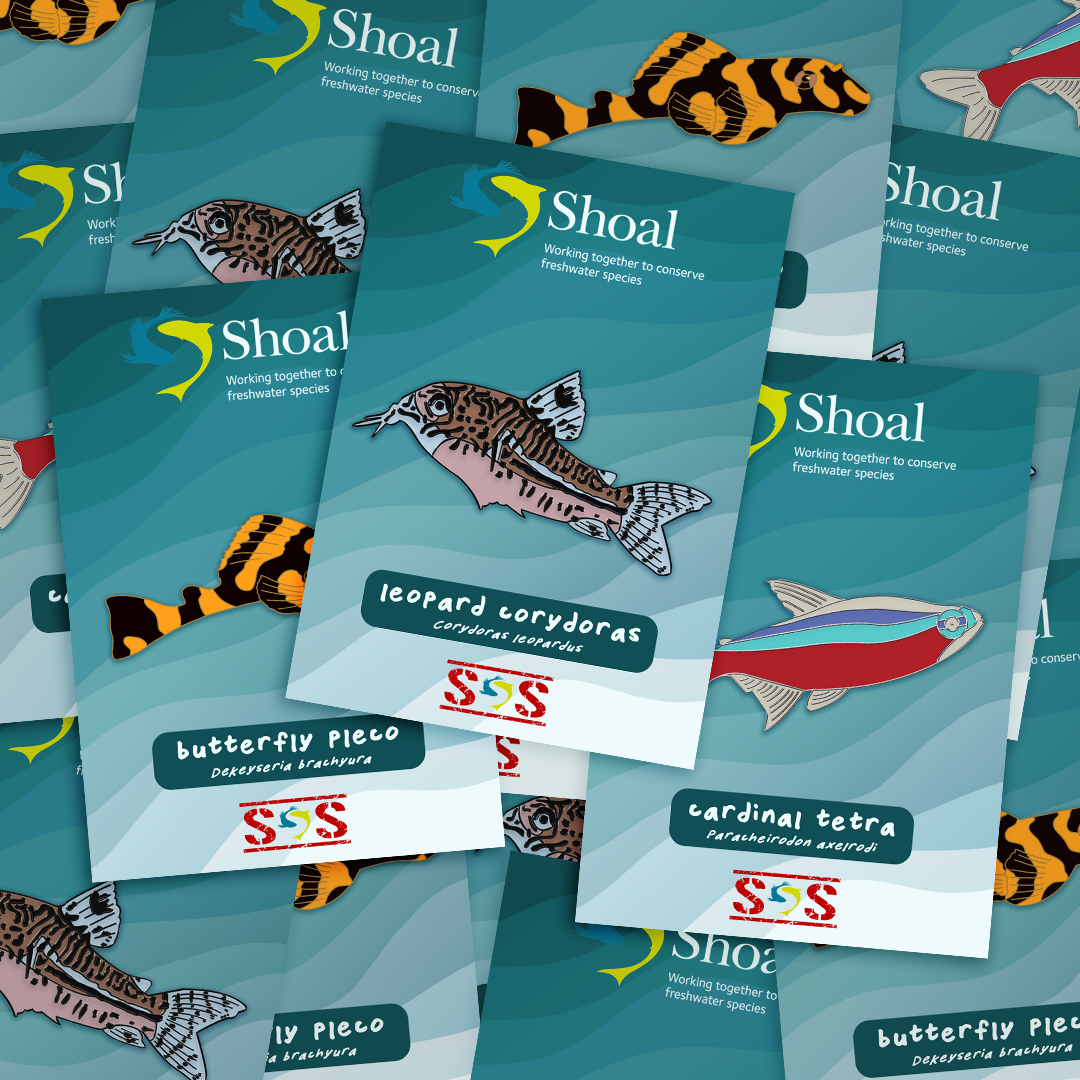
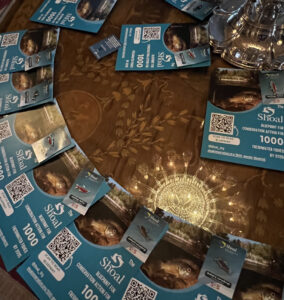
Our brand new range of collectible enamel pins are available in select aquarium stores across the UK – with donations going towards our SOS: Support Our Shoal campaign.
Designed to bridge the gap between the home aquarium community and impactful conservation of the world’s most threatened freshwater fish,SOS: Support Our Shoal provides a reliable channel for aquarists to direct vital funds to the freshwater species and ecosystems that need them most.
“SOS: Support Our Shoal is a rallying cry to those who care about what is happening to freshwater species and want to be part of the solution. This is a landmark time for the aquarium community, and collaborating with us is a demonstration that it is beginning to take conservation seriously.”
Mike Baltzer, Executive Director, SHOAL
You can find the pins at any of our brilliant partner aquarium stores across the UK:
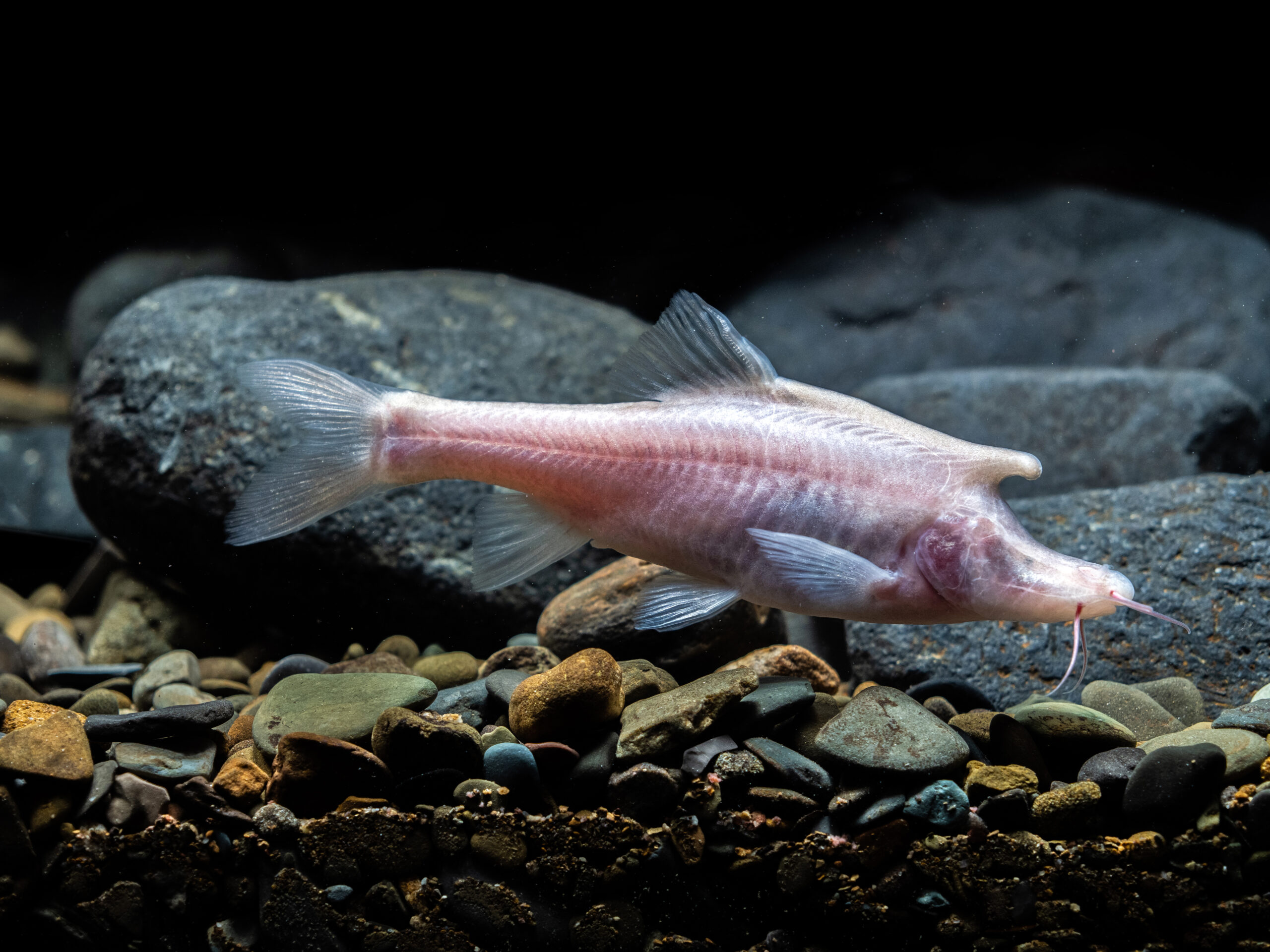
A minnow hiding in a megacity, 7 Swiss whitefish, and a cavefish that eats out of people’s hands were highlighted in New Species 2023. In March we released our third annual New Species report, detailing the 243 freshwater fish species described in 2023.
“Awareness-raising is a critical part of the work needed to give these species a chance of survival, and it’s our hope and expectation that New Species reports will go some way to driving a greater appreciation for freshwater fish.”
In March the WWF and partners released a flagship report focussed on the dazzlingly diverse fishes of the Mekong.
The river is home to some of the world’s largest freshwater species and one of the smallest, but the species are under increasing threat.
With one-fifth already facing extinction, urgent action is needed to safeguard the future of these extraordinary fishes, as well as the people & ecosystems that depend on them.
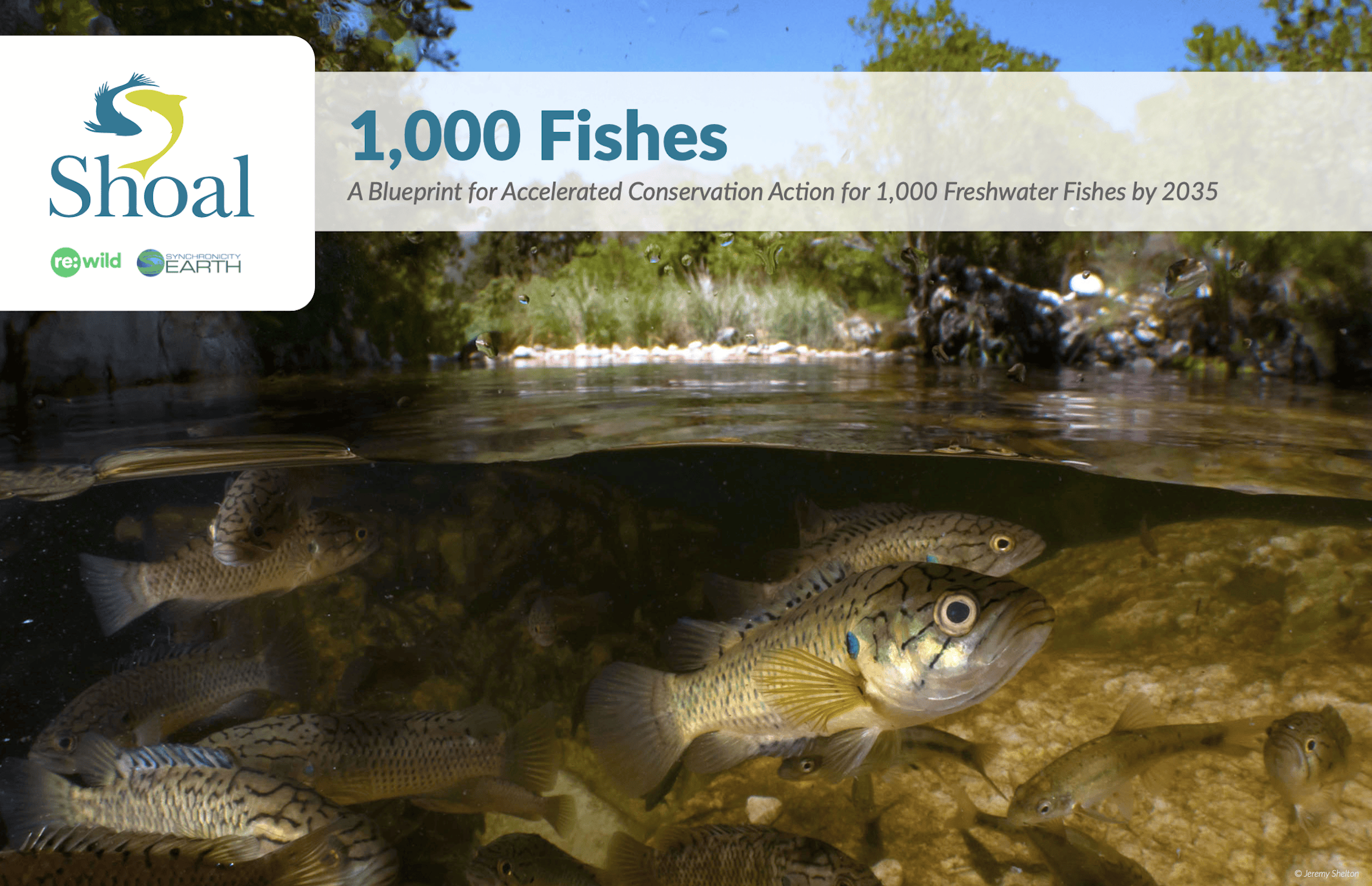
In April we launched an ambitious new initiative to mobilise conservation action for 1,000 of Earth’s most threatened freshwater fish species by 2035.
The SHOAL Blueprint for Conservation Action for 1,000 Freshwater Fishes by 2035 is perhaps the single most ambitious conservstion framework in terms of species numbers ever written, and certainly our most ambitious project to date here at SHOAL.
“The Blueprint shows the level of ambition and determination we need to turn back the tide on the freshwater biodiversity crisis, and halt extinctions and recover populations of the world’s most threatened freshwater fish. It is collaborative to its core and puts local communities at the forefront of impactful conservation action. It is urgent that we now push on and mobilise the conservation actions outlined by The Blueprint – our planet’s freshwaters depend on them.”
Mike Baltzer, Executive Director, SHOAL
We are celebrating the launch with a photo competition, which ends Saturday 31st August 2024.
For Insect Week we’re shining the spotlight on one of our finest Fantastic Freshwater insects.
Meet the rock threadtail
Perched on stones set in the rocky streams of eastern Zimbabwe is one of our most delicate fantastic freshwater species. First discovered in 2013 in Chimanimani National Park, the rock threadtail (Elattoneura lapidaria) was described in 2015, then listed as critically endangered in 2017.
This damselfly is found at whopping elevations, as high as 1500-1600m above sea level in the Chimanimani Mountains. Endemic to Eastern Zimbabwe, the species is only found in the Bundi Plain and Bundi Valley.
Damsel(fly) in distress
The rock threadtail is one of the 50 landmark species at high risk of extinction identified in SHOAL’s Fantastic Freshwater* report. Published on 19th May 2022 (International Day for Biodiversity), Fantastic Freshwater highlights the diversity and beauty of freshwater species and the immense threats they face to their survival.
Like many of our Fantastic Freshwater species, threats to the rock threadtail are largely a result of degradation of their habitat – in this instance as a result of particularly prolific illegal gold mining activity.
Despite Chimanimani National Park being a protected area, more and more people are travelling to eastern Zimbabwe hoping to find gold, including the park rangers. The activity has caused great harm to the natural water sources and biodiversity of the region and poses a major threat to the future of the rock threadtail.
Panning for solutions
At this stage further research of the habitat in Chimanimani National Park is needed, in order to address activities that are threatening the rock threadtail and develop a plan for meaningful conservation action.
If you want to support the work SHOAL are doing to conserve freshwater species through action-driven conservationdonate here and don’t forget to subscribe to our newsletter The Stream to get all the latest freshwater news straight to your inbox
Our partners have produced a new film about the Search for the Fat Catfish.
Dive into Lake Tota on the Search for the Fat Catfish
Colombia’s fat catfish is one of freshwater’s great mysteries. Not seen since 1957, there are more layers of intrigue surrounding this creature than it has rings of fatty tissue – i.e. a LOT!
Firstly, nobody knows why it has that strange physiology: why is it fat? Could it be from overeating? Or a way to stay warm in the cold mountain waters of Colombia’s Páramo? It could be something else entirely, but with only 10 preserved specimens in the world, and no live sightings of the species for more than 70 years, it is incredibly challenging to know.
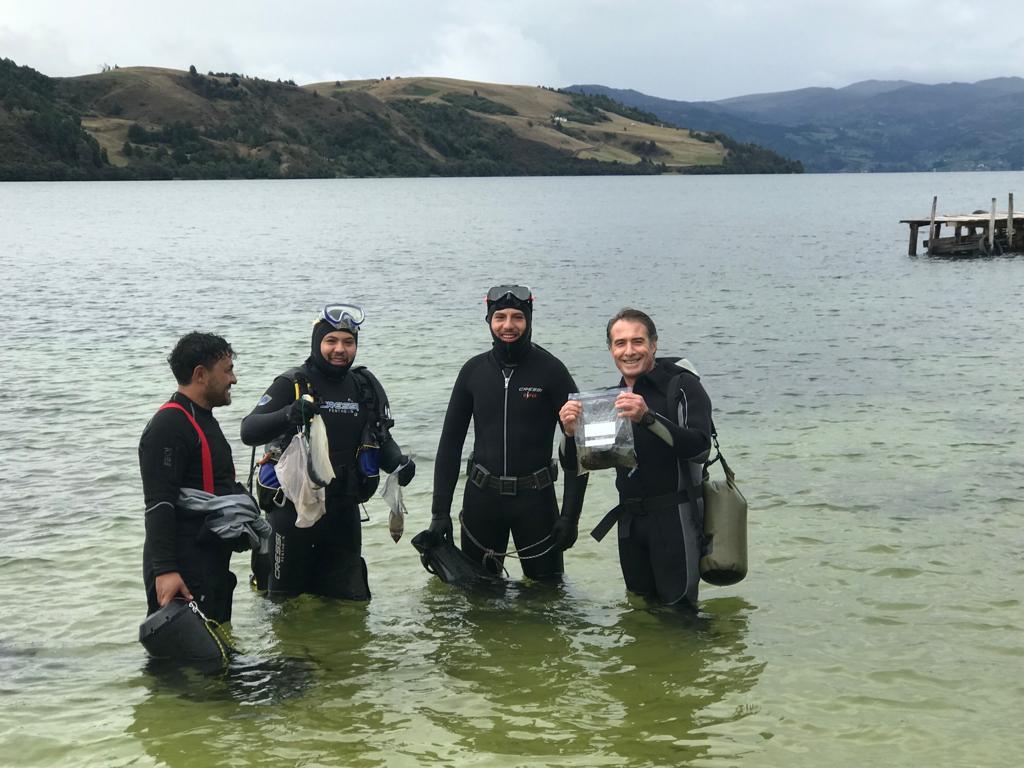
And what happened to the species? It was allegedly once so common that people living near Lake Tota used the grease from the fish to light their homes. Yet the species seems to have disappeared without trace. Nobody knows why. Through SHOAL’s Search for the Fat Catfish with partners from Instituto de Investigación de Recursos Biológicos at Alexander von Humboldt, Universidad De Los Andes, and Re:wild, we attempt to find answers to some of these questions. Using eDNA metabarcoding and more traditional search techniques, our partners are working to put pieces of the puzzle together and give us some clues about the fat catfish.
Freshwater film made it all the way to the BAFTAs this year – here’s more freshwater films you can check out today.
Freshwater made it to thes earlier this year, thanks to an acclaimed film by Karni Arieli and Saul Freed.
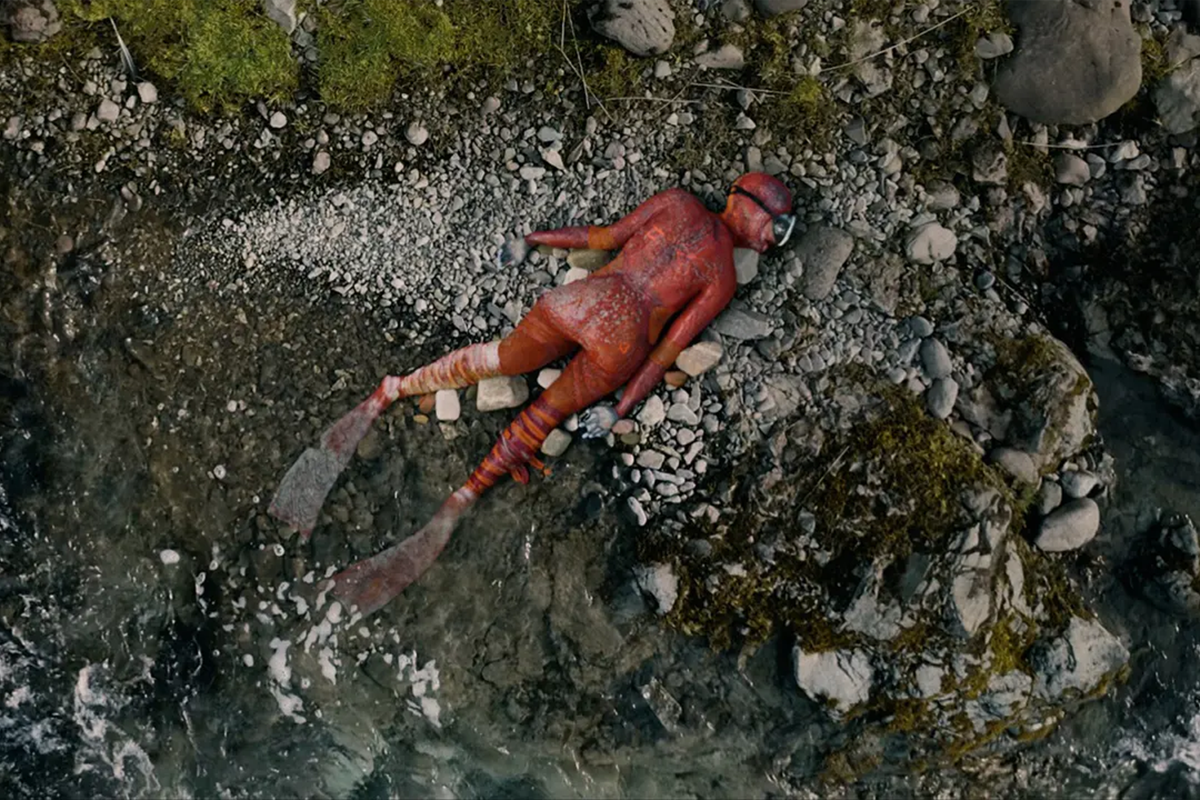
Wild Summon(nominated for Best Animated Short) combines animation with live-action underwater photography to tell the dramatic life cycle of the wild salmon in human form – her fight for survival as she migrates from a freshwater river to the open ocean – and then all the way back to her birthplace to spawn her young.
Narrated by Marianne Faithfull, the filmmakers describe Wild Summon as a “natural history fantasy”.
“If you watch the film without the sound, it might look like some sort of science-fiction film about creatures that live underwater. If you do the opposite – if you just listen to the voiceover – then it’s a straight natural history documentary”, Freed says. The arresting film has won multiple awards since it premiered at the Cannes film festival last year, as well as being nominated for a Palme d’Or, shortlisted for an Academy Award, and up for a BAFTA.
If Wild Summon has got you falling down the freshwater film rabbit hole too, here’s more you can check out today!
Artifishal: The Fight To Save Wild Salmon (2019), Blue Heart: The Fight For Europe’s Last Wild Rivers (2018), DamNation: The Problem With Hydropower (2014)
We’ve cheated a bit here because number 1 on our list is actually three films. Patagonia have made three films about freshwater issues, with the goal to spark dialogue and encourage change.
Artifishal: The Fight To Save Wild Salmon (2019) is a film about people, the fight for the future of wild fish and the environment that supports them. The film explores wild salmon’s slide toward extinction, threats posed by fish hatcheries and fish farms, and our continued loss of faith in nature.
Blue Heart: The Fight for Europe’s Last Wild Rivers (2018) is a shocking look at the tsunami of dam development in the Balkan Peninsula, as the construction of 3,000 proposed hydropower developments threaten to destroy the last wild rivers in Europe.
The majestic cinematography of DamNation: The Problem with Hydropower (2014) highlights the destructive effect of obsolete dams on healthy river ecosystems and habitats, as well as rivers splashing back to life when the infrastructure is removed.
The Ghosts of Table Mountain (2022) is an intimate look at the Table Mountain Ghost Frog by Freshwater Films.
The short documentary reveals the secret lives of the critically endangered frog – one of SHOAL’s Fantastic Freshwater species – as well as other freshwater creatures who depend on South Africa’s ancient, rocky beacon of biodiversity Table Mountain, including caddis-flies and Cape galaxias.
A story of conservation, collaboration and hope – the filmmakers aim to introduce viewers to the rare and beautiful amphibian, as well as the threats that are impacting the rivers and streams it calls home.
The great lakes are Earth’s largest freshwater system, holding around 20% of the planet’s surface freshwater and home to more than 35,000 species of flora and fauna.
This feature length documentary by Julia Robson and Alyssa Armbruster follows the co-creators of Walk to Sustain Our Great Lakes as they embark on a 343 mile walk from the shores of Lake Michigan in Milwaukee, WI, all the way to Lake Superior in the Upper Peninsula of Michigan.
Filmmakers Ferenc Kriska and György Kriska put the spotlight on some of the most important, but overlooked, species in the freshwater ecosystem in this short documentary.
If you only have half an hour to spare, spend it diving into the secret worlds of a range of invertebrate fauna of the wetland – including pond skaters, mayflies and water spiders.
SHOAL has launched an ambitious new initiative to mobilise conservation action for 1,000 of Earth’s most threatened freshwater fish species by 2035.
Conservation action for 1,000 freshwater fishes by 2035? There’s a reason for conservation optimism. Keep scrolling to learn more about one of our most ambitious campaigns to date.
In April we launched the SHOAL Blueprint for Accelerated Conservation Action for 1,000 Freshwater Fishes by 2035, an exciting and ambitious new initiative that will place at least 1,000 threatened freshwater fishes on the path to recovery by 2035.
It’s not just a plan for 1,000 fishes. It’s a plan for hundreds of critical freshwater habitats, vital to thousands of other species and communities – very often the poorest on the planet – that rely on these fish and the freshwater habitats for their everyday lives.
The Blueprint was pulled together with the expert support and guidance from SHOAL partners the IUCN SSC Freshwater Fish Specialist Group (FFSG) and IUCN Biodiversity Assessment and Knowledge Team (BAKT).
Freshwater fishes have been largely neglected in conservation planning and yet the ecosystems they inhabit are vital to the survival of the planet. The incredible diversity of freshwater fishes in only 1% of the Earth’s surface area represents more than half of fish diversity overall. The Blueprint is therefore an extremely welcome and important call to action to halt the loss of so many species under the threat of extinction.
Brian Zimmerman, Co-Chair, IUCN SSC Freshwater Fish Specialist Group
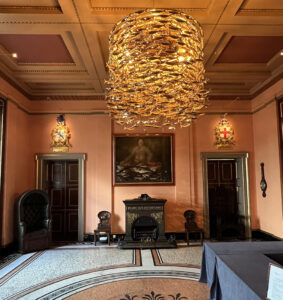
The blueprint was launched in April at an event kindly hosted by the Fishmongers’ Company at Fishmongers’ Hall in London, where SHOAL‘s executive director Mike Baltzer presented how the crucial initiative will mobilise collaborative conservation efforts for global conservation impact.
The Blueprint is a fundamental framework to Phase Two of SHOAL‘s strategy, and will define the organisation’s work for the coming decade. It is wildly ambitious – perhaps the single most ambitious conservation framework in terms of species numbers ever written*!
*We’d welcome people pointing us in the direction of a more ambitious framework!
Freshwater fishes are slipping through the net of conservation and are silently sinking towards extinction. The Blueprint identifies which species need urgent attention and how to cost effectively and collaboratively implement conservation action at scale to ensure at least 1,000 species are under suitable conservation action within a decade. This is the scale of action required to save freshwater fishes and the time to act is now.
Barney Long, Senior Director of Conservation Strategies, Re:wild
This Blueprint is the level of ambition that is desperately needed to make up for the damage caused by decades of neglect in the world’s freshwaters, and to ensure they are conserved and protected long into the future. With funding and support from those able to offer it, it is very much achievable.
Hear what our partners say about working with SHOAL, and why the Blueprint is so critical 👇
The Blueprint shows the level of ambition and determination we need to turn back the tide on the freshwater biodiversity crisis, and halt extinctions and recover populations of the world’s most threatened freshwater fish. It is collaborative to its core and puts local communities at the forefront of impactful conservation action. It is urgent that we now push on and mobilise the conservation actions outlined by The Blueprint – our planet’s freshwaters depend on them.
Michael Baltzer, Executive Director, SHOAL
For freshwaters, the time for action is now.
Together – as a strong and determined shoal – we’ll show that collaborative conservation can change the trajectory for freshwater fishes and save the world’s freshwater ecosystems.
Checking out one of our Fantastic Freshwater plant species this International Plants Appreciation Day.
We’re giving some love to our Fantastic Freshwater plants this International Plant Appreciation Day.
Just 5% of all plants live in freshwaters, but they are absolutely vital to these ecosystems – and the species that call them home – surviving and thriving.
Plants oxygenate water, reduce flood risk, support nutrient cycling, and remove pollutants. They’re really doing some heavy lifting to keep our freshwater fresh!
Meet malabar rotala
With its characteristic small pink and red flowers, malabar rotala (Rotala malabarica) is a beautiful plant native to the Kannur District in Kerala, India, from where it was described in 1990.
The species has in fact only been recorded in a total of 22 ponds, with more than half of the known population in a single pond. One pond with half the population!
The Western Ghats – home to the Denison’s barb – runs along the coast of western India. The range of mountains support a very wide range of wetland-dependent plants, and represent one of the global centres of diversity of aquatic and wetland plants.
Malabar rotala is one of the 50 landmark species at high risk of extinction identified in SHOAL’s Fantastic Freshwater* report. Published on 19th May 2022 (International Day for Biodiversity), Fantastic Freshwater highlights the diversity and beauty of freshwater species and the immense threats they face to their survival.
Wetlands are very sensitive ecosystems and rely on specific environmental conditions; any disruption of these specific conditions can pose serious threats to freshwater flora. Threats to malabar rotala include:
Leakage of waste and habitat destruction from mining
Quarrying of the laterite bedrock which hold the seasonal pools where it occurs
Herbicide pollution from nearby cashew plantations
Unfortunately there are currently no conservation actions in place to protect and restore the malabar rotala.
As with other freshwater plants, more research is needed to increase our knowledge of its ecology, threats, habitat and population trends, so that effective conservation actions can be taken.
If you want to support the work SHOAL are doing to conserve freshwater species through action-driven conservation donate here and don’t forget to subscribe to our newsletter The Stream to get all the latest freshwater news straight to your inbox
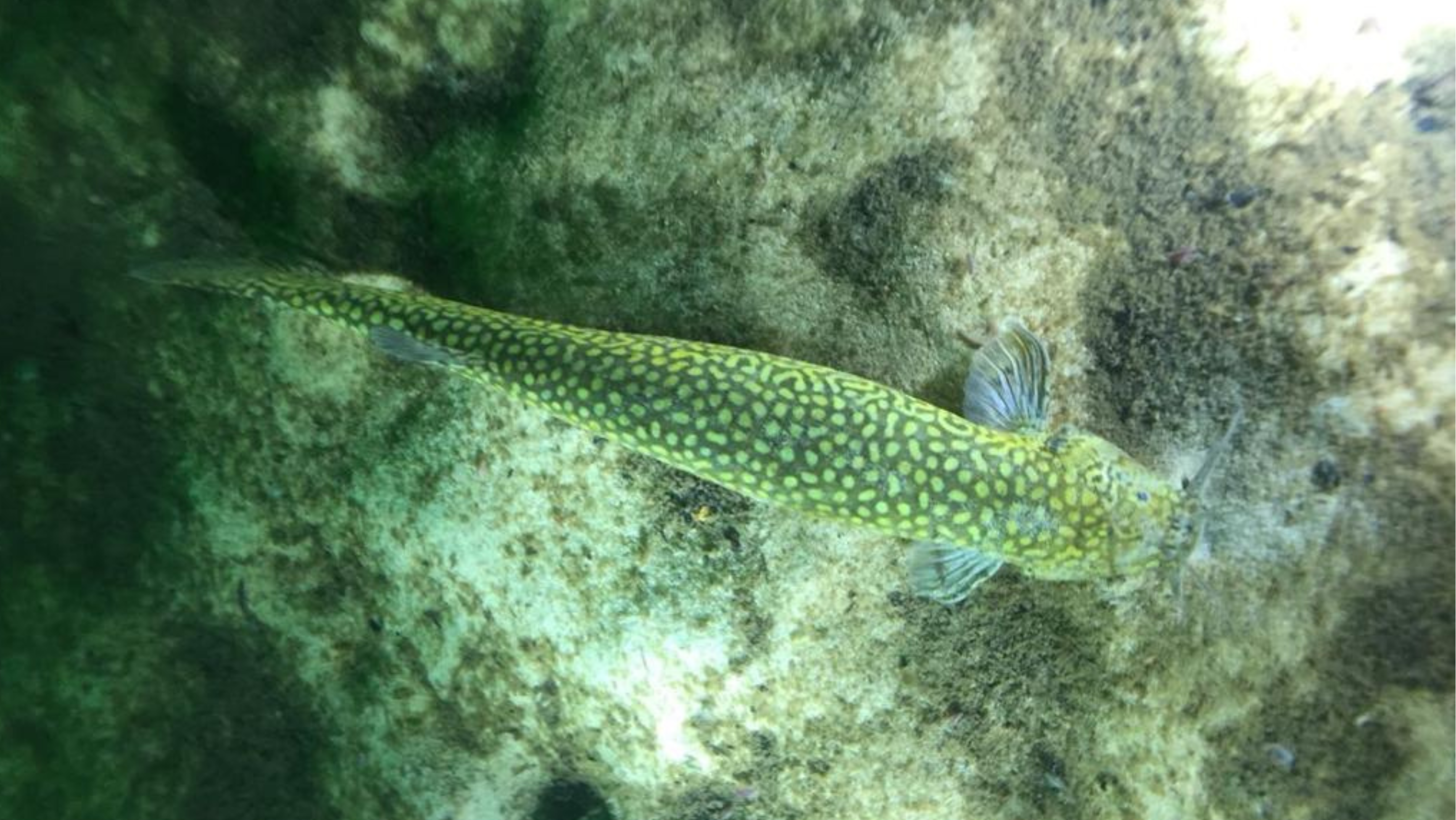
On the heels of the news that 25% of freshwater fish are at risk of extinction, a team of ichthyologists in Türkiye has rediscovered hope in the shape of a carp-like, spotted fish: the leopard barbel (Luciobarbus subquincunciatus).
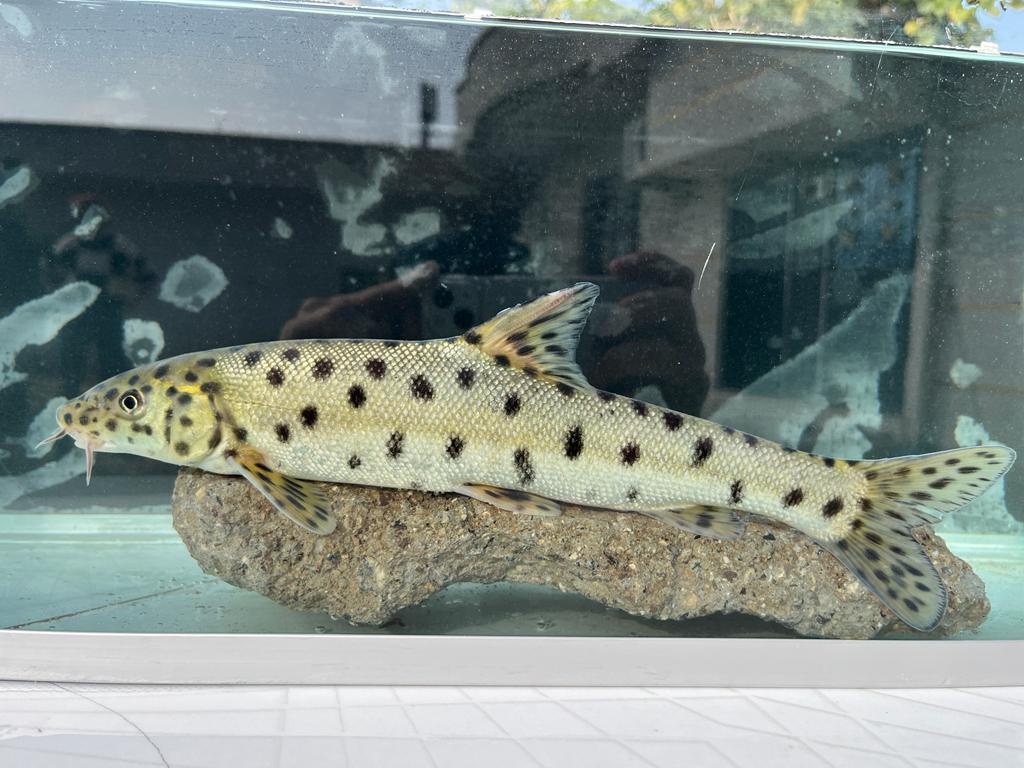
The species – one of SHOAL and Re:wild’s Most Wanted – was last scientifically documented in 2011. That is until last November, when Dr Cüneyt Kaya and Dr Münevver Oral’s team found the fish in the Turkish section of the Tigris River.
We got the chance to catch up with Kaya and Oral about the amazing rediscovery – including the dramatic night the fish was found – and their next challenge.
SHOAL: Congratulations on the rediscovery, how do you feel now that the news is out and what has the response been like?
DR MÜNEVVER ORAL (MO): We’re really excited. In fact, the right word would be we are thrilled, because the leopard barbel is the second species that we found from SHOAL and Re:wild’s 10 Most Wanted Lost Fishes list. As far as we are aware, no other country has found any species and Türkiye has a 100% success rate – so in this sense we are super happy and proud.
SHOAL: Going back to the beginning, when did you start looking for the leopard barbel and how did you approach the search?
MO: We started the search operation in late October. We spent more than a week trying to bring everyone together and talking with the local authorities. Where the species distributes is almost at the border of Syria and Türkiye, and the Syrian border is where you need to be careful in terms of security.
There are also a lot of dams built on the Tigris river so we needed to come up with a strategy. The Ilısu Dam was built in 2018 and is the second biggest in Türkiye in terms of water collection capacity. We did extended and comprehensive expeditions across the surrounding cities – including Batman, Hasankeyf, Şırnak, Mardin, Siirt (Botan) – and checked pretty much every single river collection point to the Tigris river.
The leopard barbel is the second species on SHOAL and Re:wild’s Most Wanted Lost Fishes list to be rediscovered, having found the Batman River loach in Southeastern Türkiye in late 2021. The leopard barbel, a difficult second album, required an adjustment in strategy.
MO: The Batman River loach prefers much shallower rivers so it was easier to go into the river and find the species, it was mostly on us, but the leopard barbel prefers deeper water so we needed fishermen with hands-on experience.
It was a lot of work but I’m so glad that it could pay off eventually.
SHOAL: The moment the fish was found sounds very dramatic, what happened?
MO: On the 12 November we finished the third expedition which had taken more than a week in Şırnak, Cizre. Cüneyt went to an IUCN meeting in Antalya (southern Türkiye), and I came back to my faculty where we are based. Then after 3 days, on 15th November at 10.30 pm, we received this facetime call from our fisherman [Mehmet Ülkü].You should have seen our faces. I was like “What’s happening at this hour? Why is he calling me on facetime?” and he was like “I have a surprise!”.
The minute I received the news I started driving in less than 30 minutes. Cüneyt was in Antalya, the southern part of Türkiye.
DR CÜNEYT KAYA (CK): Quite far away.
MO: And if you were driving how long would that take, maybe 16 hours?
CK: No, more than that. It’s really far.
MO: So he got on the first direct flight from Antalya to Van (nearest direct flight) and drove another 6 hours to finally reach Cizre.
CK: When we got there it was almost sunset.
MO: What was thrilling was whilst we were on our way Mehmet called me again and showed me this wonderful looking, much younger smaller one. A second specimen of the leopard barbel.
CK: Amazing.
MO: That can only be described as a miracle, I don’t have any other words.
CK: On the plane I saw these photos and was like “what’s happening?”!
MO: It was quite an unforgettable experience for both of us.
SHOAL: It’s such a dramatic tale! What did it feel like when you finally saw the fish with your own eyes?
MO: Well the second fish, the young one, is quite good looking. The same thing applies to every human being and animal – as we get older we tend to get a little uglier. But the younger fish was amazing, you could see the spots easily.
CK: It was yellow-ish – like a golden-yellow – so very healthy
MO: Yeah, super handsome! One of the established ichthyologists, Dr.Jörg Freyhof saw the photos and was like “Oh my god, that’s one of the best photos ever taken of the leopard barbel”, so we were very happy.
The stunning pictures of the two specimens taken by photojournalist Metin Yoksu showcase the leopard barbel in all its spotted glory. Once done marvelling at how handsome the fish was, Kaya and Oral admit to being surprised by the fish’s quiet nature.
MO: Wild species are normally super fast and they really don’t like seeing people, but this fish – both of them – wouldn’t get scared. I think it’s in their biology that they don’t. Maybe it’s because of their predator behaviour? They tend to hunt as opposed to being hunted. They were super handsome and they were quiet.
SHOAL: Handsome and brooding, that’s so interesting.
SHOAL: Did you feel that with the rediscovery of the Batman River loach a few years ago, you felt quite confident going into the search for the leopard barbel?
CK: Yes.
MO: We were quite confident because we kept receiving anonymous calls from the locals.
CK: In the same genus there are many species, so they’d confuse them – but sometimes the calls were correct.
MO: And it’s not only the leopard barbel on our target list, there are other species. Cüneyt is the field man, he goes at least 10 or 20 times in the year…
CK: …more…
MO: …to this and other parts of Türkiye and we always observe the habitat. We had positive signs to make us think that the leopard barbel was still alive, but we wouldn’t have any proof until the night that we found the species.
SHOAL: What are your hopes for the leopard barbel both on a local level and an international level?
MO: The biggest motivation for us is to make sure that we do everything to protect the leopard barbel. That’s why we say Cizre, but we don’t pinpoint exactly where we found the species to make sure the people won’t go and hunt for it. It’s somewhere along a 40km radius, so good luck with that!
We will be going back to Şırnak to bring all the fishermen together to help them learn what to do and what not to do. There’s some fishing gear which is forbidden which causes a lot of issues for the whole aquatic ecosystem – fish, mammals, crustaceans, everything, these are called ghost fishing. It’s easily solved, during the expedition we gave instructions to local authorities and they took super fast actions. Our fisherman [Mehmet Ülkü] will be the bridge between us, academia, and local fishermen. We are so happy to have him in our team.
Also we will be in touch with the national education department to give some seminars to teachers so they can discuss the issues and understand how to protect our biodiversity for future generations.
Every second day we speak with our fisherman [Mehmet Ülkü], and an engineer from the local fisheries and agriculture department was a graduate from our department, Rıdvan Hüsem, so they’re taking us really seriously. Hopefully we as a large team will be able to carry out as many awareness activities as possible.
From his immense knowledge of the local waterways to catching the specimen itself – not to mention keeping it happy and safe as Kaya and Oral raced across the country! – the two are very emphatic that Ülkü’s contribution was vital to the successful rediscovery.
MO: He’s the star, not us. If he didn’t trust and collaborate with us, we wouldn’t be able to achieve what we achieved. His expertise helped us a lot. He is very excited and he’s already a star in Cizre when we found the species and where he’s from.
SHOAL: On an international level, Türkiye is the only country to have a 100% hit rate for rediscovering the 10 Most Wanted Lost Fishes.
MO: Yeah! Where is the award? I want to meet Leonardo Di Caprio in person! He used to be my crush in high school, so I don’t know maybe a date or a dinner?
SHOAL: Oh definitely! Why do you think it’s so important to rediscover lost species?
MO: In the ecosystem, everything is connected. It can be finding a new species or it can be rediscovering a species, it’s always important.
If you don’t know what you have at a country level or international level, you don’t know what to protect.
SHOAL: And in the communities and organisations you’ve worked with, it must be really exciting and motivating.
MO: Oh my god you know everyone is calling, everyone is clapping. Obviously Leonardo has helped us a lot, and I’m so happy, but this is already important as it is. We know that the biodiversity crisis is increasing with global warming, so we really do need to take care of our biodiversity as much as possible.
SHOAL: So what is next for you both, do you have another ambitious project on the horizon?
MO: That question I ask to SHOAL and Re:wild. Hey guys, do you think you will be challenging us to find another lost species perhaps?
There are already so many species that we are looking forward to finding. There are already so many species that we want to figure out their phylogenetic relationships. We’re up for any challenges! If you want to update the list feel free, we’re so up for new challenges.
On the heels of the news that 25% of freshwater fish are at risk of extinction, a team of ichthyologists in Türkiye (Turkey) has rediscovered hope in the shape of a carp-like, spotted fish — the leopard barbel (Luciobarbus subquincunciatus) — in the Turkish section of the Tigris River. The species, which was last scientifically documented in 2011, is the second species on SHOAL and Re:wild’sMost Wanted Lost Fishes list to be rediscovered. The first, the Batman River loach, was found by the same intrepid team in Southeastern Türkiye in late 2021.
“There is nothing quite like the feeling of finding that a species that has been pushed to the brink of extinction is still hanging on, despite the odds. It is even more thrilling than discovering a new species because it means that we can give a rare species a second chance. With both the Batman River loach and now the leopard barbel, we have an obligation to mobilise conservation efforts to ensure neither becomes lost again”.
Cüneyt Kaya, associate professor at Recep Tayyip Erdogan University and member of the expedition team
The leopard barbel was once abundant, ranging from Eastern Türkiye, Eastern Syria, Iran and Iraq in the Tigris-Euphrates river system. Over the last three decades, however, fishing, pollution, habitat destruction and dam construction have pushed the species to the edge of extinction. Anecdotal evidence from local fishers suggested that the fish may still be out there, so Kaya and Münevver Oral, an assistant professor at Recep Tayyip Erdogan University enlisted their help, in addition to working with the local fisheries aquaculture department.
The team started by looking at the scientific literature about where the species had been previously found. However, those data were collected before nine dams were built in the Turkish portion of the Tigris River. The dams alter water flow regimes, and cold water that accumulates at the bottom of reservoirs is sometimes released downstream. The release of cold water drives many freshwater fish toward warmer waters, so the team had to adjust its strategy to look further downstream from the dams.
Just days after the second of two expeditions, Kaya and Oral got the video call they had hoped for from local fisherman Mehmet Ülkü: he had caught a 50-centimetre (20-inch), 2-kilogram (4.4-pound) fish with conspicuous black spots and the telltale fleshy filament that dangles from the mouths of this type of freshwater fish.
Ülkü kept the fish alive in a tank with a constant oxygen supply overnight, while Kaya took a direct flight to Van city, then drove nearly six hours to Cizre, where the species was found, while Oral drove more than 11 hours through the night to see — and help release — the fish. By the time they arrived, Ülkü had caught a second leopard barbel safely in his nets.
“We dropped everything and would have gone to the ends of the Earth to see this fish, this legend, alive in the wild. I have never seen a fish as beautiful as this. It was the realisation not only of our dream to find this lost species, but of the hope that not all is lost — we still have a chance to protect the leopard barbel and all of the other incredible freshwater species it shares its home with”.
Münevver Oral, assistant professor at Recep Tayyip Erdogan University and member of the expedition team
After Kaya and Oral took photos and measured the size and shape of the two fish, they were joined by the local Cizre fisheries aquaculture department to safely release the fish, which they described as a joyous event.
“We all have a role to play in protecting our incredible natural heritage and I am proud to have used my skills to help rediscover the leopard barbel. Safeguarding this species into the future is going to require educating other fishers and continuing to bring together scientific knowledge and local expertise.”
Kaya and Oral are planning to conduct a series of seminars for fishers and teachers to help build pride in their riverways and wildlife, using the rediscovery as a case study to protect the Tigris River and its rich biodiversity. They are also hoping to get a better understanding of how many leopard barbel might still exist and where they are still found across their historic range.
In November 2023, the International Union for Conservation of Nature released an updated assessment of freshwater fish across the planet, finding that dams and water extraction are putting 45% of all threatened freshwater fish at risk of extinction. Not only have several dams built in the Turkish portion of the Tigris River impacted the leopard barbel, but a new dam is under construction in Cizre, very close to where the two leopard barbels were found.
“Freshwater ecosystems play a tremendous role in maintaining the overall health of our planet. Addressing threats and safeguarding the biodiversity that maintains these ecosystems is critical to solving the climate and biodiversity loss crises, and essential for human wellbeing. We hope the rediscovery of the leopard barbel will serve as an inspiring catalyst for future freshwater biodiversity conservation efforts in this region.”
Dr Harmony Patricio, conservation programme manager, SHOAL and Re:wild


)
)
)


 Michael and team in the field collecting goodeids in Mexico.